


Wydawcy
Katalog tematyczny
- Archeologia (109)
- Ekonomia, finanse, business (13704)
- Filozofia (1445)
- Historia (3040)
- Języki i językoznawstwo (2356)
- Lifestyle, hobby i rozrywka (475)
- Medycyna (9704)
- Nauki humanistyczne (4)
- Nauki o Ziemi i środowisku (2638)
- Nauki ścisłe (20412)
- Nauki społeczne (8486)
- Nauki techniczne (13450)
- Prawo (1696)
- Publikacje informacyjne i interdyscyplinarne (1288)
- Religia i wierzenia (917)
- Technika komputerowa (4067)
- Zdrowie, relacje międzyludzkie i rozwój osobisty (657)





Informacje szczegółowe o książce
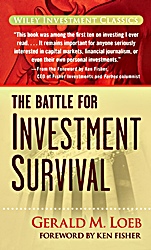
Battle for Investment Survival
ISBN 9780470110034
Autor: Gerald M. Loeb, Kenneth L. Fisher
Wydawca: Wiley
Dostępność: 3-6 tygodni
Cena: 119,70 zł
Przed złożeniem zamówienia prosimy o kontakt mailowy celem potwierdzenia ceny.
ISBN13: |
9780470110034 |
ISBN10: |
0470110031 |
Autor: |
Gerald M. Loeb, Kenneth L. Fisher |
Oprawa: |
Hardback |
Rok Wydania: |
2007-06-29 |
Ilość stron: |
336 |
Wymiary: |
225x149 |
Tematy: |
KF |
"Loeb tells us to put all our eggs in one basket, and watch the basket."
—John RothchildFinancial Columnist, Time magazine
"This book is very special in my life. It is the very first Wall Street book I ever read. After reading 1,200 additional finance books, The Battle for Investment Survival′s principles and concepts are still valid for consistent success."
—Victor Sperandeo Author of Trader Vic on Commodities
In The Battle for Investment Survival, the turf is Wall Street, the goal is to preserve your capital at all costs, and to win is to "make a killing without being killed." This memorable classic, originally written in 1935, offers a fresh perspective on investing from times past. The Battle for Investment Survival treats investors to a straightforward account of how to profit—and how to avoid profit loss—in what Loeb would describe as the constant tug–of–war between rising and falling markets.
Spis treści:
Foreword.
Introduction.
1. It Requires Knowledge, Experience, and Flair.
2. Speculative Attitude Essential.
3. Is There an Ideal Investment?
4. Pitfalls for the Inexperienced.
5. How to Invest for Capital Appreciation.
6. Speculation versus Investment.
7. Sound Accounting for Investors.
8. Why Commitments Should Not Be Haphazard.
9. Some “Don’ts” in Security Programs.
10. What to Look for in Corporate Reports.
11. Concerning Financial Information, Good and Bad.
12. What to Buy—and When.
13. Importance of Correct Timing.
14. Statistical Analysis, Market Trends, and Public Psychology.
15. Price Movement and Other Market Action Factors.
16. Further Technical Observations.
17. More on Technical Position of Market—Its Interpretation and Significance.
18. Advantages of Switching Stocks.
19. “Fast Movers” or “Slow Movers”?
20. Detecting “Good” Buying or &#
8220;Good” Selling.
21. Qualities of the Good Investor or Investment Adviser.
22. Gaining Profits by Taking Losses.
23. You Can’t Forecast, but You Can Make Money.
24. Strategy for Profits.
25. The Ever–Liquid Account.
26. A Realistic Appraisal of Bonds.
27. Merits of Mining Shares.
28. Diversification of Investments.
29. Travel as an Education for Investors.
30. General Thoughts on Speculation.
31. Investment and Spending.
32. Investment and Taxation.
33. Investment and Inflation.
34. Case History Examples.
35. Investment Trust Investing Is Average Investing.
36. Do Tax Losses Mean Savings?
37. Odd–Lot Investors Aren’t Always Wrong.
38. What Women Should Know About Stocks.
39. Tip to the Investor: Always Write it Down.
40. What is Better: Dollars in the Hand—or “In the Bush”?
41. Last Wills and Testaments Should be Carefully Drawn.
42. Price of Stock is What Counts.
43. Careful Investors Look for Signs of Quality Management.
44. Act Your Age When Investing.
45. Investors Should Budget for Future Fluctuations.
46. What To Do About Losses.
47. Several Fallacies of the Marketplace.
48. Are You Fast Enough to Switch Capital?
49. How a Bull Market Affects Your Investment Thoughts.
50. Don’t Let Tax Questions Cloud Investment Decisions.
51. Stop Orders Need Careful Evaluation.
52. Cash Dividends May Slow Growth of Young Company.
53. Middle Course Helps Buyers to Avoid Market Fallacies.
54. Wall Street Proverbs Are Often Fallacious.
55. Investing in New Products.
56. News and the Market.
57. A Little Investment Knowledge is Necessary for Every Citizen.
58. Don’t Look for Management at Bargain Rates.
59. Miracle Plan Investing.
60. The Step System.
61. Double Dividends.
62. A Layman Looks at Building.
63. Investment Manager’s Dilemma.
64. I Don’t Sell—People Buy fro
m Me.
65. Money from Market Letters.
66. The Ideal Client.
67. Perpetual Profits.
68. What Makes a Stock “Good”?
69. A Dollar Today.
70. The Leopard Never Changes Its Spots.
71. Words for the Beginner.
72. More on Tape Reading.
73. What’s the Value of Watching “Tape”?
74. Importance of Equity Investments.
75. Wallflower Stocks.
76. More Double Dividends.
77. Never Accept Without Checking.
78. How to Get the Most Out of Your Investments.
Nota biograficzna:
Gerald M. Loeb worked on Wall Street as a stockbroker for forty years, beginning in the late 1920s. He was also a financial writer whose articles were published in Barron′s, Wall Street Today, and Investor Magazine. A prolific writer throughout his career, Loeb also authored Gerald Loeb′s Checklist for Buying Stocks and Your Battle for Stock Market Profits.
Okładka tylna:
"Loeb tells us to put all our eggs in one basket, and watch the basket."
—John RothchildFinancial Columnist, Time magazine
"This book is very special in my life. It is the very first Wall Street book I ever read. After reading 1,200 additional finance books, The Battle for Investment Survival′s principles and concepts are still valid for consistent success."
—Victor Sperandeo Author of Trader Vic on Commodities
In The Battle for Investment Survival, the turf is Wall Street, the goal is to preserve your capital at all costs, and to win is to "make a killing without being killed." This memorable classic, originally written in 1935, offers a fresh perspective on investing from times past. The Battle for Investment Survival treats investors to a straightforward account of how to profit—and how to avoid profit loss—in what Loeb would describe as the constant tug–of–war between rising and falling markets.
Koszyk
Książek w koszyku: 0 szt.
Wartość zakupów: 0,00 zł
Informacje


Kontakt
Gambit
Centrum Oprogramowania
i Szkoleń Sp. z o.o.
Al. Pokoju 29b/22-24
31-564 Kraków
Siedziba Księgarni
ul. Kordylewskiego 1
31-542 Kraków
+48 12 410 5991
+48 12 410 5987
+48 12 410 5989
Subskrypcje
Administratorem danych osobowych jest firma Gambit COiS Sp. z o.o. Na podany adres będzie wysyłany wyłącznie biuletyn informacyjny.
Autoryzacja płatności

Informacje na temat autoryzacji płatności poprzez PayU.

© Copyright 2012: GAMBIT COiS Sp. z o.o. Wszelkie prawa zastrzeżone.
Projekt i wykonanie: Alchemia Studio Reklamy