


Wydawcy
Katalog tematyczny
- Archeologia (109)
- Ekonomia, finanse, business (13704)
- Filozofia (1445)
- Historia (3040)
- Języki i językoznawstwo (2356)
- Lifestyle, hobby i rozrywka (475)
- Medycyna (9704)
- Nauki humanistyczne (4)
- Nauki o Ziemi i środowisku (2638)
- Nauki ścisłe (20412)
- Nauki społeczne (8486)
- Nauki techniczne (13450)
- Budownictwo lądowe (1045)
- Chemia przemysłowa (2258)
- Elektronika i telekomunikacja (3287)
- Energetyka (1122)
- Inne nauki stosowane (363)
- Inżynieria biochemiczna (507)
- Inżynieria transportu (232)
- Mechanika i materiały (3316)
- Nauka o środowisku (321)
- Rolnictwo (507)
- Technika, ogólnie (475)
- Prawo (1696)
- Publikacje informacyjne i interdyscyplinarne (1288)
- Religia i wierzenia (917)
- Technika komputerowa (4067)
- Zdrowie, relacje międzyludzkie i rozwój osobisty (657)





Informacje szczegółowe o książce
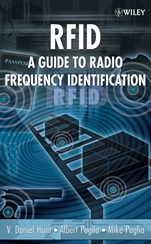
Rfid: A Guide to Radio Frequency Identification
ISBN 9780470107645
Autor: V. Daniel Hunt, Albert Puglia, Mike Puglia
Wydawca: Wiley
Dostępność: 3-6 tygodni
Cena: 441,00 zł
Przed złożeniem zamówienia prosimy o kontakt mailowy celem potwierdzenia ceny.
ISBN13: |
9780470107645 |
ISBN10: |
0470107642 |
Autor: |
V. Daniel Hunt, Albert Puglia, Mike Puglia |
Oprawa: |
Hardback |
Rok Wydania: |
2007-04-26 |
Ilość stron: |
240 |
Wymiary: |
238x164 |
Tematy: |
TJ |
A Primer on Radio Frequency Identification (RFID)
This broad overview and guide to RFID technology and its application provides the initial "homework" for the reader interested in better understanding RFID technology and tools. It is written to provide an introduction for business leaders, supply chain improvement advocates, and technologists to help them adopt RFID tools for their unique applications, and provide the basic information for better understanding of RFID.
RFID—A Guide to Radio Frequency Identification describes and addresses the following:
How RFID works, how it is used, and who is using it
The history of RFID technology, the current state of the art, and where RFID is expected to be taken in the future
The role of middleware software to route data between the RFID network and the information technology (IT) systems within an organization
The use of RFID technology in both commercial and government applications
The role and value of RFID industry standards and the current regulatory compliance environment
The issues faced by the public and industry regarding the wide–scale deployment of RFID technology
With the global sales of active RFID systems forecast to grow from $500 million in 2006 to $6.78 billion in 2016, there′s more need than ever for a comprehensive guide to RFID that gives practical answers to complex questions about how RFID works, how it′s currently being used, and how it may be applied in the future.
RFID—A Guide to Radio Frequency Identification is a one–stop resource for current information on commercial and government applications of RFID technology, with insightful focus on such specific uses as supply chain management, retail and consumer packaging, transportation and distribution of products, pharmaceutical applications, and security and access control.
Spis treści:
PREFACE.
AC
KNOWLEDGMENTS.
STAFF ACKNOWLEDGMENTS.
ABOUT THE AUTHORS.
1 INTRODUCTION.
1.1 What Is RFID?
1.2 What Explains the Current Interest in RFID Technology?
1.3 Goals of This Book.
2 AN OVERVIEW OF RFID TECHNOLOGY.
2.1 The Three Core Components of an RFID System.
2.2 RFID Tags.
2.3 RFID Interrogators.
2.4 RFID Controllers.
2.5 Frequency.
2.6 Automatic Identifi cation and Data Capture (AIDC) Systems.
2.7 “Smart” Tags vs. Bar Codes.
2.8 RFID Technology in Supply Chain Management.
3 HISTORY AND EVOLUTION OF RFID TECHNOLOGY.
3.1 The Convergence of Three Technologies.
3.2 Milestones in RFID and the Speed of Adoption.
3.3 RFID in the Future.
4 RFID MIDDLEWARE AND INFORMATION TECHNOLOGY INTEGRATION.
4.1 What Is RFID Middleware?
4.2 The Recent Focus on Middleware.
4.3 Core Functions of RFID Middleware.
4.4 Middleware as Part of an RFID System—The EPC Architecture.
4.5 The Present State of Middleware Development.
4.6 Middleware Vendors.
5 COMMERCIAL AND GOVERNMENT RFID TECHNOLOGY APPLICATIONS.
5.1 Introduction.
5.2 Effect of the Wal–Mart and Department of Defense Mandates.
5.3 Strategic Dimensions of the Wal–Mart and DoD Mandates.
5.4 RFID Technology for Business Applications.
5.5 RFID and Supply Chain Management.
5.6 The Business Case for RFID.
5.7 Government Use of RFID Technology.
5.8 RFID and the Pharmaceutical Supply Chain.
5.9 RFID Implanted in Humans.
6 RFID TECHNOLOGY IN HOMELAND SECURITY, LAW ENFORCEMENT, AND CORRECTIONS.
6.1 Introduction.
6.2 RFID Technology in Homeland Security.
6.3 RFID in Law Enforcement.
6.4 RFID Use in Law Enforcement—Looking to the Future.
6.5 RFID Technology in Corrections.
7 RFID REGULATIONS AND STANDARDS.
7.1 Governmental RFID Regulation.
7.2 World Regulatory Bodies.
7.3 Industrial–Scientifi c–Med
ical (ISM) Bands.
7.4 Spectrum Allocations for RFID.
7.5 Industrial RFID Standards.
7.6 International Standards Organization (ISO).
7.7 EPCglobal.
7.8 The Wal–Mart and DoD Mandates and EPC.
8 ISSUES SURROUNDING THE DEPLOYMENT OF RFID TECHNOLOGY.
8.1 Introduction.
8.2 Privacy Issues in Applying RFID Technology.
8.3 The Costs of Developing and Deploying RFID Technology.
8.4 The Growth of Global Standards and Regulations.
8.5 Technological Immaturity and Integration with Legacy Systems.
8.6 Lack of Robustness.
8.7 Lack of Knowledge and Experience, End–User Confusion, and Skepticism.
8.8 Ethical Issues.
8.9 Data Management.
9 THE FUTURE PREDICTIONS FOR RFID.
APPENDIX A WAL–MART RFID INITIATIVE.
APPENDIX B DEPARTMENT OF DEFENSE RFID POLICY OVERVIEW.
LIST OF ACRONYMS.
GLOSSARY.
RFID VENDOR LIST.
POINTS OF CONTACT.
INDEX.
Nota biograficzna:
V. Daniel Hunt is President and CEO of Technology Research Corporation. He is an internationally known management consultant, emerging technology trends analyst, and author of numerous bestselling bottom–line performance improvement books.
Albert Puglia is an attorney and the Senior Public Safety–Privacy Issue Analyst at Technology Research Corporation.
Mike Puglia has served as an RFID and advanced engineering technology analyst and writer at Technology Research Corporation.
Okładka tylna:
A Primer on Radio Frequency Identification (RFID)
This broad overview and guide to RFID technology and its application provides the initial "homework" for the reader interested in better understanding RFID technology and tools. It is written to provide an introduction for business leaders, supply chain improvement advocates, and technologists to help them adopt RFID tools for their unique applications, and provide t
he basic information for better understanding of RFID.
RFID—A Guide to Radio Frequency Identification describes and addresses the following:
How RFID works, how it is used, and who is using it
The history of RFID technology, the current state of the art, and where RFID is expected to be taken in the future
The role of middleware software to route data between the RFID network and the information technology (IT) systems within an organization
The use of RFID technology in both commercial and government applications
The role and value of RFID industry standards and the current regulatory compliance environment
The issues faced by the public and industry regarding the wide–scale deployment of RFID technology
With the global sales of active RFID systems forecast to grow from $500 million in 2006 to $6.78 billion in 2016, there′s more need than ever for a comprehensive guide to RFID that gives practical answers to complex questions about how RFID works, how it′s currently being used, and how it may be applied in the future.
RFID—A Guide to Radio Frequency Identification is a one–stop resource for current information on commercial and government applications of RFID technology, with insightful focus on such specific uses as supply chain management, retail and consumer packaging, transportation and distribution of products, pharmaceutical applications, and security and access control.
Koszyk
Książek w koszyku: 0 szt.
Wartość zakupów: 0,00 zł
Informacje


Kontakt
Gambit
Centrum Oprogramowania
i Szkoleń Sp. z o.o.
Al. Pokoju 29b/22-24
31-564 Kraków
Siedziba Księgarni
ul. Kordylewskiego 1
31-542 Kraków
+48 12 410 5991
+48 12 410 5987
+48 12 410 5989
Subskrypcje
Administratorem danych osobowych jest firma Gambit COiS Sp. z o.o. Na podany adres będzie wysyłany wyłącznie biuletyn informacyjny.
Autoryzacja płatności

Informacje na temat autoryzacji płatności poprzez PayU.

© Copyright 2012: GAMBIT COiS Sp. z o.o. Wszelkie prawa zastrzeżone.
Projekt i wykonanie: Alchemia Studio Reklamy