


Wydawcy
Katalog tematyczny
- Archeologia (109)
- Ekonomia, finanse, business (13704)
- Filozofia (1445)
- Historia (3040)
- Języki i językoznawstwo (2356)
- Lifestyle, hobby i rozrywka (475)
- Medycyna (9704)
- Nauki humanistyczne (4)
- Nauki o Ziemi i środowisku (2638)
- Nauki ścisłe (20412)
- Nauki społeczne (8486)
- Nauki techniczne (13450)
- Prawo (1696)
- Publikacje informacyjne i interdyscyplinarne (1288)
- Religia i wierzenia (917)
- Technika komputerowa (4067)
- Zdrowie, relacje międzyludzkie i rozwój osobisty (657)





Informacje szczegółowe o książce
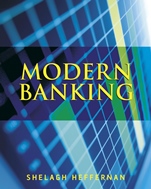
Modern Banking
ISBN 9780470095003
Autor: Shelagh Heffernan
Wydawca: Wiley
Dostępność: 3-6 tygodni
Cena: 260,40 zł
Przed złożeniem zamówienia prosimy o kontakt mailowy celem potwierdzenia ceny.
ISBN13: |
9780470095003 |
ISBN10: |
0470095008 |
Autor: |
Shelagh Heffernan |
Oprawa: |
Paperback |
Rok Wydania: |
2004-11-26 |
Ilość stron: |
736 |
Wymiary: |
233x193 |
Tematy: |
KF |
Modern Banking is a sequel to the highly successful Modern Banking in Theory and Practice, first published in 1996. Over the last decade many aspects of banking have changed considerably, though the key features that distinguish banks from other financial institutions remain. Some might question the need for a book on banking rather than one on financial institutions – while banks remain special and unique to the financial sector, books need to be devoted to them.
Modern Banking focuses on the theory and practice of banking, and its prospects in the new millennium. The book is written for courses in banking and finance at Masters/MBA level, or undergraduate degrees specialising in this area. Bank practitioners wishing to deepen and broaden their understanding of banking issues may also be attracted to this book. While they often have exceptional and detailed knowledge of the areas they have worked in, busy bankers may be all too unaware of the key broader issues. Consider the fundamental questions: What is unique about a bank? and What differentiates it from other financial institutions? Answering these questions begins to show how banks should evolve and adapt – or fail. If bankers know the underlying reasons for why profitable banks exist, it will help them to devise strategies for sustained growth.
Modern Banking concludes with a set of case studies that give practical insight into the key issues covered in the book:The core banking functionsDifferent types of banks and diversification of bank activitiesRisk management: issues and techniquesGlobal regulation: Basel 1 and Basel 2.Bank regulation in the UK, US, EU, and JapanBanking in emerging marketsBank failure and financial crisesCompetitive issues, from cost efficiency to mergers and acquisitionsCase Studies including: Goldman Sachs, Bankers Trust/Deutsche Bank, Sumitomo Mitsui
, Bancomer
Spis treści:
ACKNOWLEDGEMENTS.
PREFACE.
CHAPTER 1: What are Banks and What Do They Do?
1.1 Introduction.
1.2 The Meaning of Banking.
1.3 Organisational Structures.
1.4 Banking Structures.
1.5 Financial Conglomerates.
1.6 Central Banking.
1.7 Summary: Why are Banks Special?
1.8 Conclusion.
CHAPTER 2: Diversification of Banking Activities.
2.1 Introduction.
2.2 The Expansion of Banks into Non–banking Financial Services.
2.3 The Effect of Non–interest Income on Banks’ Total Income.
2.4 Global Markets and Centres.
2.5 International Banking.
2.6 Banking Issues in the 21st Century.
2.7 Conclusion.
CHAPTER 3: Management of Risks in Banking.
3.1 Introduction.
3.2 Key Financial Risks in the 21st Century.
3.3 Approaches to the Management of Financial Risks.
3.4 Financial Derivatives and Risk Management.
3.5 Management of Market Risk.
3.6 Management of Credit Risk.
3.7 Risk Management by Major Global Bank.
3.8 Conclusion.
CHAPTER 4: Global Regulation of Banks.
4.1 Introduction.
4.2 Why Regulate?
4.3 International Regulation.
4.4 Basel 2 – The Three Pillar Approach.
4.5 Alternative or Complementary Approaches to Basel.
4.6 International Financial Architecture.
4.7 Conclusion.
CHAPTER 5: Bank Structure and Regulation: UK, USA, Japan, EU.
5.1 Introduction.
5.2 Bank Structure and Regulation in the UK.
5.3 Bank Structure and Regulation in the USA.
5.4 Bank Structure and Regulation in Japan.
5.5 Bank Structure and Regulation in the EU.
5.6 Conclusions: Structure and Regulati
on of Banks.
CHAPTER 6: Banking in Emerging Economies.
6.1 Introduction.
6.2 Financial Repression and Evolving Financial Systems.
6.3 Banking Reforms in Russia, China and India.
6.4 Islamic Banking.
6.5 Sovereign and Political Risk Analysis.
6.6 Conclusion.
CHAPTER 7: Bank Failures.
7.1 Introduction.
7.2 Bank Failure – Definitions.
7.3 Case Studies on Bank Failure.
7.4 The Determinants of Bank Failure: A Qualitative Review.
7.5 Bank Failure: Quantitative Models.
7.6 Conclusion.
CHAPTER 8: Financial Crises.
8.1 Introduction.
8.2 Definitions and Controversies.
8.3 The South East Asian Financial Crisis, 1997–99.
8.4 The Japanese Banking Crisis.
8.5 Scandinavian Banking Crises.
8.6 Long Term Capital Management (LTCM).
8.7 Lender of Last Resort.
8.8 Conclusions.
Appendix 8.1 Japanese Financial Reforms (Big Bang, 1996).
Appendix 8.2 Reform of the Regulators.
CHAPTER 9: Competitive Issues in Banking.
9.1 Introduction.
9.2 Measuring Bank Output.
9.3 X–efficiency, Scale Economies and Scope Economies.
9.4 Empirical Models of Competition in Banking.
9.5 Consolidation in the Banking Sector.
9.6 Conclusion.
CHAPTER 10: Case Studies.
10.1 Introduction.
10.2 Goldman Sachs.
Appendix.
10.3 Kidder Peabody Group.
10.4 From Sakura to Sumitomo Mitsui Financial Group.
10.5 Bancomer: A Study of an Emerging Market Bank.
10.6 Credit Lyonnais.
10.7 Continental Illinois Bank and Trust Company.
10.8 Bankers Trust: From a Commercial/Investment Bank to Takeover by Deutsche Bank.
REFERENCES/BIBLIOGRAPHY.<
/b>
INDEX.
Nota biograficzna:
Professor Shelagh Heffernan is currently Professor of Banking and Finance at Cass Business School, City University, London and has been a visiting Professor at several universities. Modern Banking is her fourth book.
A former Commonwealth Scholar at Oxford University, Professor Heffernan is also a past beneficiary of a Leverhulme Trust Research Award, which funded new research on competition in banking, and recently received a second award from the Leverhulme Trust. She publishes in top academic journals – her paper, ‘How do UK Institutions Really Price their Banking Products?’ (Journal of Banking and Finance) was chosen as one of the top 50 published articles by Emerald Management Review.
Current research includes: SMEs and banking services, the conversion of mutuals to bank stock firms, monetary policy and pass through (funded by an ESRC grant), and M&As in banking. Professor Heffernan is an Associate Member of the Higher Education Academy and has received two Distinguished Teaching and Learning awards.
Okładka tylna:
Modern Banking is a sequel to the highly successful Modern Banking in Theory and Practice, first published in 1996. Over the last decade many aspects of banking have changed considerably, though the key features that distinguish banks from other financial institutions remain. Some might question the need for a book on banking rather than one on financial institutions – while banks remain special and unique to the financial sector, books need to be devoted to them.
Modern Banking focuses on the theory and practice of banking, and its prospects in the new millennium. The book is written for courses in banking and finance at Masters/MBA level, or undergraduate degrees specialising in this area. Bank practitioners wishing to deepen and broaden their understanding of
Koszyk
Książek w koszyku: 0 szt.
Wartość zakupów: 0,00 zł
Informacje


Kontakt
Gambit
Centrum Oprogramowania
i Szkoleń Sp. z o.o.
Al. Pokoju 29b/22-24
31-564 Kraków
Siedziba Księgarni
ul. Kordylewskiego 1
31-542 Kraków
+48 12 410 5991
+48 12 410 5987
+48 12 410 5989
Subskrypcje
Administratorem danych osobowych jest firma Gambit COiS Sp. z o.o. Na podany adres będzie wysyłany wyłącznie biuletyn informacyjny.
Autoryzacja płatności

Informacje na temat autoryzacji płatności poprzez PayU.

© Copyright 2012: GAMBIT COiS Sp. z o.o. Wszelkie prawa zastrzeżone.
Projekt i wykonanie: Alchemia Studio Reklamy