


Wydawcy
Katalog tematyczny
- Archeologia (109)
- Ekonomia, finanse, business (13704)
- Filozofia (1445)
- Historia (3040)
- Języki i językoznawstwo (2356)
- Lifestyle, hobby i rozrywka (475)
- Medycyna (9704)
- Nauki humanistyczne (4)
- Nauki o Ziemi i środowisku (2638)
- Nauki ścisłe (20412)
- Nauki społeczne (8486)
- Nauki techniczne (13450)
- Budownictwo lądowe (1045)
- Budownictwo komunikacyjne (9)
- Hydraulika (33)
- Konstrukcje budowlane (95)
- Mechanika konstrukcji (182)
- Przemysł budowlany (7)
- Chemia przemysłowa (2258)
- Elektronika i telekomunikacja (3287)
- Energetyka (1122)
- Inne nauki stosowane (363)
- Inżynieria biochemiczna (507)
- Inżynieria transportu (232)
- Mechanika i materiały (3316)
- Nauka o środowisku (321)
- Rolnictwo (507)
- Technika, ogólnie (475)
- Prawo (1696)
- Publikacje informacyjne i interdyscyplinarne (1288)
- Religia i wierzenia (917)
- Technika komputerowa (4067)
- Zdrowie, relacje międzyludzkie i rozwój osobisty (657)





Informacje szczegółowe o książce
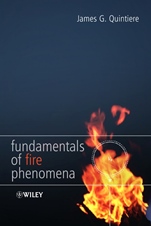
Fundamentals of Fire Phenomena
ISBN 9780470091135
Autor: James G. Quintiere
Wydawca: Wiley
Dostępność: 3-6 tygodni
Cena: 476,70 zł
Przed złożeniem zamówienia prosimy o kontakt mailowy celem potwierdzenia ceny.
ISBN13: |
9780470091135 |
ISBN10: |
0470091134 |
Autor: |
James G. Quintiere |
Oprawa: |
Hardback |
Rok Wydania: |
2006-03-17 |
Ilość stron: |
460 |
Wymiary: |
244x168 |
Tematy: |
TN |
Understanding fire dynamics and combustion is essential in fire safety engineering and in fire science curricula. Engineers and students involved in fire protection, safety and investigation need to know and predict how fire behaves to be able to implement adequate safety measures and hazard analyses. Fire phenomena encompass everything about the scientific principles behind fire behavior. Combining the principles of chemistry, physics, heat and mass transfer, and fluid dynamics necessary to understand the fundamentals of fire phenomena, this book integrates the subject into a clear discipline:Covers thermochemistry including mixtures and chemical reactions;Introduces combustion to the fire protection student;Discusses premixed flames and spontaneous ignition;Presents conservation laws for control volumes, including the effects of fire;Describes the theoretical bases for empirical aspects of the subject of fire;Analyses ignition of liquids and the importance of evaporation including heat and mass transfer;Features the stages of fire in compartments, and the role of scale modeling in fire.
Fundamentals of Fire Phenomena is an invaluable reference tool for practising engineers in any aspect of safety or forensic analysis. Fire safety officers, safety practitioners and safety consultants will also find it an excellent resource. In addition, this is a must–have book for senior engineering students and postgraduates studying fire protection and fire aspects of combustion.
Spis treści:
Preface.
Nomenclature.
1 Introduction to Fire.
1.1 Fire in History.
1.2 Fire and Science.
1.3 Fire Safety and Research in the Twentieth Century.
1.4 Outlook for the Future.
1.5 Introduction to This Book.
2 Thermochemistry.
2.1 Introduction.
2.2 Chemical Reactions.
2.3 Gas Mixture.
2.4 Conservation Laws for Systems.
2.5 Heat of Formation.
2.6 Application of Mass
and Energy Conservation in Chemical Reactions.
2.7 Combustion Products in Fire.
3 Conservation Laws for Control Volumes.
3.1 Introduction.
3.2 The Reynolds Transport Theorem.
3.3 Relationship between a Control Volume and System Volume.
3.4 Conservation of Mass.
3.5 Conservation of Mass for a Reacting Species.
3.6 Conservation of Momentum.
3.7 Conservation of Energy for a Control Volume.
4 Premixed Flames.
4.1 Introduction.
4.2 Reaction Rate.
4.3 Autoignition.
4.4 Piloted Ignition.
4.5 Flame Speed, Su.
4.6 Quenching Diameter.
4.7 Flammability Limits.
4.8 Empirical Relationships for the Lower Flammability Limit.
4.9 A Quantitative Analysis of Ignition, Propagation and Extinction.
5 Spontaneous Ignition.
5.1 Introduction.
5.2 Theory of Spontaneous Ignition.
5.3 Experimental Methods.
5.4 Time for Spontaneous Ignition.
6 Ignition of Liquids.
6.1 Introduction.
6.2 Flashpoint.
6.3 Dynamics of Evaporation.
6.4 Clausius–Clapeyron Equation.
6.5 Evaporation Rates.
7 Ignition of Solids.
7.1 Introduction.
7.2 Estimate of Ignition Time Components.
7.3 Pure Conduction Model for Ignition.
7.4 Heat Flux in Fire.
7.5 Ignition in Thermally Thin Solids.
7.6 Ignition of a Thermally Thick Solid.
7.7 Ignition Properties of Common Materials.
8 Fire Spread on Surfaces and Through Solid Media.
8.1 Introduction.
8.2 Surface Flame Spread – The Thermally Thin Case.
8.3 Transient Effects.
8.4 Surface Flame Spread for a Thermally Thick Solid.
8.5 Experimental Considerations for Solid Surface Spread.
8.6 Some Fundamental Results for Surface Spread.
8.7 Examples of Other Flame Spread Conditions.
9 Burning Rate.
9.1 Introduction.
9.2 Diffusive Burning of Liquid Fuels.
9.3 Diffusion Flame Variables.
9.4 Convective Burning for Specific Flow Conditions.
9.5 Radiation Effects on Burning.<
br>9.6 Property Values for Burning Rate Calculations.
9.7 Suppression and Extinction of Burning.
9.8 The Burning Rate of Complex Materials.
9.9 Control Volume Alternative to the Theory of Diffusive Burning.
9.10 General Considerations for Extinction Based on Kinetics.
9.10.1 A demonstration of the similarity of extinction in premixed and diffusion flames.
9.11 Applications to Extinction for Diffusive Burning.
10 Fire Plumes.
10.1 Introduction.
10.2 Buoyant Plumes.
10.3 Combusting Plumes.
10.4 Finite Real Fire Effects.
10.5 Transient Aspects of Fire Plumes.
10.5.1 Starting plume.
10.5.2 Fireball or thermal.
11 Compartment Fires.
11.1 Introduction.
11.2 Fluid Dynamics.
11.3 Heat Transfer.
11.4 Fuel Behavior.
11.5 Zone Modeling and Conservation Equations.
11.6 Correlations.
11.7 Semenov Diagrams, Flashover and Instabilities.
12 Scaling and Dimensionless Groups.
12.1 Introduction.
12.2 Approaches for Establishing Dimensionless Groups.
12.3 Dimensionless Groups from the Conservation Equations.
12.4 Examples of Specific Correlations.
12.5 Scale Modeling.
Appendix.
Flammability Properties.
Archibald Tewarson.
Index.
Nota biograficzna:
James G. Quintiere, Department of Fire Protection Engineering, University of Maryland, College Park, MD 20742–3031, USA
Educated as a mechanical engineer, Professor Quintiere received a B.S. degree from New Jersey Institute of Technology (1962), and a M.S. (1966) and Ph.D. (1970) from New York University. His career in fire safety began in 1971 when he joined the National Bureau of Standards, now known as the National Institute of Science and Technology. He left in 1989, as Chief of the Fire Science and Engineering Division, to join the faculty of the Department of Fire Protection Engineering. Dr. Quintiere′s research in fire has covered a wide range of topics
including compartment fire behavior, fire induced flows, fire growth on materials and scale model studies. He is currently Chairman of the International Association for Fire Safety Science (IAFSS). He received the Department of Commerce Bronze Medal (1976) and Silver Medal (1982) as well as the Howard W. Emmons Lecture Award from the IAFSS in 1986. He has written over 75 journal publications and reports.
Okładka tylna:
Understanding fire dynamics and combustion is essential in fire safety engineering and in fire science curricula. Engineers and students involved in fire protection, safety and investigation need to know and predict how fire behaves to be able to implement adequate safety measures and hazard analyses. Fire phenomena encompass everything about the scientific principles behind fire behavior. Combining the principles of chemistry, physics, heat and mass transfer, and fluid dynamics necessary to understand the fundamentals of fire phenomena, this book integrates the subject into a clear discipline:Covers thermochemistry including mixtures and chemical reactions;Introduces combustion to the fire protection student;Discusses premixed flames and spontaneous ignition;Presents conservation laws for control volumes, including the effects of fire;Describes the theoretical bases for empirical aspects of the subject of fire;Analyses ignition of liquids and the importance of evaporation including heat and mass transfer;Features the stages of fire in compartments, and the role of scale modeling in fire.
Fundamentals of Fire Phenomena is an invaluable reference tool for practising engineers in any aspect of safety or forensic analysis. Fire safety officers, safety practitioners and safety consultants will also find it an excellent resource. In addition, this is a must–have book for senior engineering students and postgraduates studying fire protection and fire aspects of combustion.
Koszyk
Książek w koszyku: 0 szt.
Wartość zakupów: 0,00 zł
Informacje


Kontakt
Gambit
Centrum Oprogramowania
i Szkoleń Sp. z o.o.
Al. Pokoju 29b/22-24
31-564 Kraków
Siedziba Księgarni
ul. Kordylewskiego 1
31-542 Kraków
+48 12 410 5991
+48 12 410 5987
+48 12 410 5989
Subskrypcje
Administratorem danych osobowych jest firma Gambit COiS Sp. z o.o. Na podany adres będzie wysyłany wyłącznie biuletyn informacyjny.
Autoryzacja płatności

Informacje na temat autoryzacji płatności poprzez PayU.

© Copyright 2012: GAMBIT COiS Sp. z o.o. Wszelkie prawa zastrzeżone.
Projekt i wykonanie: Alchemia Studio Reklamy