


Wydawcy
Katalog tematyczny
- Archeologia (109)
- Ekonomia, finanse, business (13704)
- Filozofia (1445)
- Historia (3040)
- Języki i językoznawstwo (2356)
- Lifestyle, hobby i rozrywka (475)
- Medycyna (9704)
- Chirurgia (272)
- Inne gałęzie medycyny (1871)
- Medycyna kliniczna (4187)
- Choroby wewnętrzne (514)
- Dermatologia (51)
- Diagnostyka medyczna (3)
- Endokrynologia (144)
- Gastroenterologia (27)
- Geriatria (50)
- Ginekologia i położnictwo (134)
- Hematologia (46)
- Hepatologia (10)
- Kardiologia (71)
- Laryngologia (12)
- Nefrologia (10)
- Neurologia (500)
- Oftalmologia (50)
- Pediatria (33)
- Pulmunologia (32)
- Reumatologia (14)
- Terapia genowa (1)
- Układ mięśniowo-szkieletowy (1)
- Urologia (14)
- Medycyna niekonwencjonalna (14)
- Medycyna przedkliniczna (269)
- Medycyna, ogólnie (1740)
- Medyczne służby pomocnicze (745)
- Studia medyczne (16)
- Weterynaria (548)
- Nauki humanistyczne (4)
- Nauki o Ziemi i środowisku (2638)
- Nauki ścisłe (20412)
- Nauki społeczne (8486)
- Nauki techniczne (13450)
- Prawo (1696)
- Publikacje informacyjne i interdyscyplinarne (1288)
- Religia i wierzenia (917)
- Technika komputerowa (4067)
- Zdrowie, relacje międzyludzkie i rozwój osobisty (657)





Informacje szczegółowe o książce
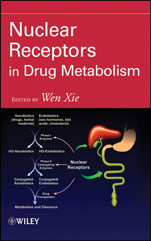
Nuclear Receptors in Drug Metabolism
ISBN 9780470086797
Autor: Wen Xie
Wydawca: Wiley
Dostępność: 3-6 tygodni
Cena: 617,40 zł
Przed złożeniem zamówienia prosimy o kontakt mailowy celem potwierdzenia ceny.
ISBN13: |
9780470086797 |
ISBN10: |
0470086793 |
Autor: |
Wen Xie |
Oprawa: |
Hardback |
Rok Wydania: |
2008-11-14 |
Ilość stron: |
352 |
Wymiary: |
241x158 |
Tematy: |
MJ |
Integrating the findings from several disciplines, Nuclear Receptors in Drug Metabolism enables readers to more accurately predict drug metabolism and drug–drug interactions as well as physiological outcomes. It offers a comprehensive review of the role of nuclear hormone receptors as transcriptional regulators of drug–metabolizing enzymes and transporters, helping readers understand what′s known, what′s in development, and what′s on the horizon. In addition to drug metabolism and drug development, the book also emphasizes clinical drug use, therapeutic potentials, and pharmacogenetics.
Nuclear Receptors in Drug Metabolism features a team of expert authors. Their contributions are based not only on a thorough analysis and synthesis of the primary literature, but also their own firsthand experiences in the drug development labs. With their guidance, readers gain a deep understanding of how nuclear hormone receptors function in regulating drug–metabolizing enzymes and transporters. Among the topics covered are:
Establishing orphan nuclear receptors PXR and CAR as xenobiotic receptors
Nuclear receptor–mediated regulation of phase II conjugating enzymes and drug transporters
Structure and function of PXR and CAR
Animal models of xenobiotic nuclear receptors and their utility in drug development
Nuclear receptors and drug–drug interactions of prescription drugs and herbal medicines
Genetic variants of xenobiotic receptors and their implications in drug metabolism and pharmacogenetics
Regulation of drug–metabolizing enzymes and transporters by nuclear receptors other than PXR and CAR
Drug development scientists will find a wealth of new information and approaches to support their efforts to develop new drugs that effectively treat such diseases as cancer, coronary heart disease, diabetes, and liver diseases.
Spis treści:
Preface.<
/b>
Abbreviations.
Contributors.
Chapter 1. Drug Metabolism: Significance and Challenges (Chandra Prakash and Alfin D.N. Vaz).
1.1. Introduction.
1.2. Phase I Drug Metabolizing Enzymes.
1.3. Phase II Conjugative Enzymes.
1.4. Drug Efflux Transporters.
1.5. Drug Uptake Transporters.
1.6. Challenges in Drug Metabolism.
1.7. Summary.
1.8. References.
Chapter 2. Establishing Orphan Nuclear Receptors PXR and CAR as Xenobiotic Receptors (Tao Li, Junichiro Sonoda, and Ronald M. Evans).
2.1. Introduction.
2.2. Nuclear Receptor and Orphan Nuclear Receptor Superfamily.
2.3. Orphan Nuclear Receptors as Xenobiotic Receptors and Their Implications in Phase I Enzyme Regulation.
2.4. Perspectives.
2.5. References.
Chapter 3. Nuclear Receptor–Mediated Regulation of Phase II Conjugating Enzymes (Olivier Barbier).
3.1. Introduction.
3.2. Phase II Drug Metabolizing Enzymes.
3.3. The Xenosensors CAR and PXR: 2 Masters Regulators of Phase II Metabolism.
3.4. AhR And Nrf2, Two Important Regulators of Phase II Enzymes.
3.5. PPARS and Phase II XMEs Regulation.
3.6. FXR/LXR and Phase II XMEs Regulation.
3.7. HNF and Phase II XMEs Regulation.
3.8. Regulation of Phase II Conjugating Enzymes by Steroid and Thyroid Receptors.
3.9. Concluding remarks and perspectives.
3.10. References.
Chapter 4. Nuclear Receptor–Mediated Regulation of Drug Transporters (Oliver Burk).
4.1. Introduction.
4.2. Drug Transporters.
4.3. Induction of Drug Transporters by Activation of PXR and CAR.
4.4. Induction of Drug Transporters by Activation of PPARa.
4.5. Molecular Mechanism of PXR– and CAR–Dependent Drug Transporter Regulation.
4.6. Induction of Drug Transporter Expression and Drug Disposition.
4.7. Conclusions and Future Perspectives.
4.8. References.
Chapter 5. Structure and Function of PXR and CAR (X. Edward Zhou and H. Eric Xu
).
5.1. Introduction.
5.2. Structure and Function of PXR.
5.3. Structure and Function of CAR.
5.4. Concluding Remarks.
5.5. References.
Chapter 6. Xenobiotic Receptor CoFactors and Coregulators (John Y. L. Chiang).
6.1. Regulation of PXR and CAR Nuclear Translocation.
6.2. Nuclear Receptor Coregulators and Epigenetic Regulation of Gene Transcription.
6.3. PXR and CAR Crosstalk with other Nuclear Receptors and Transcription Factors.
6.4. PXR and CAR Regulation of Lipid and Glucose Homeostasis.
6.5. Conclusion.
6.6. References.
Chapter 7. Animal Models of Xenobiotic Nuclear Receptors and Their Utility in Drug Development (Haibiao Gong and Wen Xie).
7.1. Introduction.
7.2. PXR and CAR Loss–of–Function (Knock Out) Mouse Models.
7.3. PXR and CAR Gain–of–Function (Transgenic) Mouse Models.
7.4. Humanized Mouse Models.
7.5. Utility of Xenobiotic Mouse Models in Pharmaceutical Development.
7.6. Closing Remarks.
7.7. References.
Chapter 8. Nuclear Receptors and Drug–Drug Interactions with Prescription Drugs and Herbal Medicines (Rommel G. Tirona and Richard B. Kim).
8.1. Introduction.
8.2. Prescription Drugs/Drug Classes Commonly Involved in Inductive Interactions.
8.3. Herbal Drug Medicines Commonly Involved in Inductive Interactions.
8.4. Pharmacology of Induction.
8.5. Clinical Aspects of Induction–Type Drug Interactions.
8.6. Inhibition of Nuclear Receptors in Clinical Drug Interactions.
8.7. Nuclear Receptor–Mediated Drug Side–Effects.
8.8. Perspectives.
8.9. References.
Chapter 9. Genetic Variants of Xenobiotic Receptors and Their Implications in Drug Metabolism and Pharmacogenetics (Jatinder Lamba and Erin G. Schuetz).
9.1. PXR (Pregnane X Receptor) Background.
9.2. PXR Gene Structure.
9.3. PXR Alternative mRNAs.
9.4. Genetic Variants in PXR’s Exons and their Functional Cons
equences.
9.5. Genetic Variants In Introns 2–8 and the 3’–UTR of PXR and their Functional Consequences.
9.6. Resequencing Strategy for the PXR Promoter and Intron 1.
9.7. Genetic Variation in the PXR Promoter and 5’–UTR and its Functional Relevance.
9.8. Genetic Variation in PXR’s Intron 1 and its Functional Relevance.
9.9. In Silico Analysis for Functional Effect of SNPs in PXR’s Promoter, 5’–UTR and Intron 1.
9.10. SNPs in PXR’s Promoter and Intron 1 Affect Putative HNF Binding Sites.
9.11. PXR SNPs Have Been Associated with Intestinal and Hepatic Inflammation and Diseases.
9.12. PXR Structural Variation and other Genomic Features.
9.13. PXR Summary.
9.14. CAR–Background.
9.15. CAR Gene Structure.
9.16. CAR Alternatively Spliced RNAs.
9.17. CAR Genetic Variants (SNPs) and their Functional Consequences.
9.18. CAR Summary.
9.19. References.
Chapter 10. Beyond PXR and CAR, Regulation of Xenobiotic Metabolism by Other Nuclear Receptors (Martin Wagner, Gernot Zollner, and Michael Trauner).
10.1. Introduction.
10.2. Farnesoid X Receptor.
10.3. Hepatocyte Nuclear Factor 4.
10.4. Vitamin D receptor.
10.5. Glucocorticoid Receptor.
10.6. Peroxisome Proliferator Activated Receptors.
10.7. Aryl Hydrocarbon Receptor (AhR).
10.8. Conclusions.
10.9. References.
Chapter 11. Emerging Role of Retinoid–Related Orphan Receptor (ROR) and Its Crosst alk With LXR(Liver X Receptor) in the Regulation Of Drug–Metabolizing Enzymes (Taira Wada and Wen Xie).
11.1. Introduction.
11.2. Orphan Nuclear Receptor RORα.
11.3. A Potential Role of RORs in Xeno– and Endobiotic Gene Regulation.
11.4. LXR and its Regulation of Drug Metabolizing Enzymes.
11.5. A Functional Cross–Talk Between RORa and LXR in the Regulation of Xeno– and Endobiotic Genes.
11.6. Closing Remarks.
Inde
Koszyk
Książek w koszyku: 0 szt.
Wartość zakupów: 0,00 zł
Informacje


Kontakt
Gambit
Centrum Oprogramowania
i Szkoleń Sp. z o.o.
Al. Pokoju 29b/22-24
31-564 Kraków
Siedziba Księgarni
ul. Kordylewskiego 1
31-542 Kraków
+48 12 410 5991
+48 12 410 5987
+48 12 410 5989
Subskrypcje
Administratorem danych osobowych jest firma Gambit COiS Sp. z o.o. Na podany adres będzie wysyłany wyłącznie biuletyn informacyjny.
Autoryzacja płatności

Informacje na temat autoryzacji płatności poprzez PayU.

© Copyright 2012: GAMBIT COiS Sp. z o.o. Wszelkie prawa zastrzeżone.
Projekt i wykonanie: Alchemia Studio Reklamy