


Wydawcy
Katalog tematyczny
- Archeologia (109)
- Ekonomia, finanse, business (13704)
- Filozofia (1445)
- Historia (3040)
- Języki i językoznawstwo (2356)
- Lifestyle, hobby i rozrywka (475)
- Medycyna (9704)
- Nauki humanistyczne (4)
- Nauki o Ziemi i środowisku (2638)
- Nauki ścisłe (20412)
- Nauki społeczne (8486)
- Nauki techniczne (13450)
- Budownictwo lądowe (1045)
- Chemia przemysłowa (2258)
- Elektronika i telekomunikacja (3287)
- Energetyka (1122)
- Inne nauki stosowane (363)
- Inżynieria biochemiczna (507)
- Inżynieria transportu (232)
- Mechanika i materiały (3316)
- Nauka o środowisku (321)
- Rolnictwo (507)
- Technika, ogólnie (475)
- Prawo (1696)
- Publikacje informacyjne i interdyscyplinarne (1288)
- Religia i wierzenia (917)
- Technika komputerowa (4067)
- Zdrowie, relacje międzyludzkie i rozwój osobisty (657)





Informacje szczegółowe o książce
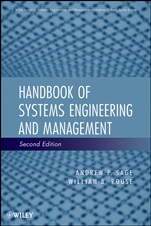
Handbook of Systems Engineering and Management
ISBN 9780470083536
Autor: Andrew P. Sage, William B. Rouse
Wydawca: Wiley
Dostępność: 3-6 tygodni
Cena: 1 325,10 zł
Przed złożeniem zamówienia prosimy o kontakt mailowy celem potwierdzenia ceny.
ISBN13: |
9780470083536 |
ISBN10: |
0470083530 |
Autor: |
Andrew P. Sage, William B. Rouse |
Oprawa: |
Hardback |
Rok Wydania: |
2009-05-15 |
Numer Wydania: |
2nd Edition |
Ilość stron: |
1504 |
Wymiary: |
258x177 |
Tematy: |
TJ |
The trusted handbook—now in a new edition
This newly revised handbook presents a multifaceted view of systems engineering from process and systems management perspectives. It begins with a comprehensive introduction to the subject and provides a brief overview of the thirty–four chapters that follow. This introductory chapter is intended to serve as a "field guide" that indicates why, when, and how to use the material that follows in the handbook.
Topical coverage includes: systems engineering life cycles and management; risk management; discovering system requirements; configuration management; cost management; total quality management; reliability, maintainability, and availability; concurrent engineering; standards in systems engineering; system architectures; systems design; systems integration; systematic measurements; human supervisory control; managing organizational and individual decision–making; systems reengineering; project planning; human systems integration; information technology and knowledge management; and more.
The handbook is written and edited for systems engineers in industry and government, and to serve as a university reference handbook in systems engineering and management courses. By focusing on systems engineering processes and systems management, the editors have produced a long–lasting handbook that will make a difference in the design of systems of all types that are large in scale and/or scope.
Spis treści:
Preface.
Contributors.
An Introduction to Systems Engineering and Systems Management (Andrew P. Sage and William B. Rouse).
Systems Engineering.
Importance of Technical Direction and Systems Management.
Additional Definitions of Systems Engineering.
Life–Cycle Methodologies, or Processes, for Systems Engineering.
The Rest of the Handbook of Systems Engineering and Management.
Knowledge Map of the Systems Engineering
and Management Handbook.
The Many Dimensions of Systems Engineering.
People, Organizations, Technology, and Architectures and System Families.
References.
1 Systems Engineering Life Cycles: Life Cycles for Research, Development, Test, and Evaluation; Acquisition; and Planning and Marketing (F. G. Patterson, Jr.).
1.1 Introduction.
1.2 Classification of Organizational Processes.
1.3 Research, Development, Test, and Evaluation Life Cycles.
1.4 System Acquisition or Production Life Cycles.
1.5 The Planning and Marketing Life Cycle.
1.6 Software Acquisition life–Cycle Models.
1.7 Trends in Systems Engineering Life Cycles.
1.8 Conclusion.
References.
2 Systems Engineering Management: The Multidisciplinary Discipline (Aaron J. Shenhar and Brian Sauser).
2.1 Introduction.
2.2 Defining Systems Engineering Management.
2.3 Activities and Roles of the Systems Engineering Manager.
2.4 Toward a Comprehensive Framework for the Implementation of Systems Engineering Management: The Four–Dimensional “Diamond Taxonomy”—NTCP.
2.5 Different Systems Engineering Management Roles for Various Project Types.
2.6 The Skills, Tools, and Disciplines Involved in Systems Engineering Management.
2.7 Developing Educational and Training Programs in Systems Engineering Management.
2.8 Conclusion.
References.
3 Risk Management (Yacov Y. Haimes).
3.1 The Process of Risk Assessment and Management.
3.2 The Holistic Approach to Risk Analysis.
3.3 Risk of Extreme Events.
3.4 The Partitioned Multiobjective Risk Method.
3.5 The Characteristics of Risk in Human–Engineered Systems.
3.6 Selected Cases of Risk–Based Engineering Problems.
3.7 Conclusion.
Acknowledgment.
References.
4 Discovering System Requirements (A. Terry Bahill and Frank F. Dean).
4.1 Introduction.
4.2 Stating The Problem.
4.3 What Are
Requirements?
4.4 Qualities of a Good Requirement.
4.5 Characterization of Requirements.
4.6 The Requirements Development and Management Process.
4.7 Fitting the Requirements Process into the Systems Engineering Process.
4.8 Related Items.
4.9 Requirements Volatility.
4.10 Inspections.
4.11 A Heuristic Example of Requirements.
4.12 The Hybrid Process for Capturing Requirements.
4.13 Conclusion.
Acknowledgments.
References.
5 Configuration Management (Peggy S. Brouse).
5.1 Introduction.
5.2 Configuration Management within the System Life Cycle.
5.3 Configuration Status Accounting and Configuration Auditing.
5.4 Configuration Management Responsibilities.
5.5 Configuration Management in Process Improvement.
5.6 Configuration Management Tools.
5.7 Conclusion.
References.
6 Cost Management (Benjamin S. Blanchard).
6.1 Introduction.
6.2 Life–Cycle Costing.
6.3 Functional Economic Analysis.
6.4 Work Breakdown Structure.
6.5 Activity–Based Costing.
6.6 Cost and Effectiveness Analysis.
6.7 System Evaluation and Cost Control.
6.8 Conclusion.
References.
7 Total Quality Management (James L. Melsa).
7.1 Introduction.
7.2 Historical Background of the Quality Movement.
7.3 Total Quality Management Tools.
7.4 Total Quality Management Philosophies.
7.5 Conclusion.
Appendix 7A The ISO 9000:2000 Standards.
Appendix 7B Malcolm Baldrige Award Criteria.
Appendix 7C Deming’s Quality Philosophy.
References.
8 Reliability, Maintainability, and Availability (Michael Pecht).
8.1 Introduction and Motivation.
8.2 Evolution of RMA Engineering.
8.3 Allocation.
8.4 Design for Reliability.
8.5 System Reliability Assessment Modeling.
8.6 Fault Trees.
8.7 Design for Maintainability.
8.8 Data Collection, Classification, and Reporting.
8.9 Warranties and Life–Cycle Costs
.
8.10 Operational Readiness and Availability.
References.
9 Concurrent Engineering (Andrew Kusiak and Nick Larson).
9.1 Introduction.
9.2 Concurrent Engineering and the Product Life Cycle.
9.3 Building a Concurrent Engineering Environment: A Systems Engineering Perspective.
9.4 Managing a Concurrent Engineering Environment: Tools and Techniques.
9.5 Implementation.
9.6 Concurrnt Engineering in the Future.
9.7 Conclusion.
Acknowledgment.
References.
10 Engineering the Enterprise as a System (William B. Rouse).
10.1 Introduction.
10.2 Essential Challenges.
10.3 Enterprise Transformation.
10.4 Enterprises as Systems.
10.5 Transformation Framework.
10.6 Implications for Systems Engineering and Management.
10.7 Conclusion.
References.
11 Standards in Systems Engineering (Stephen C. Lowell).
11.1 Introduction.
11.2 Definition.
11.3 Historical Highlights of Standards in the United States.
11.4 Reasons for Using Specifications and Standards.
11.5 Proper Application of Specifications and Standards.
11.6 Selection and Development of Specifications and Standards.
11.7 Useful Standards in the Systems Engineering Process.
11.8 Locating and Obtaining Specifications and Standards.
12 System Architectures (Alexander H. Levis).
12.1 Introduction.
12.2 Definition of Architectures.
12.3 Structured Analysis Approach.
12.4 The Executable Model.
12.5 Physical Architecture.
12.6 Performance Evaluation.
12.7 Object–Oriented Approach.
12.8 Architecture Evaluation.
12.9 The DoD Architecture Framework.
12.10 Conclusion.
Acknowledgment.
References.
13 Systems Design (K. Preston White, Jr.).
13.1 Introduction.
13.2 What is Systems Design?
13.3 Steps in the Design process.
13.4 Design Tools.
13.5 A Brief History of Recent Design Theory.
13.6 Design and Concurren
Koszyk
Książek w koszyku: 0 szt.
Wartość zakupów: 0,00 zł
Informacje


Kontakt
Gambit
Centrum Oprogramowania
i Szkoleń Sp. z o.o.
Al. Pokoju 29b/22-24
31-564 Kraków
Siedziba Księgarni
ul. Kordylewskiego 1
31-542 Kraków
+48 12 410 5991
+48 12 410 5987
+48 12 410 5989
Subskrypcje
Administratorem danych osobowych jest firma Gambit COiS Sp. z o.o. Na podany adres będzie wysyłany wyłącznie biuletyn informacyjny.
Autoryzacja płatności

Informacje na temat autoryzacji płatności poprzez PayU.

© Copyright 2012: GAMBIT COiS Sp. z o.o. Wszelkie prawa zastrzeżone.
Projekt i wykonanie: Alchemia Studio Reklamy