


Wydawcy
Katalog tematyczny
- Archeologia (109)
- Ekonomia, finanse, business (13704)
- Filozofia (1445)
- Historia (3040)
- Języki i językoznawstwo (2356)
- Lifestyle, hobby i rozrywka (475)
- Medycyna (9704)
- Nauki humanistyczne (4)
- Nauki o Ziemi i środowisku (2638)
- Nauki ścisłe (20412)
- Astronomia (294)
- Biologia (5119)
- Chemia (6540)
- Chemia analityczna (361)
- Chemia fizyczna (346)
- Chemia nieorganiczna (137)
- Chemia organiczna (535)
- Krystalografia (27)
- Minerologia (46)
- Fizyka (3309)
- Matematyka (4574)
- Nauki ścisłe, ogólnie (503)
- Nauki społeczne (8486)
- Nauki techniczne (13450)
- Prawo (1696)
- Publikacje informacyjne i interdyscyplinarne (1288)
- Religia i wierzenia (917)
- Technika komputerowa (4067)
- Zdrowie, relacje międzyludzkie i rozwój osobisty (657)





Informacje szczegółowe o książce
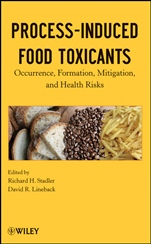
Process–Induced Food Toxicants: Occurrence, Formation, Mitigation, and Health Risks
ISBN 9780470074756
Autor: Richard H. Stadler, David R. Lineback
Wydawca: Wiley
Dostępność: 3-6 tygodni
Cena: 871,50 zł
Przed złożeniem zamówienia prosimy o kontakt mailowy celem potwierdzenia ceny.
ISBN13: |
9780470074756 |
ISBN10: |
0470074752 |
Autor: |
Richard H. Stadler, David R. Lineback |
Oprawa: |
Hardback |
Rok Wydania: |
2008-12-19 |
Ilość stron: |
724 |
Wymiary: |
234x162 |
Tematy: |
PN |
A comprehensive look at analytical, health, and risk management issues
Process–Induced Food Toxicants provides a much–needed single–source reference on food process toxicants that also answers important food safety questions. The text presents currently known toxicants, and includes a balanced view, given by renowned experts in industry, academia, and the regulatory field, of mitigation options, risk assessment, and risk management for these compounds.
The text begins by considering different processes used in the manufacture and processing of foods—including thermal treatment, drying, fermentation, preservation, and high hydrostatic pressure processing—and examines the risks of potential contaminant/toxicant formation as they relate to each processing method. For each subject covered, the book offers a consistent approach featuring:
Occurrence in food
Methods of analysis
Mechanisms of formation
Approaches to mitigation/reduction
Human exposure through the food supply
Potential health risks
Risk management
Process–Induced Food Toxicants gives readers the latest information based on results from recent research, as well as new technological and methodological developments and how they bear on mitigation. These include both analytical methodologies and practical systems such as HACCP for managing food safety concerns. Process–Induced Food Toxicants provides a wide range of students and professionals in food science, food technology, toxicology, public health, public policy, and other related disciplines with a unique, comprehensive, and invaluable resource.
Spis treści:
Preface.
List of contributors.
PART I: Specific Toxicants Related to Processing Technology.
1 Introduction to Food Process Toxicants (David R. Lineback and Richard H. Stadler).
1.1 His
tory and Role of Food Processing.
1.2 General Approaches to Food Processing.
1.3 Concerns about Food Safety during Food Processing.
1.4 Food–Borne Processing Toxicants: Setting Priorities.
1.5 Issues of Process Toxicants Present in Small Amounts in Foods.
1.6 Outlook.
2 Thermal Treatment.
2.1 Acrylamide (Craig Mills, Donald S. Mottram, and Bronislaw L. Wedzicha).
2.2 Acrolein (Takayuki Shibamoto).
2.3 Heterocyclic Aromatic Amines (Robert J. Turesky).
2.4 Hazards of Dietary Furan (P. Michael Bolger, Shirley S–H. Tao, and Michael Dinovi).
2.5 Hydroxymethylfurfural (HMF) and R elated Compounds (Francisco J. Morales).
2.6 Chloropropanols and Chloroesters (Colin G. Hamlet and Peter A. Sadd).
2.7 Maillard Reaction of Proteins and Advanced Glycation End Products (AGE s) in Food (Thomas Henle).
2.8 Polyaromatic Hydrocarbons (Jong–Heum Park and Trevor M. Penning).
3 Fermentation.
3.1 Ethyl Carbamate (Urethane) (Colin G. Hamlet).
3.2 Biogenic Amines (Livia Simon Sarkadi).
4 Preservation.
4.1 N–Nitrosamines, Including N–Nitrosoaminoacids and Potential Further Nonvolatiles (Michael Habermeyer and Gerhard Eisenbrand).
4.2 Food Irradiation (Eileen M. Stewart).
4.3 Benzene (Adam Becalski and Patricia Nyman).
5 High Hydrostatic Pressure (Alexander Mathys and Dietrich Knorr).
5.1 Introduction.
5.2 HPP.
5.3 Chemical and Matrix Effects.
5.4 Microbial Effects.
5.5 Allergenic Potential.
5.6 Conclusion.
Annex.
References.
6 Alkali and/or Acid Treatment.
6.1 The Dietary Significance of Processing–Induced Lysinoalanine in Food (Mendel Friedman).
6.2 Dietary Significance of Process
ing–Induced D–Amino Acids (Mendel Friedman).
6.3 Chloropropanols (Jan Velíšek).
PART II: General Considerations.
7 Application of HACCP for the Management of Processing Contaminants (Yasmine Motarjemi, Richard H. Stadler, Alfred Studer, and Valeria Damiano).
7.1 Introduction.
7.2 Processing Contaminants: Risks and Control Measures.
7.3 HACCP: the Backbone of Food Safety Assurance.
7.4 Application of HACCP to Processing Contaminants.
7.5 A Case Study on the Application of the HACCP Approach for the Management of Processing Contaminants: Extruded Cereal Snack.
7.6 Conclusions.
Acknowledgment.
References.
8 Emerging Food Technologies (Fanbin Kong and R. Paul Singh).
8.1 Introduction.
8.2 Pulsed Electric Fields.
8.3 Pulsed UV Light.
8.4 Ultrasound.
8.5 Microwave and Radio–Frequency Processing.
8.6 Ohmic Heating.
8.7 Infrared Heating.
References.
9 Food Processing and Nutritional Aspects (Josef Burri, Constantin Bertoli, and Richard H. Stadler).
9.1 Introduction.
9.2 Food Processing and Major Benefits.
9.3 Conclusions and Future Research Needs.
References.
10 Risk Communication (David Schmidt and Danielle Schor).
10.1 Introduction.
10.2 Attitudes about Food–Related Risks.
10.3 Ranking Risks: Placing Risks in Context.
10.4 Effective Communication Techniques: Examples.
10.5 Challenges and Barriers.
10.6 Future Prospects.
References.
11 Risk/Risk and R isk/Benefit Considerations (Leif Busk).
11.1 Introduction.
11.2 Mitigation and Potential Risk of Other Possible Food Safety–Related Issues.
11.3 Research Needs.
11.4 Challenges and Future Prospects.
References.
Index.
Nota biograficzna:
Richard H. Stadler, PhD, is the head of the Quality Management Department at the Nestlé Product Tech
nology Center in Orbe, Switzerland.
DAVID R. LINEBACK, PhD, is the Director (Retired) of the Joint Institute for Food Safety and Applied Nutrition (JIFSAN) at the University of Maryland.
Okładka tylna:
A comprehensive look at analytical, health, and risk management issues
Process–Induced Food Toxicants provides a much–needed single–source reference on food process toxicants that also answers important food safety questions. The text presents currently known toxicants, and includes a balanced view, given by renowned experts in industry, academia, and the regulatory field, of mitigation options, risk assessment, and risk management for these compounds.
The text begins by considering different processes used in the manufacture and processing of foods—including thermal treatment, drying, fermentation, preservation, and high hydrostatic pressure processing—and examines the risks of potential contaminant/toxicant formation as they relate to each processing method. For each subject covered, the book offers a consistent approach featuring:
Occurrence in food
Methods of analysis
Mechanisms of formation
Approaches to mitigation/reduction
Human exposure through the food supply
Potential health risks
Risk management
Process–Induced Food Toxicants gives readers the latest information based on results from recent research, as well as new technological and methodological developments and how they bear on mitigation. These include both analytical methodologies and practical systems such as HACCP for managing food safety concerns. Process–Induced Food Toxicants provides a wide range of students and professionals in food science, food technology, toxicology, public health, public policy, and other related disciplines with a unique, comprehensive, and invaluable resource.
Koszyk
Książek w koszyku: 0 szt.
Wartość zakupów: 0,00 zł
Informacje


Kontakt
Gambit
Centrum Oprogramowania
i Szkoleń Sp. z o.o.
Al. Pokoju 29b/22-24
31-564 Kraków
Siedziba Księgarni
ul. Kordylewskiego 1
31-542 Kraków
+48 12 410 5991
+48 12 410 5987
+48 12 410 5989
Subskrypcje
Administratorem danych osobowych jest firma Gambit COiS Sp. z o.o. Na podany adres będzie wysyłany wyłącznie biuletyn informacyjny.
Autoryzacja płatności

Informacje na temat autoryzacji płatności poprzez PayU.

© Copyright 2012: GAMBIT COiS Sp. z o.o. Wszelkie prawa zastrzeżone.
Projekt i wykonanie: Alchemia Studio Reklamy