


Wydawcy
Katalog tematyczny
- Archeologia (109)
- Ekonomia, finanse, business (13704)
- Filozofia (1445)
- Historia (3040)
- Języki i językoznawstwo (2356)
- Lifestyle, hobby i rozrywka (475)
- Medycyna (9704)
- Nauki humanistyczne (4)
- Nauki o Ziemi i środowisku (2638)
- Nauki ścisłe (20412)
- Nauki społeczne (8486)
- Edukacja (229)
- Kryminologia, opieka spełeczna (284)
- Obronność (10)
- Polityka (1389)
- Psychologia (777)
- Socjologia (410)
- Społeczeństwo i kultura (187)
- Nauki techniczne (13450)
- Prawo (1696)
- Publikacje informacyjne i interdyscyplinarne (1288)
- Religia i wierzenia (917)
- Technika komputerowa (4067)
- Zdrowie, relacje międzyludzkie i rozwój osobisty (657)





Informacje szczegółowe o książce
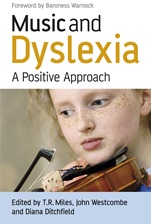
Music and Dyslexia: A Positive Approach
ISBN 9780470065570
Autor: Timothy R. Miles, John Westcombe, Diana Ditchfield
Wydawca: Wiley
Dostępność: 3-6 tygodni
Cena: 561,75 zł
Przed złożeniem zamówienia prosimy o kontakt mailowy celem potwierdzenia ceny.
ISBN13: |
9780470065570 |
ISBN10: |
0470065575 |
Autor: |
Timothy R. Miles, John Westcombe, Diana Ditchfield |
Oprawa: |
Hardback |
Rok Wydania: |
2008-02-29 |
Ilość stron: |
196 |
Wymiary: |
235x167 |
Tematy: |
JD |
This book is a sequel to the highly successful and insightful Music and Dyslexia –– Opening New Doors. It takes up some of the themes mentioned in the earlier book, including sight–reading and the problems of mastering musical notation. The positive approach to dyslexia advocated by the contributors reflects their experience over many years and will be an encouragement alike to dyslexic musicians and their teachers.
The book has four sections. The first section, tackling problems, explains what dyslexia is, describes some of the developmental differences of which teachers and others need to be aware and outlines some of the circumstances which may cause problems for dyslexics that are not obvious at first glance. The second section, in and around the classroom, looks at significant aspects of teaching and learning music in the pupilâ s life. Early years, winning over reluctant musicians, musical games to play in the language classroom, sight–reading and what role computers can play are all discussed, with practical ideas and suggestions for the teacher.
The third section looks at strategies and successes. It embraces both the maturing voice and oboes as well as links between acknowledged early precepts and advice given at a critical period of a studentâ s life in Higher Education. The final section looks at the neurological aspect of dyslexia, focusing on the newest research in brain imaging to expand our knowledge of what the brain is doing while music is being engaged in.
Music and Dyslexia â A Positive Approach increases understanding and imaginatively challenges the difficulties those with dyslexia and their teachersâ encounter whilst positively urging all to enjoy musicâ s pleasures.
Spis treści:
Foreword.
List of Contributors.
Preface.
Section I: Tackling Problems.
1. Dyslexia and
other developmental Differences (Tim Miles)
2. Things that can go wrong (Tim Miles)
Section II: In and around the Classroom (Christine McRitchie Pratt)
4. Classroom Rhythm games for literacy support (Katie Overy)
5. Early Years: Deirdre Starts to Learn Piano (Olivia McCarth and Diana Ditchfield)
6. Winning Over the Reluctants (Christine McRitchie Pratt, Diana Ditchfield, Sheila Oglethorpe and John Westcombe)
7;. Can Music Lessons Help the Dyslexic Learner? (Sheila Oglethorpe)
8. Parallels Between the Teaching of Musical and Mathematical Notation (Tim Miles)
9. The Paper Work (Diana Ditchfield)
10. Sight–reading (Sheila Oglethorpe)
11. Sight–reading and Memory (Michael Lea)
12. Ten Top Tips and Thoughts (Nigel Clarke)
13. Can Computers Help? Matching the Inner with the Outer Ear (Adam Apostoli)
Section III: Strategies and Success.
14. Positive Connections Across the Generations (Annemarie Sand John Westcombe)
15. Similarities and Differences in the Dyslexic Voice (Paula Bishop–Liebler)
16. Thirty–seven Oboists (Carolyn King)
17. Suzuki Benefits for Children with Dyslexia (Jenny Macmillan)
18. Dyslexia: No Problem (Diana Ditchfield)
Section IV: Science takes Us Forward.
19. Insights from Brain Imaging (Katie Overy)
20. Music Reading: A Cognitive Neuroscience Approach (Lauren Stewart)
Index.
Nota biograficzna:
Tim Miles, OBE, MA, PhD, CPsychol., FBPS, was the first Professor of Psychology at the University of Wales, Bangor, serving from 1963 to 1987, and is now Professor Emeritus. He has published widely both on dyslexia and other topics. he is an amateur Cellist.
Okładka tylna:
This book is a sequel to the highly successful and insightful Music and Dyslexia –– Opening New Doors. It takes up some of the themes mentioned in the earlier book, including sight–reading and the problems o
f mastering musical notation. The positive approach to dyslexia advocated by the contributors reflects their experience over many years and will be an encouragement alike to dyslexic musicians and their teachers.
The book has four sections. The first section, tackling problems, explains what dyslexia is, describes some of the developmental differences of which teachers and others need to be aware and outlines some of the circumstances which may cause problems for dyslexics that are not obvious at first glance. The second section, in and around the classroom, looks at significant aspects of teaching and learning music in the pupilâ s life. Early years, winning over reluctant musicians, musical games to play in the language classroom, sight–reading and what role computers can play are all discussed, with practical ideas and suggestions for the teacher.
The third section looks at strategies and successes. It embraces both the maturing voice and oboes as well as links between acknowledged early precepts and advice given at a critical period of a studentâ s life in Higher Education. The final section looks at the neurological aspect of dyslexia, focusing on the newest research in brain imaging to expand our knowledge of what the brain is doing while music is being engaged in.
Music and Dyslexia â A Positive Approach increases understanding and imaginatively challenges the difficulties those with dyslexia and their teachersâ encounter whilst positively urging all to enjoy musicâ s pleasures.
Koszyk
Książek w koszyku: 0 szt.
Wartość zakupów: 0,00 zł
Informacje


Kontakt
Gambit
Centrum Oprogramowania
i Szkoleń Sp. z o.o.
Al. Pokoju 29b/22-24
31-564 Kraków
Siedziba Księgarni
ul. Kordylewskiego 1
31-542 Kraków
+48 12 410 5991
+48 12 410 5987
+48 12 410 5989
Subskrypcje
Administratorem danych osobowych jest firma Gambit COiS Sp. z o.o. Na podany adres będzie wysyłany wyłącznie biuletyn informacyjny.
Autoryzacja płatności

Informacje na temat autoryzacji płatności poprzez PayU.

© Copyright 2012: GAMBIT COiS Sp. z o.o. Wszelkie prawa zastrzeżone.
Projekt i wykonanie: Alchemia Studio Reklamy