


Wydawcy
Katalog tematyczny
- Archeologia (109)
- Ekonomia, finanse, business (13704)
- Filozofia (1445)
- Historia (3040)
- Języki i językoznawstwo (2356)
- Lifestyle, hobby i rozrywka (475)
- Medycyna (9704)
- Nauki humanistyczne (4)
- Nauki o Ziemi i środowisku (2638)
- Nauki ścisłe (20412)
- Astronomia (294)
- Biologia (5119)
- Chemia (6540)
- Chemia analityczna (361)
- Chemia fizyczna (346)
- Chemia nieorganiczna (137)
- Chemia organiczna (535)
- Krystalografia (27)
- Minerologia (46)
- Fizyka (3309)
- Matematyka (4574)
- Nauki ścisłe, ogólnie (503)
- Nauki społeczne (8486)
- Nauki techniczne (13450)
- Prawo (1696)
- Publikacje informacyjne i interdyscyplinarne (1288)
- Religia i wierzenia (917)
- Technika komputerowa (4067)
- Zdrowie, relacje międzyludzkie i rozwój osobisty (657)





Informacje szczegółowe o książce
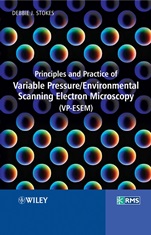
Principles and Practice of Variable Pressure / Environmental Scanning Electron Microscopy (VP–ESEM)
ISBN 9780470065402
Autor: Debbie Stokes
Wydawca: Wiley
Dostępność: 3-6 tygodni
Cena: 382,20 zł
Przed złożeniem zamówienia prosimy o kontakt mailowy celem potwierdzenia ceny.
ISBN13: |
9780470065402 |
ISBN10: |
0470065400 |
Autor: |
Debbie Stokes |
Oprawa: |
Hardback |
Rok Wydania: |
2008-11-14 |
Ilość stron: |
234 |
Wymiary: |
238x163 |
Tematy: |
PN |
Scanning electron microscopy (SEM) is a technique of major importance and is widely used throughout the scientific and technological communities. The modern SEM is capable of resolution on the order of a few Angstroms (i.e. sub–nanometer), subject to the limits of electron–specimen interactions. However, for a long time it has been apparent that the high vacuum SEM needed to develop in respects other than increased resolution. Hence the advent of SEMs that utilise a gas for image formation while simultaneously providing charge stabilisation for electrically non–conductive specimens and/or a suitable environment for materials and experiments involving water.
This text outlines the principles and applications in a generic way, applicable to readers familiar with any of the types of VP–ESEM on the market, irrespective of manufacturer
The book addresses various aspects of the topic in six chapters.Chapter 1 – A brief historical overview contains background information charting the development and growth of the technique and its underlying principles
Chapter 2 – Principles of SEM gives an overview of various aspects of the conventional high vacuum SEM, in preparation for later chapters covering the greater variety of operating conditions associated with the VP–ESEM
Chapter 3 – General principles of VP–ESEM: utilising a gas reviews the basic scientific principles of signal formation and collection in a gaseous environment, including specimen stability as a function of water vapour pressure and/or temperature.
Chapter 4 – Imaging and analysis in the VP–ESEM: the influence of a gas looks at the properties and effects of different gases, pressures and primary electron energies, with particular attention to electron scattering and its effects on imaging and microanalysis
Chapter 5 – I
maging uncoated specimens in the VP–ESEM briefly looks at the pros and cons of putting native–state materials in the VP–ESEM, such as primary electron beam penetration, radiation damage and, crucially, the properties of materials in an electric field and the influence of gaseous positive ions
Chapter 6 – A lab in a chamber – in situ methods in VP–ESEM and other applications concludes the book with a survey of dynamic experiments such as: tensile testing, vapour–deposition of nanostructures, oxidation and reduction,lithography, ice crystallization and wetting of surfaces, to name a few, as well as unique imaging methods, plus an extensive review of the literature covering both hard and soft materials.
This book is intended as a guide to help those that are just starting out with VP–ESEM, as well as those with more experience looking to gain a deeper appreciation of the concepts.
Spis treści:
Contents
Chapter 1 –A brief historical overview
1.1 Scanning electron microscopy
1.2 The development of imaging in a gas environment
Chapter 2 –Principles of SEM
2.1 Introduction
2.2 Electron sources
2.3 Electron optics
2.4 Signals and detection
2.5 Practical aspects of electron beam irradiation
2.6 the sem in operation
Chapter 3 –General principles of VP–ESEM: utilising a gas
3.1 Introduction
3.2 VP–ESEM instrumentation
3.3 Signal generation in a gas
3.4 Imaging with water vapour
Chapter 4 –Imaging and analysis in the VP–ESEM: the influence of a gas
4.1 Introduction
4.2 Background to theoretical calculations
4.3 Which gas?
4.4 Exploring the gas path lengt
h
4.5 How much gas?
4.6 X–ray microanalysis in the VP–ESEM
Chapter 5 –Imaging uncoated specimens in the VP–ESEM
5.1 Introduction
5.2 Electronic structure
5.3 Factors affecting secondary electron emission
5.4 The influence of the specimen on the system
5.5 Time– and temperature–dependent effects
5.6 imaging soft materials
5.7 Effects of ions on imaging
5.8 Imaging with a gas: summary
Chapter 6 –A lab in a chamber – in situ methods in VP–ESEM and other applications
6.1 Introduction
6.2 Nanocharacterisation of insulating materials
6.3 In situ experiments
6.4 Other applications
Okładka tylna:
Scanning electron microscopy (SEM) is a technique of major importance and is widely used throughout the scientific and technological communities. The modern SEM is capable of resolution on the order of a few Angstroms (i.e. sub–nanometer), subject to the limits of electron–specimen interactions. However, for a long time it has been apparent that the high vacuum SEM needed to develop in respects other than increased resolution. Hence the advent of SEMs that utilise a gas for image formation while simultaneously providing charge stabilisation for electrically non–conductive specimens and/or a suitable environment for materials and experiments involving water.
This text outlines the principles and applications in a generic way, applicable to readers familiar with any of the types of VP–ESEM on the market, irrespective of manufacturer
The book addresses various aspects of the topic in six chapters.Chapter 1 – A brief historical overview contains background information charting the development and growth of the technique and its underlying principles
Chapter 2 – Principles of SEM gives an overview of various aspects of t
he conventional high vacuum SEM, in preparation for later chapters covering the greater variety of operating conditions associated with the VP–ESEM
Chapter 3 – General principles of VP–ESEM: utilising a gas reviews the basic scientific principles of signal formation and collection in a gaseous environment, including specimen stability as a function of water vapour pressure and/or temperature.
Chapter 4 – Imaging and analysis in the VP–ESEM: the influence of a gas looks at the properties and effects of different gases, pressures and primary electron energies, with particular attention to electron scattering and its effects on imaging and microanalysis
Chapter 5 – Imaging uncoated specimens in the VP–ESEM briefly looks at the pros and cons of putting native–state materials in the VP–ESEM, such as primary electron beam penetration, radiation damage and, crucially, the properties of materials in an electric field and the influence of gaseous positive ions
Chapter 6 – A lab in a chamber – in situ methods in VP–ESEM and other applications concludes the book with a survey of dynamic experiments such as: tensile testing, vapour–deposition of nanostructures, oxidation and reduction,lithography, ice crystallization and wetting of surfaces, to name a few, as well as unique imaging methods, plus an extensive review of the literature covering both hard and soft materials.
This book is intended as a guide to help those that are just starting out with VP–ESEM, as well as those with more experience looking to gain a deeper appreciation of the concepts.
Koszyk
Książek w koszyku: 0 szt.
Wartość zakupów: 0,00 zł
Informacje


Kontakt
Gambit
Centrum Oprogramowania
i Szkoleń Sp. z o.o.
Al. Pokoju 29b/22-24
31-564 Kraków
Siedziba Księgarni
ul. Kordylewskiego 1
31-542 Kraków
+48 12 410 5991
+48 12 410 5987
+48 12 410 5989
Subskrypcje
Administratorem danych osobowych jest firma Gambit COiS Sp. z o.o. Na podany adres będzie wysyłany wyłącznie biuletyn informacyjny.
Autoryzacja płatności

Informacje na temat autoryzacji płatności poprzez PayU.

© Copyright 2012: GAMBIT COiS Sp. z o.o. Wszelkie prawa zastrzeżone.
Projekt i wykonanie: Alchemia Studio Reklamy