


Wydawcy
Katalog tematyczny
- Archeologia (109)
- Ekonomia, finanse, business (13704)
- Filozofia (1445)
- Historia (3040)
- Języki i językoznawstwo (2356)
- Lifestyle, hobby i rozrywka (475)
- Medycyna (9704)
- Nauki humanistyczne (4)
- Nauki o Ziemi i środowisku (2638)
- Nauki ścisłe (20412)
- Astronomia (294)
- Biologia (5119)
- Chemia (6540)
- Chemia analityczna (361)
- Chemia fizyczna (346)
- Chemia nieorganiczna (137)
- Chemia organiczna (535)
- Krystalografia (27)
- Minerologia (46)
- Fizyka (3309)
- Matematyka (4574)
- Nauki ścisłe, ogólnie (503)
- Nauki społeczne (8486)
- Nauki techniczne (13450)
- Prawo (1696)
- Publikacje informacyjne i interdyscyplinarne (1288)
- Religia i wierzenia (917)
- Technika komputerowa (4067)
- Zdrowie, relacje międzyludzkie i rozwój osobisty (657)





Informacje szczegółowe o książce
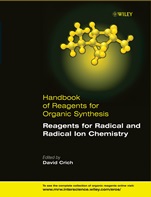
Reagents for Radical and Radical Ion Chemistry
ISBN 9780470065365
Autor: David Crich
Wydawca: Wiley
Dostępność: 3-6 tygodni
Cena: 843,15 zł
Przed złożeniem zamówienia prosimy o kontakt mailowy celem potwierdzenia ceny.
ISBN13: |
9780470065365 |
ISBN10: |
0470065362 |
Autor: |
David Crich |
Oprawa: |
Hardback |
Rok Wydania: |
2008-11-27 |
Ilość stron: |
722 |
Wymiary: |
289x223 |
Tematy: |
PN |
Radicals and radical ions have long surpassed their image as highly reactive, uncontrollable intermediates unsuitable for application in fine chemical synthesis. Nowhere is this more apparent than in the area of stereoselective radical reactions which, as recently as the 1980s, were considered unlikely, but which, with improved methods for radical generation, now compete on an equal footing with their more familiar two electron counterparts. Unfortunately, most undergraduate organic chemistry textbooks still introduce budding chemists to radical reactions through the chlorination of methane, and so convey the erroneous general impression of complex and unselective chemistry. The goal of this Handbook is to illuminate the broad selection of reagents available for open shell reactions, and to illustrate the wide variety of highly selective transformations that may be highly selective transformations that may be readily achieved with high degrees of functional group compatibility through their use. Accordingly, it is hoped that the Handbook will stimulate the ever wider use of radical and radical ion–based transformations in synthetic organic chemistry.
All the information compiled in this volume, along with many more reagents of other types and uses, is also available in electronic format on Wiley Interscience in the electronic Encyclopedia of Reagents for Organic Synthesis (e–EROS). e–EROS offers text and structure searching and is supplemented twice a year with the addition of many new and updated entries.
To see the complete collection of organic reagents online visit: http://www/mrw.interscience.wiley.com/eros/
Spis treści:
Preface.
Introduction.
Selected Monographs and Reviews.
Acrylonitrile.
Allyl Ethylsulfone.
Allyltributylstannane.
Allyltriphenylstannane.
4,4′ –Azobis(4–cyanopentanoic acid).
1,1′ –AzobisR
11;1–cyclohexanenitrile.
2,2′–Azobis(2,4–dimethyl–4–methoxyvaleronitrile).
2,2′–Azobis[2–(imidazolin–2–yl)–propane]
Dihydrochloride.
Azobisisobutyronitrile.
2,2′–Azobis(2–methylpropanimidamide) Dihydrochloride.
Benzeneselenol.
Benzenesulfonyl Azide.
1,2–Benziodoxol–3(1H)–one Derivatives.
4,5–Bis (1,1–dimethylethyl)–6–ethoxy–2,2–dimethyl–3,7–dioxa–4–aza–6–phosphanonanoic Acid 6–oxide.
Bis(dimethylglyoximato)(methyl)(pyridine)cobalt (III).
Bis(ethoxythiocarbonyl)sulfide.
Bis[(1R,2S,5R)–menthyl](phenyl)tin Hydride.
Bis[4–(tridecafluorohexyl)phenyl]Diselenide.
Bis(trimethylstannyl) Benzopinacolate.
Bromine Azide.
Bromine Trifluoride.
(1–Bromoethenyl)chlorodimethylsilane.
(Bromomethyl)chlorodimethylsilane.
N–Bromosuccinimide.
Bromotrichloromethane.
t–Butyl Hydroperoxide.
t–Butyl Hypochlorite.
t–Butyl Hypoiodite.
t–Butyl Isocyanide.
N–t–Butyl– 1 –diethylphosphono–2,2–dimethylpropyl
Nitroxide.
Carbon Monoxide.
Carbon Tetrabromide.
Carbon Tetraiodide.
Catecholborane.
Ceriuim (IV) Ammonium Nitrate.
Chlorobis(dimethylglyoximato) (pyridine)cobalt (III).
N–Chloro–N–cyclohexylbenzenesulfonamide.
4–(4–Chlorophenyl)–3–hydroxy–2(3H)thiazolethione.
Chromium(II) Acetate.
Chromium (II) Chloride.
Cobalt Salen Complexes.
Cobalt Salophen Complexes.
Copper(II) Acetate.
1,4–Cyclohexadiene.
Decacarbonyldimanganese.
(Diacetoxyiodo)benzene.
Dibenzoyl Peroxide.
Di–t–butyl Hyponitrite.
1,1–Di–t–butyl Peroxide.
2,2–Di(t–butylperoxy)butane.
Di–t–butyl Peroxyoxalate.
N,N–Dichlor
obenzenesulfonamide.
2,3–Dichloro–5,6–dicyano–1,4–benzoquinone.
Dilauroyl Peroxide.
1,4:5,8–Dimethano–1,2,3,4,5,6,7,8–octahydro–9,10–dimethoxyanthracenium Hexachloroantimonate.
(2,6–Dimethoxy–1–methyl–2,5–cyclohexadien–1–yl)
(1,1–dimethylethyl)dimethylsilane.
[2–(Dimethylamino)methyl]phenyl Dimethyltin Hydride.
2,2–Dimethyl–5–[3–(diphenylstannyl)propyl]–1,3–dioxolan–4–one.
Dimethyl Disulfide.
5,5–Dimethyl– 1–(phenylmethyl)–3–pyrazolidinone.
Dimethyl[3–(1–pyrenyl)propyl]stannane.
Diphenyl Diselenide.
Diphenyl Disulfide.
Diphenyl Disulfone.
Diphenyl Ditelluride.
Diphenyl[2–(4–pyridyl)ethyl]tin hydride.
2,2′–Dipyridyl Disulfide N,N′–Dioxide.
t–Dodecanethiol.
Ethanesulfonyl Azide.
Ethyl Difluoroiodoacetate.
Galvinoxyl.
Hexabutyldistannane.
Hexamethyldistannane.
Hydrogen Bromide.
Hydrogen Selenide.
N–Hydroxyphthalimide.
N–Hydroxypyridine–2–thione.
Hypophosphorous Acid.
Indium.
Iodine Azide.
Iodine–Nitrogen Tetroxide.
2′–Iodobiphenyl–2–thiol Dimethylaluminum Complex.
Iodoform.
Iodosylbenzene.
1–Iodo–2–(2,2,2,–triethoxyethyl)benzene.
Iron, Bis(pyridine)bis(2–pyridinecarboxylato–N1,02).
Iron(III) Chloride.
Lead(IV) Acetate.
Lead(IV) Acetate–Copper(II) Acetate.
Lead(IV) Acetate–Iodine.
Lithium 4,4′–Di–t–butylbiphenylide.
Lithium 1–(Dimethylamino)naphthalenide.
Lithium Naphthalenide.
Manganese(III) Acetate.
Manganese(III) Acetate–Copper(II) Acetate.
Manganese(III) Acetylacetonate.
Mercury(II) Oxide–Bromine.
Mercury (II) Oxide–Iodine.
Methyl Ac
rylate.
1–Methyl–2–azaadamantane N–Oxyl.
N–Methylcarbazole.
S–Methyl N–methyl–N–hydroxydithiocarbamate.
N–Methylquinolinium Hexafluorophosphate.
1–[(Methyltelluro)ethyl]benzene.
Methyl Thioglycolate.
Naphthalene– 1,8–diyl Bis (diphenylmethylium) Perchlorate.
4–Nitrobenzenesulfenyl Chloride.
0–Nitrobenzenesulfonylhydrazide.
Nitroethylene.
Nitrosobenzene.
Nitrosyl Chloride.
S–(1–Oxido–2–pyridinyl)–1,1,3,3–tetramethylthiouronium.
Hexafluorophosphate (HOTT).
4–Pentyne–1–thiol.
Peroxyacetyl Nitrate.
Phenyl Chlorothionocarbonate.
Phenyliodine (III) Dichloride.
Phenylsulfonylethylene.
Phosphinic Acid, Alkyl Esters.
Polymethylhydrosiloxane (PMHS).
Potasium O–ethyl Xanthate.
Potassium Ferricyanide.
3–Pyridinesulfonyl Azide.
2–Pyridinethiol.
Samarium(II) Iodide.
Se–Phenyl p–tolueneselenosulfonate.
Sodium Anthracenide.
Sodium Bis (dimethylglyoximato)(pyridine)cobaltate.
Sodium Hypophosphite.
Sodium Naphthalenide.
Sulfuryl Chloride.
2,2,6,6–Tetramethylpiperidin–1–oxyl.
Tetraphenyldiphosphine.
1,1,2,2,–Tetrapheyldislane.
Tetrathiafulvalene.
1,1′–Thiocarbonylbis(1H–benzotriazole).
1,1′–Thiocarbonyldiimidazole.
Thionocarbonates.
Thiophenol.
Thiophosgene.
Titanium(III) Chloride.
O–p–Tolyl Chlorothioformate.
Tri(t–butoxy)silanethiol.
Tri–n–butyl(iodoacetoxy)stannane.
Tri–n–butylstannane.
Triethylborane.
Triethylsilane.
m–Trifluoromethylbenzoyl Chloride.
α,α,α–Trifluorotoluene.
Triisopropylsilanethiol.
Trimethylstannane.
Triphenylbismuthine.
Triphenylsilane.
Triphenylstannane.
Tris(2–perfluorohexylethyl)
Koszyk
Książek w koszyku: 0 szt.
Wartość zakupów: 0,00 zł
Informacje


Kontakt
Gambit
Centrum Oprogramowania
i Szkoleń Sp. z o.o.
Al. Pokoju 29b/22-24
31-564 Kraków
Siedziba Księgarni
ul. Kordylewskiego 1
31-542 Kraków
+48 12 410 5991
+48 12 410 5987
+48 12 410 5989
Subskrypcje
Administratorem danych osobowych jest firma Gambit COiS Sp. z o.o. Na podany adres będzie wysyłany wyłącznie biuletyn informacyjny.
Autoryzacja płatności

Informacje na temat autoryzacji płatności poprzez PayU.

© Copyright 2012: GAMBIT COiS Sp. z o.o. Wszelkie prawa zastrzeżone.
Projekt i wykonanie: Alchemia Studio Reklamy