


Wydawcy
Katalog tematyczny
- Archeologia (109)
- Ekonomia, finanse, business (13704)
- Filozofia (1445)
- Historia (3040)
- Języki i językoznawstwo (2356)
- Lifestyle, hobby i rozrywka (475)
- Medycyna (9704)
- Nauki humanistyczne (4)
- Nauki o Ziemi i środowisku (2638)
- Nauki ścisłe (20412)
- Nauki społeczne (8486)
- Nauki techniczne (13450)
- Budownictwo lądowe (1045)
- Chemia przemysłowa (2258)
- Elektronika i telekomunikacja (3287)
- Energetyka (1122)
- Inne nauki stosowane (363)
- Inżynieria biochemiczna (507)
- Inżynieria transportu (232)
- Mechanika i materiały (3316)
- Nauka o środowisku (321)
- Rolnictwo (507)
- Technika, ogólnie (475)
- Prawo (1696)
- Publikacje informacyjne i interdyscyplinarne (1288)
- Religia i wierzenia (917)
- Technika komputerowa (4067)
- Zdrowie, relacje międzyludzkie i rozwój osobisty (657)





Informacje szczegółowe o książce
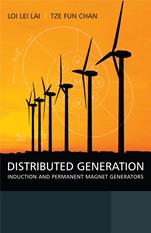
Distributed Generation: Induction and Permanent Magnet Generators
ISBN 9780470062081
Autor: Loi Lei Lai, Tze Fun Chan
Wydawca: Wiley
Dostępność: 3-6 tygodni
Cena: 572,25 zł
Przed złożeniem zamówienia prosimy o kontakt mailowy celem potwierdzenia ceny.
ISBN13: |
9780470062081 |
ISBN10: |
0470062088 |
Autor: |
Loi Lei Lai, Tze Fun Chan |
Oprawa: |
Hardback |
Rok Wydania: |
2007-10-19 |
Ilość stron: |
262 |
Wymiary: |
251x177 |
Tematy: |
TJ |
Distributed power generation is a technology that could help to enable efficient, renewable energy production both in the developed and developing world. It includes all use of small electric power generators, whether located on the utility system, at the site of a utility customer, or at an isolated site not connected to the power grid. Induction generators (IGs) are the cheapest and most commonly used technology, compatible with renewable energy resources. Permanent magnet (PM) generators have traditionally been avoided due to high fabrication costs; however, compared with IGs they are more reliable and productive.
Distributed Generation thoroughly examines the principles, possibilities and limitations of creating energy with both IGs and PM generators. It takes an electrical engineering approach in the analysis and testing of these generators, and includes diagrams and extensive case study examples o better demonstrate how the integration of energy sources can be accomplished. The book also provides the practical tools needed to model and implement new techniques for generating energy through isolated or grid–connected systems.
Besides a chapter introducing the technical, econo9mic and environmental impact so distributed generation, this book includes:an examination of various phase–balancing schemes for a three–phase IG operating on a single–phase power system;a coupled circuit 2–D finite element analysis of a grid–connected IG, with Steinmetz connection;a study of self–excited induction generator (SEIG) schemes for autonomous power systems, and the voltage and frequency control of SEIG with a slip–ring machine (SESRIG);a report on a PM synchronous generator with inset rotor for achieving a reduced voltage regulation, and an analysis of its performance using a two–axis model and finite element method;experimental work on various IG and SEIG schemes.
This book is a
must–read for engineers, consultants, regulators, and environmentalists involved in energy production and delivery, helping them to evaluate renewable energy sources and to integrate these into an efficient energy delivery system. It is also a superior reference for undergraduates and postgraduates. Designers, operators, and planners will appreciate its unique contribution to the literature in this field.
Spis treści:
Foreword.
Preface.
Acknowledgements.
About the Authors.
1. Distributed Generation.
1.1 Introduction.
1.2 Reasons for DG.
1.3 Technical Impacts of DG.
1.3.1 DG Technologies.
1.3.2 Thermal Issues.
1.3.3 Voltage Profile Issues.
1.3.4 Fault–Level Contributions.
1.3.5 Harmonics and Interactions with Loads.
1.3.6 Interactions Between Generating Units.
1.3.7 Protection Issues.
1.4 Economic Impact of DG.
1.5 Barriers to DG Development.
1.6 Renewable Sources of Energy.
1.7 Renewable Energy Economics.
1.8 Interconnection.
1.8.1 Interconnection Standardization.
1.8.2 Rate Design.
1.9 Recommendations and Guidelines for DG Planning.
1.10 Summary.
References.
2. Generators.
2.1 Introduction.
2.2 Synchronous Generator.
2.2.1 Permanent Magnet Materials.
2.2.2 Permanent Magnet Generator.
2.3 Induction Generator.
2.3.1 Three–Phase IGs and SEIGs.
2.3.2 Single–Phase IGs and SEIGs.
2.4 Doubly Fed Induction Generator.
2.4.1 Operation.
2.4.2 Recent Work.
2.5 Summary.
References.
3. Three–Phase IG Operating on a Single–Phase Power System.
3.1 Introduction.
3.2 Phase Balancing Using Passive Circuit Elements.
3.2.1 Analysis of IG with Phase Converters.
3.2.2 Phase–Balancing Schemes.
3.2.3 Case Study.
3.2.4 System Power Factor.
3.2.5 Power and Efficiency.
3.2.6 Operation with Fixed Phase Converters.
3.2.7 Summary.
3.3 Phase Balancing using the Smith Con
nection.
3.3.1 Three–Phase IG with the Smith Connection.
3.3.2 Performance Analysis.
3.3.3 Balanced Operation.
3.3.4 Case Study.
3.3.5 Effect of Phase–Balancing Capacitances.
3.3.6 Dual–Mode Operation.
3.3.7 Summary.
3.4 Microcontroller–Based Multi–Mode Control of SMIG.
3.4.1 Phase Voltage Consideration.
3.4.2 Control System.
3.4.3 Practical Implementation.
3.4.4 Experimental Results.
3.4.5 Summary.
3.5 Phase Balancing using a Line Current Injection Method.
3.5.1 Circuit Connection and Operating Principle.
3.5.2 Performance Analysis.
3.5.3 Balanced Operation.
3.5.4 Case Study.
3.5.5 Summary.
References.
4. Finite Element Analysis of Grid–Connected IG with the Steinmetz Connection.
4.1 Introduction.
4.2 Steinmetz Connection and Symmetrical Components Analysis.
4.3 Machine Model.
4.4 Finite Element Analysis.
4.4.1 Basic Field Equations.
4.4.2 Stator Circuit Equations.
4.4.3 Stator EMFs.
4.4.4 Rotor Circuit Model.
4.4.5 Comments on the Proposed Method.
4.5 Computational Aspects.
4.6 Case Study.
4.7 Summary.
References.
5. SEIGs for Autonomous Power Systems.
5.1 Introduction.
5.2 Three–Phase SEIG with the Steinmetz Connection.
5.2.1 Circuit Connection and Analysis.
5.2.2 Solution Technique.
5.2.3 Capacitance Requirement.
5.2.4 Computed and Experimental Results.
5.2.5 Capacitance Requirement on Load.
5.2.6 Summary.
5.3 SEIG with Asymmetrically Connected Impedances and Excitation Capacitances.
5.3.1 Circuit Model.
5.3.2 Performance Analysis.
5.3.3 Computed and Experimental Results.
5.3.4 Modified Steinmetz Connection.
5.3.5 Simplified Steinmetz Connection.
5.3.6 Summary.
5.4 Self–regulated SEIG for Single–Phase Loads.
5.4.1 Circuit Connection and Analysis.
5.4.2 Effect of Series Compensation Capacitance.
5.4.3 Experimental Results and Discussion
.
5.4.4 Effect of Load Power Factor.
5.4.5 Summary.
5.5 SEIG with the Smith Connection.
5.5.1 Circuit Connection and Operating Principle.
5.5.2 Performance Analysis.
5.5.3 Balanced Operation.
5.5.4 Results and Discussion.
5.5.5 Summary.
References.
6. Voltage and Frequency Control of SEIG with Slip–Ring Rotor.
6.1 Introduction.
6.2 Performance Analysis of SESRIG.
6.3 Frequency and Voltage Control.
6.4 Control with Variable Stator Load.
6.5 Practical Implementation.
6.5.1 Chopper–Controlled Rotor External Resistance.
6.5.2 Closed–Loop Control.
6.5.3 Tuning of PI Controller.
6.5.4 Dynamic Response.
6.6 Summary.
References.
7. PMSGs For Autonomous Power Systems.
7.1 Introduction.
7.2 Principle and Construction of PMSG with Inset Rotor.
7.3 Analysis for Unity–Power–Factor Loads.
7.3.1 Analysis Using the Two–Axis Model.
7.3.2 Design Considerations.
7.3.3 Computed Results.
7.3.4 Experimental Results.
7.3.5 Summary.
7.4 A Comprehensive Analysis.
7.4.1 Basic Equations and Analysis.
7.4.2 Conditions for Zero Voltage Regulation.
7.4.3 Extremum Points in the Load Characteristic.
7.4.4 Power–Load Angle Relationship.
7.4.5 The Saturated Two–Axis Model.
7.4.6 Summary.
7.5 Computation of Synchronous Reactances.
7.5.1 Analysis Based on FEM.
7.5.2 Computation of Xd and Xq.
7.5.3 Computed Results.
7.5.4 Summary.
7.6 Analysis using Time–Stepping 2–D FEM.
7.6.1 Machine Model and Assumptions.
7.6.2 Coupled Circuit and Field Analysis.
7.6.3 Magnetic Saturation Consideration.
7.6.4 Computed Results.
7.6.5 Experimental Verification.
7.6.6 Summary.
References.
8. Conclusions.
8.1 Accomplishments of the Book.
8.2 Future Work.
Reference.
Appendix A. Analysis for IG and SEIG.
A.1 Symmetrical Components Equations for IG.
Koszyk
Książek w koszyku: 0 szt.
Wartość zakupów: 0,00 zł
Informacje


Kontakt
Gambit
Centrum Oprogramowania
i Szkoleń Sp. z o.o.
Al. Pokoju 29b/22-24
31-564 Kraków
Siedziba Księgarni
ul. Kordylewskiego 1
31-542 Kraków
+48 12 410 5991
+48 12 410 5987
+48 12 410 5989
Subskrypcje
Administratorem danych osobowych jest firma Gambit COiS Sp. z o.o. Na podany adres będzie wysyłany wyłącznie biuletyn informacyjny.
Autoryzacja płatności

Informacje na temat autoryzacji płatności poprzez PayU.

© Copyright 2012: GAMBIT COiS Sp. z o.o. Wszelkie prawa zastrzeżone.
Projekt i wykonanie: Alchemia Studio Reklamy