


Wydawcy
Katalog tematyczny
- Archeologia (94)
- Ekonomia, finanse, business (11664)
- Filozofia (1411)
- Historia (2972)
- Języki i językoznawstwo (2311)
- Lifestyle, hobby i rozrywka (411)
- Medycyna (5054)
- Nauki humanistyczne (2)
- Nauki o Ziemi i środowisku (1033)
- Nauki ścisłe (10005)
- Astronomia (12)
- Biologia (1261)
- Chemia (5074)
- Fizyka (1553)
- Matematyka (1875)
- Nauki ścisłe, ogólnie (177)
- Nauki społeczne (6049)
- Nauki techniczne (5313)
- Prawo (160)
- Publikacje informacyjne i interdyscyplinarne (706)
- Religia i wierzenia (900)
- Technika komputerowa (2101)
- Zdrowie, relacje międzyludzkie i rozwój osobisty (632)





Informacje szczegółowe o książce
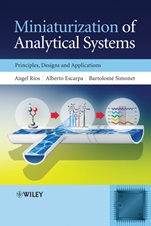
Miniaturization of Analytical Systems: Principles, Designs and Applications
ISBN 9780470061107
Autor: Angel Rios, Alberto Escarpa, Bartolome Simonet
Wydawca: Wiley
Dostępność: 3-6 tygodni
Cena: 515,55 zł
Przed złożeniem zamówienia prosimy o kontakt mailowy celem potwierdzenia ceny.
ISBN13: |
9780470061107 |
ISBN10: |
0470061103 |
Autor: |
Angel Rios, Alberto Escarpa, Bartolome Simonet |
Oprawa: |
Hardback |
Rok Wydania: |
2009-08-14 |
Ilość stron: |
384 |
Wymiary: |
252x175 |
Tematy: |
PN |
Modern analytical techniques aim to improve selectivity and sensitivity, achieve faster analysis time and increase throughput. These very ambitious goals are exacerbated by the need to reduce the overall size of the device and the instrumentation. The interest for portable analytical instruments, which allow field tests to be carried out easily, has increased the practical usefulness of miniaturized analytical systems.
Miniaturization of Analytical Systems: Principles, Designs and Applications provides a highly needed general vision of the miniaturization of analytical systems, including their principles, design and applications.
Included within this valuable text are:
basic concepts behind miniaturization in analytical chemistryintegrated classification of the miniaturized analytical systems and definition of the terms associated with miniaturizationthe mechanical and electronic tools needed for designing and fabricating such systems
In addition
procedures for both miniaturization and coupling to conventional equipment are systematically presented and discussedreal applications and the analytical performance tests that can be established to assure the reliability of these microsystems are presented
Spis treści:
Preface.
1 Miniaturization in Analytical Chemistry.
1.1 Introduction.
1.2 Miniaturization as One of the Critical Trends in Modern Analytical Chemistry.
1.3 Evolution in the Field of Analytical Miniaturization.
1.4 Classification of Miniaturized Analytical Systems and Definition of Terms.
1.5 Theory of Miniaturization.
1.6 Features of Miniaturized Analytical Systems.
1.7 Incidences of Miniaturization in the Analytical Process.
1.8 Outlook.
References.
2 Tools for the Design of Miniaturized Analytical Systems.
2.1 Introduction.
2.2 Miniaturized Analytical Processes: The Downsizing and Inte
grating Phenomena.
2.3 Microfluidic Devices.
2.4 Microtechnology.
2.5 MEMS and NEMS.
2.6 Outlook.
References.
3 Automation and Miniaturization of Sample Treatment.
3.1 Introduction.
3.2 Simplification of Sample Treatment: Microextraction Techniques.
3.3 Simplification of Sample Treatment: Continuous Flow Systems.
References.
4 Miniaturized Systems for Analytical Separations I: Systems Based on a Hydrodynamic Flow.
4.1 Introduction.
4.2 The Earliest Example of Miniaturization of a Gas Chromatograph and Some Other Developments.
4.3 Capillary Liquid Chromatography (CLC).
4.4 Liquid Chromatography on Microchips.
References.
5 Miniaturized Systems for Analytical Separations II: Systems Based on Electroosmotic Flow (EOF).
5.1 Introduction.
5.2 CE on the Microchip Format.
5.3 Modes and Theories of CE Microchips.
5.4 Microfabrication Techniques.
5.5 Basic Fluidic Manipulation/Motivation: Electrokinetic Injection and Separation Protocols.
5.6 Electrochromatography in Microchip Format: Designs and Applications.
5.7 Comparison of Hydrodynamic and Electroosmotic Flow–driven Miniaturized Systems.
5.8 Analytical Applications.
5.9 Outlook.
References.
6 Detection in Miniaturized Analytical Systems.
6.1 Introduction.
6.2 Laser–induced Fluorescence (LIF) Detection.
6.3 Electrochemical Detection (ED).
6.4 Microfluidics–MS Interfacing.
6.5 Unconventional Detection Methods.
6.6 Outlook.
References.
7 Miniaturization of the Entire Analytical Process I: Micro(nano)sensors.
7.1 Introduction.
7.2 Evolution of Sensors with Nanotechnology.
7.3 Micro(nano)sensors.
7.4 Nanoprobes for In Vivo Bioanalysis.
References.
8 Miniaturization of the Entire Analytical Process II: Micro Total Analysis Systems (μTAS).
8.1μTAS, Microfluidics and Lab–on–a–Chip: Concepts and Terminology.
8.2 Basic Concepts of Microfluidics: The Design of Analytical Microsystems.
8.3 The Basics of Downscaling in Microsystems.
8.4 Microfluidic Platforms: Types, Principles and Classification.
8.5 Microfluidic Devices for Analytical Lab–on–a–Chip Applications.
8.6 Outlook.
References.
9 Portability of Miniaturized Analytical Systems.
9.1 Introduction.
9.2 Portable Gas Analysers.
9.3 Portable Electrochemical Analysers.
9.4 Portable Optical Analysers.
9.5 Portable Lab–on–a–Chip Analysers.
References.
10 Analytical Performance of Miniaturized Analytical Systems.
10.1 Introduction.
10.2 Quality Control in Miniaturized Systems.
10.3 Validation of Microsystems.
10.4 Qualification of Microsystems.
10.5 Robustness of Microsystems.
Further Reading.
Index.
Okładka tylna:
Modern analytical techniques aim to improve selectivity and sensitivity, achieve faster analysis time and increase throughput. These very ambitious goals are exacerbated by the need to reduce the overall size of the device and the instrumentation. The interest for portable analytical instruments, which allow field tests to be carried out easily, has increased the practical usefulness of miniaturized analytical systems.
Miniaturization of Analytical Systems: Principles, Designs and Applications provides a highly needed general vision of the miniaturization of analytical systems, including their principles, design and applications.
Included within this valuable text are:
basic concepts behind miniaturization in analytical chemistryintegrated classification of the miniaturized analytical systems and definition of the terms associated with miniaturizationthe mechanical and electronic tools needed for designing and fabricating such systems
In addition
procedures for both miniaturization and coupl
ing to conventional equipment are systematically presented and discussedreal applications and the analytical performance tests that can be established to assure the reliability of these microsystems are presented
Koszyk
Książek w koszyku: 0 szt.
Wartość zakupów: 0,00 zł
Informacje


Kontakt
Gambit
Centrum Oprogramowania
i Szkoleń Sp. z o.o.
Al. Pokoju 29b/22-24
31-564 Kraków
Siedziba Księgarni
ul. Kordylewskiego 1
31-542 Kraków
+48 12 410 5991
+48 12 410 5987
+48 12 410 5989
Subskrypcje
Administratorem danych osobowych jest firma Gambit COiS Sp. z o.o. Na podany adres będzie wysyłany wyłącznie biuletyn informacyjny.
Autoryzacja płatności

Informacje na temat autoryzacji płatności poprzez PayU.

© Copyright 2012: GAMBIT COiS Sp. z o.o. Wszelkie prawa zastrzeżone.
Projekt i wykonanie: Alchemia Studio Reklamy