


Wydawcy
Katalog tematyczny
- Archeologia (109)
- Ekonomia, finanse, business (13704)
- Filozofia (1445)
- Historia (3040)
- Języki i językoznawstwo (2356)
- Lifestyle, hobby i rozrywka (475)
- Medycyna (9704)
- Nauki humanistyczne (4)
- Nauki o Ziemi i środowisku (2638)
- Nauki ścisłe (20412)
- Nauki społeczne (8486)
- Nauki techniczne (13450)
- Budownictwo lądowe (1045)
- Chemia przemysłowa (2258)
- Elektronika i telekomunikacja (3287)
- Energetyka (1122)
- Inne nauki stosowane (363)
- Inżynieria biochemiczna (507)
- Inżynieria transportu (232)
- Mechanika i materiały (3316)
- Nauka o środowisku (321)
- Rolnictwo (507)
- Technika, ogólnie (475)
- Prawo (1696)
- Publikacje informacyjne i interdyscyplinarne (1288)
- Religia i wierzenia (917)
- Technika komputerowa (4067)
- Zdrowie, relacje międzyludzkie i rozwój osobisty (657)





Informacje szczegółowe o książce
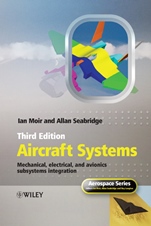
Aircraft Systems: Mechanical, Electrical, and Avionics Subsystems Integration
ISBN 9780470059968
Autor: Ian Moir, Allan Seabridge
Wydawca: Wiley
Dostępność: 3-6 tygodni
Cena: 554,40 zł
Przed złożeniem zamówienia prosimy o kontakt mailowy celem potwierdzenia ceny.
ISBN13: |
9780470059968 |
ISBN10: |
0470059966 |
Autor: |
Ian Moir, Allan Seabridge |
Oprawa: |
Hardback |
Rok Wydania: |
2008-04-04 |
Numer Wydania: |
3rd Edition |
Ilość stron: |
546 |
Wymiary: |
249x176 |
Tematy: |
TG |
This third edition of Aircraft Systems represents a timely update of the Aerospace Series′ successful and widely acclaimed flagship title. Moir and Seabridge present an in–depth study of the general systems of an aircraft – electronics, hydraulics, pneumatics, emergency systems and flight control to name but a few – that transform an aircraft shell into a living, functioning and communicating flying machine. Advances in systems technology continue to alloy systems and avionics, with aircraft support and flight systems increasingly controlled and monitored by electronics; the authors handle the complexities of these overlaps and interactions in a straightforward and accessible manner that also enhances synergy with the book′s two sister volumes, Civil Avionics Systems and Military Avionics Systems.
Aircraft Systems, 3rd Edition is thoroughly revised and expanded from the last edition in 2001, reflecting the significant technological and procedural changes that have occurred in the interim – new aircraft types, increased electronic implementation, developing markets, increased environmental pressures and the emergence of UAVs. Every chapter is updated, and the latest technologies depicted. It offers an essential reference tool for aerospace industry researchers and practitioners such as aircraft designers, fuel specialists, engine specialists, and ground crew maintenance providers, as well as a textbook for senior undergraduate and postgraduate students in systems engineering, aerospace and engineering avionics.
Spis treści:
Foreword.
Series Preface.
About the Authors.
Acknowledgements.
List of Abbreviations.
Introduction.
Systems Integration.
Systems Interaction.
1 Flight Control Systems.
1.1 Introduction.
1.2 Principles of Flight Control.
1.3 Flight Control Surfaces.
1.4 Primary Flight Control.
1.5
Secondary Flight Control.
1.6 Commercial Aircraft.
1.6.1 Primary Flight Control.
1.6.2 Secondary Flight Control.
1.7 Flight Control Linkage Systems.
1.7.1 Push–Pull Control Rod System.
1.7.2 Cable and Pulley System.
1.8 High Lift Control Systems.
1.9 Trim and Feel.
1.9.1 Trim.
1.9.2 Feel.
1.10 Flight Control Actuation.
1.10.1 Simple Mechanical/Hydraulic Actuation.
1.10.2 Mechanical Actuation with Electrical Signalling.
1.10.3 Multiple Redundancy Actuation.
1.10.4 Mechanical Screwjack Actuator.
1.10.5 Integrated Actuator Package (IAP).
1.10.6 Advanced Actuation Implementations.
1.11 Civil System Implementations.
1.11.1 Top–Level Comparison.
1.11.2 Airbus Implementation.
1.12 Fly–By–Wire Control Laws.
1.13 A380 Flight Control Actuation.
1.14 Boeing 777 Implementation.
1.15 Interrelationship of Flight Control, Guidance and Flight Management.
2 Engine Control Systems.
2.1 Introduction.
2.1.1 Engine/Airframe Interfaces.
2.2 Engine Technology and Principles of Operation.
2.3 The Control Problem.
2.3.1 Fuel Flow Control.
2.3.2 Air Flow Control.
2.3.3 Control Systems.
2.3.4 Control System Parameters.
2.3.5 Input Signals.
2.3.6 Output Signals.
2.4 Example Systems.
2.5 Design Criteria.
2.6 Engine Starting.
2.6.1 Fuel Control.
2.6.2 Ignition Control.
2.6.3 Engine Rotation.
2.6.4 Throttle Levers.
2.6.5 Starting Sequence.
2.7 Engine Indications.
2.8 Engine Oil Systems.
2.9 Engine Offtakes.
2.10 Reverse Thrust.
2.11 Engine Control on Modern Civil Aircraft.
3 Fuel Systems.
3.1 Introduction.
3.2 Characteristics of Fuel Systems.
3.3 Description of Fuel System Components.
3.3.1 Fuel Transfer Pumps.
<
i>3.3.2 Fuel Booster Pumps.
3.3.3 Fuel Transfer Valves.
3.3.4 Non–Return Valves (NRVs).
3.4 Fuel Quantity Measurement.
3.4.1 Level Sensors.
3.4.2 Fuel Gauging Probes.
3.4.3 Fuel Quantity Measurement Basics.
3.4.4 Tank Shapes.
3.4.5 Fuel Properties.
3.4.6 Fuel Quantity Measurement Systems.
3.4.7 Fokker F50/F100 System.
3.4.8 Airbus A320 System.
3.4.9 ‘Smart′ Probes.
3.4.10 Ultrasonic Probes.
3.5 Fuel System Operating Modes.
3.5.1 Pressurisation.
3.5.2 Engine Feed.
3.5.3 Fuel Transfer.
3.5.4 Refuel/Defuel.
3.5.5 Vent Systems.
3.5.6 Use of Fuel as a Heat Sink.
3.5.7 External Fuel Tanks.
3.5.8 Fuel Jettison.
3.5.9 In–Flight Refuelling.
3.6 Integrated Civil Aircraft Systems.
3.6.1 Bombardier Global Express.
3.6.2 Boeing 777.
3.6.3 A340–500/600 Fuel System.
3.7 Fuel Tank Safety.
3.7.1 Principles of Fuel Inerting.
3.7.2 Air Separation Technology.
3.7.3 Typical Fuel Inerting System.
3.8 Polar Operations – Cold Fuel Management.
3.8.1 Minimum Equipment List (MEL).
3.8.2 Cold Fuel Characteristics.
3.8.3 Fuel Temperature Indication.
4 Hydraulic Systems.
4.1 Introduction.
4.2 Hydraulic Circuit Design.
4.3 Hydraulic Actuation.
4.4 Hydraulic Fluid.
4.5 Fluid Pressure.
4.6 Fluid Temperature.
4.7 Fluid Flow Rate.
4.8 Hydraulic Piping.
4.9 Hydraulic Pumps.
4.10 Fluid Conditioning.
4.11 Hydraulic Reservoir.
4.12 Warnings and Status.
4.13 Emergency Power Sources.
4.14 Proof of Design.
4.15 Aircraft System Applications.
4.15.1 The Avro RJ Hydraulic System.
4.15.2 The BAE SYSTEMS Hawk 200 Hydraulic System.
4.15.3 Tornado Hydraulic System.
4.16 Civil Tr
ansport Comparison.
4.16.1 Airbus A320.
4.16.2 Boeing 767.
4.17 Landing Gear Systems.
4.17.1 Nose Gear.
4.17.2 Main Gear.
4.17.3 Braking Anti–Skid and Steering.
4.17.4 Electronic Control.
4.17.5 Automatic Braking.
4.17.6 Multi–Wheel Systems.
4.17.7 Brake Parachute.
5 Electrical Systems.
5.1 Introduction.
5.1.1 Electrical Power Evolution.
5.2 Aircraft Electrical System.
5.3 Power Generation.
5.3.1 DC Power Generation.
5.3.2 AC Power Generation.
5.3.3 Power Generation Control.
5.4 Primary Power Distribution.
5.5 Power Conversion and Energy Storage.
5.5.1 Inverters.
5.5.2 Transformer Rectifier Units (TRUs).
5.5.3 Auto–Transformers.
5.5.4 Battery Chargers.
5.5.5 Batteries.
5.6 Secondary Power Distribution.
5.6.1 Power Switching.
5.6.2 Load Protection.
5.7 Typical Aircraft DC System.
5.8 Typical Civil Transport Electrical System.
5.9 Electrical Loads.
5.9.1 Motors and Actuation.
5.9.2 DC Motors.
5.9.3 AC Motors.
5.9.4 Lighting.
5.9.5 Heating.
5.9.6 Subsystem Controllers and Avionics Systems.
5.9.7 Ground Power.
5.10 Emergency Power Generation.
5.10.1 Ram Air Turbine.
5.10.2 Backup Power Converters.
5.10.3 Permanent Magnet Generators (PMGs).
5.11 Recent Systems Developments.
5.11.1 Electrical Load Management System (ELMS).
5.11.2 Variable Speed Constant Frequency (VSCF).
5.11.3 270 VDC Systems.
5.11.4 More–Electric Aircraft (MEA).
5.12 Recent Electrical System Developments.
5.12.1 Airbus A380 Electrical System Overview.
5.12.2 A400M.
5.12.3 B787 Electrical Overview.
5.13 Electrical Systems Displays.
6 Pneumatic Systems.
Koszyk
Książek w koszyku: 0 szt.
Wartość zakupów: 0,00 zł
Informacje


Kontakt
Gambit
Centrum Oprogramowania
i Szkoleń Sp. z o.o.
Al. Pokoju 29b/22-24
31-564 Kraków
Siedziba Księgarni
ul. Kordylewskiego 1
31-542 Kraków
+48 12 410 5991
+48 12 410 5987
+48 12 410 5989
Subskrypcje
Administratorem danych osobowych jest firma Gambit COiS Sp. z o.o. Na podany adres będzie wysyłany wyłącznie biuletyn informacyjny.
Autoryzacja płatności

Informacje na temat autoryzacji płatności poprzez PayU.

© Copyright 2012: GAMBIT COiS Sp. z o.o. Wszelkie prawa zastrzeżone.
Projekt i wykonanie: Alchemia Studio Reklamy