


Wydawcy
Katalog tematyczny
- Archeologia (109)
- Ekonomia, finanse, business (13704)
- Filozofia (1445)
- Historia (3040)
- Języki i językoznawstwo (2356)
- Lifestyle, hobby i rozrywka (475)
- Medycyna (9704)
- Nauki humanistyczne (4)
- Nauki o Ziemi i środowisku (2638)
- Nauki ścisłe (20412)
- Nauki społeczne (8486)
- Edukacja (229)
- Kryminologia, opieka spełeczna (284)
- Obronność (10)
- Polityka (1389)
- Psychologia (777)
- Socjologia (410)
- Społeczeństwo i kultura (187)
- Nauki techniczne (13450)
- Prawo (1696)
- Publikacje informacyjne i interdyscyplinarne (1288)
- Religia i wierzenia (917)
- Technika komputerowa (4067)
- Zdrowie, relacje międzyludzkie i rozwój osobisty (657)





Informacje szczegółowe o książce
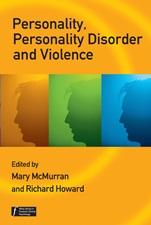
Personality, Personality Disorder and Violence: An Evidence Based Approach
ISBN 9780470059487
Autor: Mary McMurran, Richard Howard
Wydawca: Wiley
Dostępność: 3-6 tygodni
Cena: 830,55 zł
Przed złożeniem zamówienia prosimy o kontakt mailowy celem potwierdzenia ceny.
ISBN13: |
9780470059487 |
ISBN10: |
0470059486 |
Autor: |
Mary McMurran, Richard Howard |
Oprawa: |
Hardback |
Rok Wydania: |
2009-03-27 |
Ilość stron: |
340 |
Wymiary: |
254x169 |
Tematy: |
JC |
′The role of personality disorder in violence remains one of the key concerns in modern forensic practice. The editors are to be congratulated for having created this excellent volume bringing together leading scholars and practitioners in the field. The result is a volume that is scientifically robust yet clinically relevant; a comprehensive volume that has much for both the researcher and the clinician. It is not merely focused on the usual suspect – psychopathy – but provides a much broader perspective by formulating the causal processes underpinned by problems in attachment, empathy and cognition. A must –read for those who work with offenders.′ – David J Cooke
′This book makes a timely and important contribution to the field of forensic psychology, exploring the relationship between personality disorder, traits, cognition and affect and antisocial and criminal behaviour. The internationally respected authors are expert sin their fields. Finding constructive approaches that reduce offending behaviours is in everyone′s interest.′ – Professor Kate Davidson
New in the Wiley Series in Forensic Clinical Psychology, Personality, Personality Disorder and Violence takes an evidence–based look at personality traits and types of psychological functioning that may contribute to personality disorder and violence, and the connections that lie between them.
Each chapter tackles a specific area of personality or psychological functioning and is theoretically based, including a developmental perspective, discussion of what should be assessed for gauging risk and evaluating risk reduction, and an outline of effective treatments. Personality traits covered include impulsivity, aggressiveness, narcissism, and The Big Five (neuroticism, extraversion, openness, agreeableness and conscientiousness). Psychological functioning analysis includes neuroaffective processing, emotion
recognition and empathy deficits. The book concludes with implications for research and practice.
Spis treści:
About the Editors.
List of Contributors.
Series Editors’ Preface.
Preface.
INTRODUCTION.
1 Personality, Personality Disorder and Violence: An Introduction (Mary McMurran, University of Nottingham, UK).
2 The ‘Functional Link’ Between Personality Disorder and Violence: A Critical Appraisal (Conor Duggan and Richard Howard, University of Nottingham, UK).
PART I TRAITS.
3 A Systematic Review of the Relationship Between Childhood Impulsiveness and Later Violence (Darrick Jolliffe, University of Leicester, UK and David P Farrington, University of Cambridge, UK).
4 The ‘Big Five’: Neuroticism, Extraversion, Openness, Agreeableness and Conscientiousness as an Organisational Scheme for Thinking About Aggression and Violence (Vincent Egan, School of Psychology, University of Leicester, UK).
5 Narcissism (Caroline Logan, Ashworth Hospital, UK).
6 Subtypes of Psychopath (Ronald Blackburn, University of Liverpool, UK).
7 Antisocial Personality Disorder (Stéphane A De Brito and Sheilagh Hodgins, Institute of Psychiatry, King’s College, London, UK).
PART II AFFECT.
8 The Neurobiology of Affective Dyscontrol: Implications for Understanding ‘Dangerous and Severe Personality Disorder’ (Rick Howard, University of Nottingham, UK).
9 The Processing of Emotional Expression Information in Individuals with Psychopathy (R. James R. Blair, National Institute of Mental Health, USA).
10 Angry Affect, Aggression and Personality Disorder (Kevin Howells, University of Nottingham, UK).
11 Attachment Difficulties (Anthony R. Beech and Ian J. Mitchell, University of Birmingham, UK).
12 Empathy and Offending Behavior (William L. Marsha
ll, Liam E. Marshall and Geris A. Serran, ,Rockwood Psychological Services, Canada).
PART III COGNITION.
13 Psychopathic Violence: A Cognitive–Attention Perspective (Jennifer E. Vitale, Hampden–Sydney College, USA and Joseph P. Newman, University of Wisconsin–Madison, USA).
14 Social Problem Solving, Personality Disorder and Violence (Mary McMurran, University of Nottingham, UK).
15 Criminal Thinking (Glenn D. Walters, Federal Correctional Institution–Schuylkill, USA).
Conclusion.
16 Personality, Personality Disorder and Violence: Implications For Future Research and Practice (Mary McMurran and Richard Howard, University of Nottingham, UK).
Index.
Nota biograficzna:
Mary McMurran is Professor of Personality Disorder Research at the University of Nottingham. She is series editor for the Wiley Series in Forensic Clinical Psychology and her previous books include Motivating Offenders to Change, commended by the BMA. She is co–editor of Criminal Behaviour and Mental Health and associate editor of both The Journal of Forensic Psychiatry and Psychology and Legal and Criminological Psychology. She received the Senior Award for Significant Lifetime Contribution from the British Psychological Society in 2005.
Richard Howard is Senior Research Fellow at The Peaks Academic and Research Unit at Rampton Hospital in the UK, and Reader in Personality Disorder Research at the University of Nottingham.
Okładka tylna:
′The role of personality disorder in violence remains one of the key concerns in modern forensic practice. The editors are to be congratulated for having created this excellent volume bringing together leading scholars and practitioners in the field. The result is a volume that is scientifically robust yet clinically relevant; a comprehensive volume th
at has much for both the researcher and the clinician. It is not merely focused on the usual suspect – psychopathy – but provides a much broader perspective by formulating the causal processes underpinned by problems in attachment, empathy and cognition. A must –read for those who work with offenders.′ – David J Cooke
′This book makes a timely and important contribution to the field of forensic psychology, exploring the relationship between personality disorder, traits, cognition and affect and antisocial and criminal behaviour. The internationally respected authors are expert sin their fields. Finding constructive approaches that reduce offending behaviours is in everyone′s interest.′ – Professor Kate Davidson
New in the Wiley Series in Forensic Clinical Psychology, Personality, Personality Disorder and Violence takes an evidence–based look at personality traits and types of psychological functioning that may contribute to personality disorder and violence, and the connections that lie between them.
Each chapter tackles a specific area of personality or psychological functioning and is theoretically based, including a developmental perspective, discussion of what should be assessed for gauging risk and evaluating risk reduction, and an outline of effective treatments. Personality traits covered include impulsivity, aggressiveness, narcissism, and The Big Five (neuroticism, extraversion, openness, agreeableness and conscientiousness). Psychological functioning analysis includes neuroaffective processing, emotion recognition and empathy deficits. The book concludes with implications for research and practice.
Koszyk
Książek w koszyku: 0 szt.
Wartość zakupów: 0,00 zł
Informacje


Kontakt
Gambit
Centrum Oprogramowania
i Szkoleń Sp. z o.o.
Al. Pokoju 29b/22-24
31-564 Kraków
Siedziba Księgarni
ul. Kordylewskiego 1
31-542 Kraków
+48 12 410 5991
+48 12 410 5987
+48 12 410 5989
Subskrypcje
Administratorem danych osobowych jest firma Gambit COiS Sp. z o.o. Na podany adres będzie wysyłany wyłącznie biuletyn informacyjny.
Autoryzacja płatności

Informacje na temat autoryzacji płatności poprzez PayU.

© Copyright 2012: GAMBIT COiS Sp. z o.o. Wszelkie prawa zastrzeżone.
Projekt i wykonanie: Alchemia Studio Reklamy