


Wydawcy
Katalog tematyczny
- Archeologia (109)
- Ekonomia, finanse, business (13704)
- Filozofia (1445)
- Historia (3040)
- Języki i językoznawstwo (2356)
- Lifestyle, hobby i rozrywka (475)
- Medycyna (9704)
- Nauki humanistyczne (4)
- Nauki o Ziemi i środowisku (2638)
- Nauki ścisłe (20412)
- Nauki społeczne (8486)
- Nauki techniczne (13450)
- Budownictwo lądowe (1045)
- Chemia przemysłowa (2258)
- Elektronika i telekomunikacja (3287)
- Energetyka (1122)
- Inne nauki stosowane (363)
- Inżynieria biochemiczna (507)
- Inżynieria transportu (232)
- Mechanika i materiały (3316)
- Nauka o środowisku (321)
- Rolnictwo (507)
- Technika, ogólnie (475)
- Prawo (1696)
- Publikacje informacyjne i interdyscyplinarne (1288)
- Religia i wierzenia (917)
- Technika komputerowa (4067)
- Zdrowie, relacje międzyludzkie i rozwój osobisty (657)





Informacje szczegółowe o książce
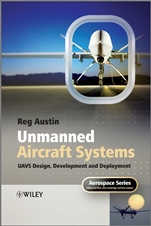
Unmanned Aircraft Systems: UAVS Design, Development and Deployment
ISBN 9780470058190
Autor: Reg Austin
Wydawca: Wiley
Dostępność: 3-6 tygodni
Cena: 515,55 zł
Przed złożeniem zamówienia prosimy o kontakt mailowy celem potwierdzenia ceny.
ISBN13: |
9780470058190 |
ISBN10: |
0470058196 |
Autor: |
Reg Austin |
Oprawa: |
Hardback |
Rok Wydania: |
2010-04-16 |
Ilość stron: |
372 |
Wymiary: |
252x169 |
Tematy: |
TG |
Unmanned Aircraft Systems delivers a much needed introduction to UAV System technology, taking an integrated approach that avoids compartmentalising the subject. Arranged in four sections, parts 1–3 examine the way in which various engineering disciplines affect the design, development and deployment of UAS. The fourth section assesses the future challenges and opportunities of UAS.
Technological innovation and increasingly diverse applications are two key drivers of the rapid expansion of UAS technology. The global defence budget for UAS procurement is expanding, and in the future the market for civilian UAVs is expected to outmatch that of the military. Agriculture, meteorology, conservation and border control are just a few of the diverse areas in which UAVs are making a significant impact; the author addresses all of these applications, looking at the roles and technology behind both fixed wing and rotorcraft UAVs.
Spis treści:
Foreword.
Acknowledgements.
Series Preface.
Preface.
Units and Abbreviations.
1 Introduction to Unmanned Aircraft Systems (UAS).
1.1 Some Applications of UAS.
1.2 What are UAS?
1.3 Why Unmanned Aircraft?
1.4 The Systemic Basis of UAS.
1.5 System Composition.
References.
Part 1 THE DESIGN OF UAV SYSTEMS.
2 Introduction to Design and Selection of the System.
2.1 Conceptual Phase.
2.2 Preliminary Design.
2.3 Detail Design.
2.4 Selection of the System.
3 Aerodynamics and Airframe Configurations.
3.1 Lift–induced Drag.
3.2 Parasitic Drag.
3.3 Rotary–wing Aerodynamics.
3.4 Response to Air Turbulence.
3.5 Airframe Configurations.
3.6 Summary.
References.
4 Characteristics of Aircraft Types.
4.1 Long–endurance, Long–range Role Aircraft.
4.2 Medium–range, Tactical Aircraft.
4.3 Close–range/Battlefield Aircraft.4.4 MUAV Types.
4.5 MAV and NAV Types.
4.6 UCAV.
4.7 Novel Hybrid Aircraft Configurations.
4.8 Research UAV.
References.
5 Design Standards and Regulatory Aspects.
5.1 Introduction.
5.2 United Kingdom.
5.3 Europe.
5.4 United States of America.
5.5 Conclusion.
References.
6 Aspects of Airframe Design.
6.1 Scale Effects.
6.2 Packaging Density.
6.3 Aerodynamics.
6.4 Structures and Mechanisms.
6.5 Selection of power–plants.
6.6 Modular Construction.
6.7 Ancillary Equipment.
References.
7 Design for Stealth.
7.1 Acoustic Signature.
7.2 Visual Signature.
7.3 Thermal Signature.
7.4 Radio/Radar Signature.
7.5 Examples in Practice.
Reference.
8 Payload Types.
8.1 Nondispensable Payloads.
8.2 Dispensable Payloads.
Reference.
9 Communications.
9.1 Communication Media.
9.2 Radio Communication.
9.3 Mid–air Collision (MAC) Avoidance.
9.4 Communications Data Rate and Bandwidth Usage.
9.5 Antenna Types.
References.
10 Control and Stability.
10.1 HTOL Aircraft.
10.2 Helicopters.
10.3 Convertible Rotor Aircraft.
10.4 Payload Control.
10.5 Sensors.
10.6 Autonomy.
References.
11 Navigation.
11.1 NAVSTAR Global Positioning System (GPS).
11.2 TACAN.
11.3 LORAN C.
11.4 Inertial Navigation.
11.5 Radio Tracking.
11.6 Way–point Navigation.
References.
12 Launch and Recovery.
12.1 Launch.
12.2 Recovery.
12.3 Summary.
13 Control Stations.
13.1 Control Station Composition.
13.2 Open System Architecture.
13.3 Mini–UAV ‘Laptop’ Ground Control Station.
13.4 Close–range UAV Systems GCS.
13.5 Medium– and Long–range UAV System GCS.
13.6 Sea Control Stations (SCS).
13.7 Air Control Stations (ACS).
14 Support Equipment.
14.1 Operating and Maintenance Manuals.
14.2 Consuma
bles.
14.3 Replaceable Components.
14.4 Vulnerable and On–condition Components.
14.5 Tools.
14.6 Subsidiary Equipment.
15 Transportation.
15.1 Micro–UAV.
15.2 VTOL Close–range Systems.
15.3 HTOL Close–range Systems.
15.4 Medium–range Systems.
15.5 MALE and HALE Systems.
16 Design for Reliability.
16.1 Determination of the Required Level of Reliability.
16.2 Achieving Reliability.
16.3 Reliability Data Presentation.
16.4 Multiplexed Systems.
16.5 Reliability by Design.
16.6 Design for Ease of Maintenance.
17 Design for Manufacture and Development.
Part 2 THE DEVELOPMENT OF UAV SYSTEMS.
18 Introduction to System Development and Certification.
18.1 System Development.
18.2 Certification.
18.3 Establishing Reliability.
19 System Ground Testing.
19.1 UAV Component Testing.
19.2 UAV Sub–assembly and Sub–system Testing.
19.3 Testing Complete UAV.
19.4 Control Station Testing.
19.5 Catapult Launch System Tests.
19.6 Documentation.
20 System In–flight Testing.
20.1 Test Sites.
20.2 Preparation for In–flight Testing.
20.3 In–flight Testing.
20.4 System Certification.
Part 3 THE DEPLOYMENT OF UAV SYSTEMS.
21 Operational Trials and Full Certification.
21.1 Company Trials.
21.2 Customer Trials and Sales Demonstrations.
22 UAV System Deployment.
22.1 Introduction.
22.2 Network–centric Operations (NCO).
22.3 Teaming with Manned and Other Unmanned Systems.
23 Naval Rˆoles.
23.1 Fleet Detection and Shadowing.
23.2 Radar Confusion.
23.3 Missile Decoy.
23.4 Anti–submarine Warfare.
23.5 Radio Relay.
23.6 Port Protection.
23.7 Over–beach Reconnaissance.
23.8 Fisheries Protection.
23.9 Detection of Illegal Imports.
23.10 Electronic Intelligence.
23.11 Maritime Sur
veillance.
23.12 Summary.
24 Army Roles.
24.1 Covert Reconnaissance and Surveillance.
24.2 Fall–of–shot Plotting.
24.3 Target Designation by Laser.
24.4 NBC Contamination Monitoring.
24.5 IED and Landmine Detection and Destruction.
24.6 Electronic Intelligence 266
24.7 Teaming of Manned and Unmanned Systems.
24.8 System Mobility.
24.9 Persistent Urban Surveillance.
25 Air Force Rˆoles.
25.1 Long–range Reconnaissance and Strike.
25.2 Airborne Early Warning.
25.3 Electronic Intelligence.
25.4 Pre–strike Radar and Anti–aircraft Systems Counter.
25.5 Interception.
25.6 Airfield Security.
26 Civilian, Paramilitary and Commercial Roles.
26.1 Aerial Photography.
26.2 Agriculture.
26.3 Coastguard and Lifeboat Institutions.
26.4 Customs and Excise.
26.5 Conservation.
26.6 Electricity Companies.
26.7 Fire Services.
26.8 Fisheries.
26.9 Gas and Oil Supply Companies.
26.10 Information Services.
26.11 Local Civic Authorities.
26.12 Meteorological Services.
26.13 Traffic Agencies.
26.14 Ordnance Survey.
26.15 Police Authorities.
26.16 Rivers Authorities and Water Boards.
26.17 Survey Organisations.
26.18 Communications Relay.
26.19 Landmine Detection and Destruction.
26.20 Other Applications.
References.
Part 4 UAS FUTURE.
27 Future Prospects and Challenges.
27.1 Introduction.
27.2 Operation in Civilian Airspace.
27.3 Power–plant Development.
27.4 Developments in Airframe Configurations.
27.5 Autonomy and Artificial Intelligence.
27.6 Improvement in Communication Systems.
References.
28 UAV Systems Continuing Evolution.
28.1 Introduction.
28.2 Cruise Missiles.
28.3 World War II Systems.
28.4 The 1950s.
28.5 The 1960s.
28.6 The 1970s.
28.7 The 1980s.
28.8 The 1990s.
28.9 The 2000s.
28.10 The 2010s.
28.11 Into the Futur
e.
Appendix A: UAS Organisations.
A.1 Conferences.
A.2 Industry Associations.
A.3 Press Organisations.
A.4 Useful Websites.
A.5 Test Site Facilities.
A.6 Regulators.
Index.
Nota biograficzna:
Leading aeronautical consultant Reg Austin co–founded the Bristol International Remotely Piloted Vehicle (RPV) conferences in 1979, which are now the longest–established UAS conferences worldwide. In addition, Austin has over 40 years′ experience in the design and development of UAS. One of Austin′s programmes, the "Sprite UAV System" has been deployed around the world and operated by day and night, in all weathers.
Okładka tylna:
Unmanned Aircraft Systems delivers a much needed introduction to UAV System technology, taking an integrated approach that avoids compartmentalising the subject. Arranged in four sections, parts 1–3 examine the way in which various engineering disciplines affect the design, development and deployment of UAS. The fourth section assesses the future challenges and opportunities of UAS.
Technological innovation and increasingly diverse applications are two key drivers of the rapid expansion of UAS technology. The global defence budget for UAS procurement is expanding, and in the future the market for civilian UAVs is expected to outmatch that of the military. Agriculture, meteorology, conservation and border control are just a few of the diverse areas in which UAVs are making a significant impact; the author addresses all of these applications, looking at the roles and technology behind both fixed wing and rotorcraft UAVs.
Koszyk
Książek w koszyku: 0 szt.
Wartość zakupów: 0,00 zł
Informacje


Kontakt
Gambit
Centrum Oprogramowania
i Szkoleń Sp. z o.o.
Al. Pokoju 29b/22-24
31-564 Kraków
Siedziba Księgarni
ul. Kordylewskiego 1
31-542 Kraków
+48 12 410 5991
+48 12 410 5987
+48 12 410 5989
Subskrypcje
Administratorem danych osobowych jest firma Gambit COiS Sp. z o.o. Na podany adres będzie wysyłany wyłącznie biuletyn informacyjny.
Autoryzacja płatności

Informacje na temat autoryzacji płatności poprzez PayU.

© Copyright 2012: GAMBIT COiS Sp. z o.o. Wszelkie prawa zastrzeżone.
Projekt i wykonanie: Alchemia Studio Reklamy