


Wydawcy
Katalog tematyczny
- Archeologia (109)
- Ekonomia, finanse, business (13704)
- Filozofia (1445)
- Historia (3040)
- Języki i językoznawstwo (2356)
- Lifestyle, hobby i rozrywka (475)
- Medycyna (9704)
- Nauki humanistyczne (4)
- Nauki o Ziemi i środowisku (2638)
- Nauki ścisłe (20412)
- Nauki społeczne (8486)
- Nauki techniczne (13450)
- Prawo (1696)
- Publikacje informacyjne i interdyscyplinarne (1288)
- Religia i wierzenia (917)
- Technika komputerowa (4067)
- Zdrowie, relacje międzyludzkie i rozwój osobisty (657)





Informacje szczegółowe o książce
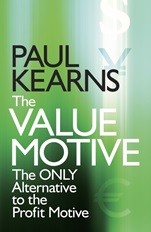
The Value Motive: The Only Alternative to the Profit Motive
ISBN 9780470057551
Autor: Paul Kearns
Wydawca: Wiley
Dostępność: 3-6 tygodni
Cena: 222,60 zł
Przed złożeniem zamówienia prosimy o kontakt mailowy celem potwierdzenia ceny.
ISBN13: |
9780470057551 |
ISBN10: |
0470057556 |
Autor: |
Paul Kearns |
Oprawa: |
Hardback |
Rok Wydania: |
2007-03-23 |
Ilość stron: |
288 |
Wymiary: |
244x173 |
Tematy: |
KM |
Our present market system has evolved in line with capitalist philosophy. At the heart of capitalism is profit. Consequently, profit has become the main driver of society. And that’s fine, because if we all make enough profit then things must be okay. Right?
Wrong. Profit can be a powerful motive, but is not always used responsibly and, in the worst cases, this can have adverse effects at a wider level (think CFCs). The calls for a corporate conscience are growing louder, but no one has yet suggested an alternative to profit that the majority find anything like as compelling. Profit is here and now. In this climate of confusion, the solution is to augment the profit motive, not replace it. To refine it so that it enriches society both materially and spiritually. To create The Value Motive.
We all value things. And we’re all fired up by what we value. Value is personal and thus a powerful force for motivating people – who are the engine of any organization. If value could replace the profit motive, it could reconcile the interests of shareholders, CEOs, citizens and government. Everyone would pursue value as part of a whole. This book is a call to manage for maximum value, and offers an alternative to the profit motive without replacing it. Profits still rise using the value motive, but society gains more value.
The profit motive has served us well for many years; The Value Motive is the next step.
Spis treści:
Preface.
About the author.
Introduction.
Chapter 1. Profit is not a dirty word but value is much cleaner.
Is profit the best way to allocate scarce resources?
Profit can be a very emotive word.
The Microsoft Paradox.
Not–for–profit? Does that mean not–for–value?
Profit is an increasingly unpopular king.
Chapter 2. Value – a very slippery word indeed.
Defining value.
A working definition of value.
Basic Val
ue.
Moving on to added value.
Private equity partners – value adders or asset strippers?
The value motive already exists..
Value as a distillation process.
Declaring value in a public statement.
The Value Agenda.
A value statement for a commercial company.
A value statement for a public sector organization.
‘Intangibles’ confuse the issue of added value.
Chapter 3. This powerful, motive force we call value.
Harnessing the power of motive.
Value means output, not input.
Defining value as an economic system.
Does the capitalist system deliver the best value?
When we say value we should really mean it.
A holistic, value system for everyone.
Chapter 4. Value has to be the raison d’être for every type of organization.
All value is good.
Value is the raison d’être of all organizations.
Corporate social responsibility (CSR) and the ‘triple’ bottom line.
Social enterprise.
Is the public sector an obsolete construct?
Chapter 5. Organizational performance measurement has to measure value.
Turning human activity into value.
The advent of the scorecard.
The EFQM business excellence model.
Agreeing value priorities using the 3 Box System.
The gulf between performance measurement theory and practice.
Activity, performance and added value measures.
Taking a fresh perspective on the purpose of performance measurement.
Measuring and managing ‘intangibles’.
E–valu–ation.
Chapter 6. Value is essentially a people thing.
A fresh approach to people management.
Measuring the value of people.
De–bunking the employee–customer–profit chain theory.
Replacing performance management with value management.
Managing value holistically.
Valuing people ?intangibles?
Chapter 7. The people measurement ‘box’.
Only meaningful measures count.<
br>People measurement is a really serious matter.
Does diversity add value?
Human capital management, a revolution in management thinking.
People – are they personnel, human resources, assets or capital?
Human capital measures and indicators of value.
Chapter 8. How the value motive could upstage the profit king.
The value motive is leadership.
The politicians definition of value.
The first, second and third sectors have to become one.
Value special cases and dead losses.
Value management education.
Auditing the value motive.
A new management discipline – valuing the human contribution.
Index.
Nota biograficzna:
PAUL KEARNS started his career specializing in industrial relations management in 1978. He then moved into human resource management roles in engineering, construction and manufacturing businesses. His last corporate role in 1991 was sitting on the management team of an automotive business where he became acutely aware, for the first time, that managing value and managing profit were two entirely different objectives. He found, in particular, that managing the human aspects of organizations to create value had become probably the biggest management issue of modern times and one that had no easy solution and no single, coherent methodology.
Since then he has been working in this field as a consultant, writer, teacher and business conference speaker. His writing has drawn a great deal of attention from both the business and academic worlds, although he has always regarded himself, first and foremost, as a pragmatic practitioner. As a consequence he regards his work as bridging the divide between academic theory and management practice. He teaches on MBA programmes and trains managers to understand the wealth creating opportunities presented by a more enlightened approach to people management. He has written eight books and is a regular, thought–provoking contributor to
both academic and professional journals.
Paul was born in 1955 in Leicester (UK) and has a degree in economics and economic history. He is married to Nuala and they have three grown–up children.
Okładka tylna:
Our present market system has evolved in line with capitalist philosophy. At the heart of capitalism is profit. Consequently, profit has become the main driver of society. And that’s fine, because if we all make enough profit then things must be okay. Right?
Wrong. Profit can be a powerful motive, but is not always used responsibly and, in the worst cases, this can have adverse effects at a wider level (think CFCs). The calls for a corporate conscience are growing louder, but no one has yet suggested an alternative to profit that the majority find anything like as compelling. Profit is here and now. In this climate of confusion, the solution is to augment the profit motive, not replace it. To refine it so that it enriches society both materially and spiritually. To create The Value Motive.
We all value things. And we’re all fired up by what we value. Value is personal and thus a powerful force for motivating people – who are the engine of any organization. If value could replace the profit motive, it could reconcile the interests of shareholders, CEOs, citizens and government. Everyone would pursue value as part of a whole. This book is a call to manage for maximum value, and offers an alternative to the profit motive without replacing it. Profits still rise using the value motive, but society gains more value.
The profit motive has served us well for many years; The Value Motive is the next step.
Koszyk
Książek w koszyku: 0 szt.
Wartość zakupów: 0,00 zł
Informacje


Kontakt
Gambit
Centrum Oprogramowania
i Szkoleń Sp. z o.o.
Al. Pokoju 29b/22-24
31-564 Kraków
Siedziba Księgarni
ul. Kordylewskiego 1
31-542 Kraków
+48 12 410 5991
+48 12 410 5987
+48 12 410 5989
Subskrypcje
Administratorem danych osobowych jest firma Gambit COiS Sp. z o.o. Na podany adres będzie wysyłany wyłącznie biuletyn informacyjny.
Autoryzacja płatności

Informacje na temat autoryzacji płatności poprzez PayU.

© Copyright 2012: GAMBIT COiS Sp. z o.o. Wszelkie prawa zastrzeżone.
Projekt i wykonanie: Alchemia Studio Reklamy