


Wydawcy
Katalog tematyczny
- Archeologia (109)
- Ekonomia, finanse, business (13704)
- Filozofia (1445)
- Historia (3040)
- Języki i językoznawstwo (2356)
- Lifestyle, hobby i rozrywka (475)
- Medycyna (9704)
- Nauki humanistyczne (4)
- Nauki o Ziemi i środowisku (2638)
- Nauki ścisłe (20412)
- Astronomia (294)
- Biologia (5119)
- Chemia (6540)
- Chemia analityczna (361)
- Chemia fizyczna (346)
- Chemia nieorganiczna (137)
- Chemia organiczna (535)
- Krystalografia (27)
- Minerologia (46)
- Fizyka (3309)
- Matematyka (4574)
- Nauki ścisłe, ogólnie (503)
- Nauki społeczne (8486)
- Nauki techniczne (13450)
- Prawo (1696)
- Publikacje informacyjne i interdyscyplinarne (1288)
- Religia i wierzenia (917)
- Technika komputerowa (4067)
- Zdrowie, relacje międzyludzkie i rozwój osobisty (657)





Informacje szczegółowe o książce
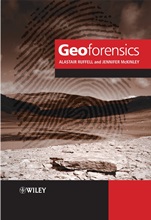
Geoforensics
ISBN 9780470057346
Autor: Alastair Ruffell, Jennifer McKinley
Wydawca: Wiley
Dostępność: 3-6 tygodni
Cena: 662,55 zł
Przed złożeniem zamówienia prosimy o kontakt mailowy celem potwierdzenia ceny.
ISBN13: |
9780470057346 |
ISBN10: |
0470057343 |
Autor: |
Alastair Ruffell, Jennifer McKinley |
Oprawa: |
Hardback |
Rok Wydania: |
2008-07-18 |
Ilość stron: |
340 |
Wymiary: |
253x176 |
Tematy: |
PNF |
Geoforensics is a comprehensive introduction to the application of geoscience to criminal investigations. Clearly structured throughout, the book follows a path from the large–scale application of remote sensing, landforms and geophysics in the first half to the increasingly small–scale examination of rock and soils to trace amounts of material. The two scales of investigation are linked by geoscience applications to forensics that can be applied at a range of dimensions, These include the use of topographic mapping, x–ray imaging, geophysics and remote sensing in assessing whether sediment, rocks or concrete may have hidden or buried materials inside for example, drugs, weapons, bodies.
This book describes the wider application of many different geoscience–based methods in assisting law enforcers with investigations such as international and national crimes of genocide and pollution, terrorism and domestic crime as well as accident investigation. The text makes a clear link to the increasingly important aspects of the spatial distribution of geoscience materials (be it soil sampling or the distribution of mud–spatter on clothing), Geographic Information Science and geostatistics. A comprehensive introduction to the application of geoscience to criminal investigation.Examples taken from an environmental and humanitarian perspective in addition to the terrorist and domestic criminal cases more regularly discussed.A chapter on the use of GIS in criminalistics and information on unusual applications and methods– for example underwater scene mapping and extraterrestrial applications.Material on how geoscience methods and applications are used at a crime scene.Accompanying website including key images and references to further material.An invaluable text for both undergraduate and postgraduate students taking general forensic science degrees or geos
cience courses.
Spis treści:
Acknowledgements.
Preamble.
1. Background to the work, organization of the text and history of research.
1.1 The scene.
1.2 The victim and materials.
1.3 The suspect.
1.4 The scope of geoforensics.
2. Physical geography, geomorphology, landform interpretation, archaeology, stratigraphy and hydrodynamics.
2.1 Physical geography.
2.2 Atmosphere.
2.3 Types of landscapes, landscape change and human influences on the landscape (short and long term).
2.4 Soils.
2.5 Hydrodynamics of rivers, lakes, estuaries, seas and oceans.
2.6 Geography, geomorphology, geological and soil maps, and other resources.
2.7 Groundwater.
3. Geophysics.
3.1 Seismic methods: macro to micro.
3.2 Gravity/gravimetrics.
3.3 Electrical.
3.4 Magnetic and electromagnetic.
3.5 Ground–penetrating radar (GPR).
3.6 Radiometrics.
3.7 Review of why some methods are favoured and others not.
4. Remote sensing.
4.1 Definitions.
4.2 Conventional aerial photography: rural and urban examples.
4.3 Geoscience use of light photography.
4.4 Infrared photography.
4.5 Elevation modelling.
4.6 Photogrammetry.
4.7 Synthetic Aperture Radar (SAR) and interferometry.
4.8 Multispectral and thermal imaging.
4.9 Hyperspectral imaging.
4.10 Satellite mapping.
4.11 Long–distance LIDAR (satellite, aerial).
4.12 Laser scanning of scenes and objects.
4.13 X–ray imagery, X–ray tomography and neutron activation.
4.14 Field Portable X–ray Fluorescence (FPXRF) spectrometry.
4.15 Some conjecture on the future of remote sensing applications.
5. Spatial location and geographic information science.
5.1 Geographic location and crime.
5.2 Spatial data and GIS.
5.3 Spatial analysis within GIS.
5.4 Use of Google Earth in criminal investigations.
6. Scale, sampling and geostatistics.
6.
1 Scale and spatial resolution.
6.2 Sampling for geological materials at urban and non–urban crime scenes.
6.3 Timing of the crime.
6.4 Sample size.
6.5 Lateral variation.
6.6 Use and misuse of statistics in forensic studies.
6.7 Statistical sampling.
6.8 Number of samples required for robust statistical analysis.
6.9 Comparing ‘like with like’.
6.10 Addressing the issue of comparing related material.
6.11 Spatial and temporal variability in nature.
6.12 Spatial awareness and use of spatial statistics: application of geostatistics.
6.13 Geostatistical techniques.
6.14 GIS and geostatistics.
7. Conventional geological analysis.
7.1 Elementary analysis of rocks 185.
7.2 Hand–specimen analysis case studies from Murray and Tedrow (1991).
7.3 Sediment analysis.
7.4 Fossils and microfossils.
7.5 A paradigm shift in geoforensics?
8. Trace evidence.
8.1 What is geological trace evidence?
8.2 Scanning Electron Microscope (SEM).
8.3 Laser Raman spectroscopy.
8.4 Inductively–coupled plasma spectroscopy.
8.5 Isotope analysis.
8.6 X–ray diffraction and trace evidence.
8.7 Manufactured or processed materials that geoscience techniques can analyse.
8.8 Some conjecture on the future of trace evidence.
9. The search for buried materials.
9.1 Introduction.
9.2 Possible methodologies for non–urban underground searches.
9.3 Underwater searches and scene mapping (remote sensing, geophysics).
9.4 Gas monitoring, organic remains and the decomposition of bodies.
9.5 Weird and wonderful burial locations.
10. Circuit complete.
Appendix 1. Search methods.
Appendix 2. Soil sampling.
A.1 Sampling protocol suggestions.
References.
Index.
Okładka tylna:
Geoforensics is a comprehensive introduction to the application of geoscience to criminal investigations. Clearly structured thro
ughout, the book follows a path from the large–scale application of remote sensing, landforms and geophysics in the first half to the increasingly small–scale examination of rock and soils to trace amounts of material. The two scales of investigation are linked by geoscience applications to forensics that can be applied at a range of dimensions, These include the use of topographic mapping, x–ray imaging, geophysics and remote sensing in assessing whether sediment, rocks or concrete may have hidden or buried materials inside for example, drugs, weapons, bodies.
This book describes the wider application of many different geoscience–based methods in assisting law enforcers with investigations such as international and national crimes of genocide and pollution, terrorism and domestic crime as well as accident investigation. The text makes a clear link to the increasingly important aspects of the spatial distribution of geoscience materials (be it soil sampling or the distribution of mud–spatter on clothing), Geographic Information Science and geostatistics. A comprehensive introduction to the application of geoscience to criminal investigation.Examples taken from an environmental and humanitarian perspective in addition to the terrorist and domestic criminal cases more regularly discussed.A chapter on the use of GIS in criminalistics and information on unusual applications and methods– for example underwater scene mapping and extraterrestrial applications.Material on how geoscience methods and applications are used at a crime scene.Accompanying website including key images and references to further material.An invaluable text for both undergraduate and postgraduate students taking general forensic science degrees or geoscience courses.
Koszyk
Książek w koszyku: 0 szt.
Wartość zakupów: 0,00 zł
Informacje


Kontakt
Gambit
Centrum Oprogramowania
i Szkoleń Sp. z o.o.
Al. Pokoju 29b/22-24
31-564 Kraków
Siedziba Księgarni
ul. Kordylewskiego 1
31-542 Kraków
+48 12 410 5991
+48 12 410 5987
+48 12 410 5989
Subskrypcje
Administratorem danych osobowych jest firma Gambit COiS Sp. z o.o. Na podany adres będzie wysyłany wyłącznie biuletyn informacyjny.
Autoryzacja płatności

Informacje na temat autoryzacji płatności poprzez PayU.

© Copyright 2012: GAMBIT COiS Sp. z o.o. Wszelkie prawa zastrzeżone.
Projekt i wykonanie: Alchemia Studio Reklamy