


Wydawcy
Katalog tematyczny
- Archeologia (109)
- Ekonomia, finanse, business (13704)
- Filozofia (1445)
- Historia (3040)
- Języki i językoznawstwo (2356)
- Lifestyle, hobby i rozrywka (475)
- Medycyna (9704)
- Chirurgia (272)
- Inne gałęzie medycyny (1871)
- Medycyna kliniczna (4187)
- Choroby wewnętrzne (514)
- Dermatologia (51)
- Diagnostyka medyczna (3)
- Endokrynologia (144)
- Gastroenterologia (27)
- Geriatria (50)
- Ginekologia i położnictwo (134)
- Hematologia (46)
- Hepatologia (10)
- Kardiologia (71)
- Laryngologia (12)
- Nefrologia (10)
- Neurologia (500)
- Oftalmologia (50)
- Pediatria (33)
- Pulmunologia (32)
- Reumatologia (14)
- Terapia genowa (1)
- Układ mięśniowo-szkieletowy (1)
- Urologia (14)
- Medycyna niekonwencjonalna (14)
- Medycyna przedkliniczna (269)
- Medycyna, ogólnie (1740)
- Medyczne służby pomocnicze (745)
- Studia medyczne (16)
- Weterynaria (548)
- Nauki humanistyczne (4)
- Nauki o Ziemi i środowisku (2638)
- Nauki ścisłe (20412)
- Nauki społeczne (8486)
- Nauki techniczne (13450)
- Prawo (1696)
- Publikacje informacyjne i interdyscyplinarne (1288)
- Religia i wierzenia (917)
- Technika komputerowa (4067)
- Zdrowie, relacje międzyludzkie i rozwój osobisty (657)





Informacje szczegółowe o książce
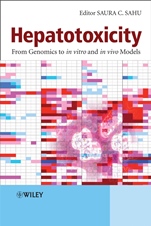
Hepatotoxicity: From Genomics to In Vitro and In Vivo Models
ISBN 9780470057162
Autor: Saura C. Sahu
Wydawca: Wiley
Dostępność: 3-6 tygodni
Cena: 1 168,65 zł
Przed złożeniem zamówienia prosimy o kontakt mailowy celem potwierdzenia ceny.
ISBN13: |
9780470057162 |
ISBN10: |
0470057165 |
Autor: |
Saura C. Sahu |
Oprawa: |
Hardback |
Rok Wydania: |
2007-12-14 |
Ilość stron: |
704 |
Wymiary: |
253x180 |
Tematy: |
MJ |
Liver, the primary organ involved in xenobiotic metabolism, is a major target organ for many drugs, chemicals and microbial pathogens. Therefore, hepatotoxicity is one of the most serious safety concerns in their safety evaluation.
Hepatotoxicity is an authoritative compilation of recent advances in this discipline, presented by leading international investigators, and demonstrating the multidisciplinary nature of this research field. The book addresses newer methodologies and emerging new technologies including toxicogenomics.
Topics covered include:models that are currently used for hepatotoxicity testing and screeninghepatocyte culturesbiomarkers of hepatotoxicityvarious mechanisms involved in hepatotoxicitygenomics of hepatotoxicitygender difference in hepatotoxicityrelationship between hepatotoxicity and hepatocarcinogenicityhepatotoxicity of botanical supplementsrisk assessment of hepatotoxins.
Hepatotoxicity gives an essential insight into the current trends and future directions of research in this field, and will be a valuable and excellent source of up–to–date information for toxicologists, investigators, risk assessors and regulators in academia, industry and government.
Spis treści:
Contributors.
Preface.
Acknowledgements.
SECTION 1: MODELS FOR HEPATOTOXICITY TESTING.
1 Current in vitro Models to Study Drug–Induced Liver Injury (Julio C. Davila, Jinghai J. Xu, Keith A. Hoffmaster, Peter J. O’Brien and Stephen C. Storm).
2 Utilization of an in vitro Hepatotoxicity Test in the Early Stage of Drug Discovery (Ikuo Horii, Hiroshi Yamada, Rie Kikkawa, Toshinori Yamamoto, Tamio Fukushima and Kaori Tomizawa).
3 Use of Hepatocytes for Characterizing a Candidate Drug’s Metabolism and Drug Interaction Potential (Srikanth C. Nallani, John M. Strong and Shiew Mei Huang).
4 Human&
#8211;Based in vitro Experimental Systems for the Evaluation of Human Drug Safety (Albert P. Li).
5 Hepatocytes as a Model for Screening Food–Related Hepatotoxins and Studying Mechanisms of their Toxicity (Saura C. Sahu).
6 Some Experimental Models of Liver Damage (Pablo Muriel).
SECTION 2: HEPATOCYTE CULTURES.
7 Application of Short– and Long–Term Hepatocyte Cultures to Predict Toxicities (Gregor Tuschl, Jens Hrach, Philip G. Hewitt and Stefan O. Mueller).
SECTION 3: BIOMARKERS OF HEPATOTOXICITY.
8 Biomarkers of Mycotoxin Exposure in Liver Toxicity (Angela J. Harris).
SECTION 4: MECHANISMS OF HEPATOTOXICITY.
9 Mechanisms of Toxic Liver Injury (Nora Anderson and J¨urgen Borlak).
10 A Role of Cytochrome P450 in Quinone–Induced Hepatotoxicity (Yasuhiro Ishihara and Norio Shimamoto).
11 A Mechanistic View of Troglitazone Hepatotoxicity (Rawiwan Maniratanachote and Tsuyoshi Yokoi).
12 Role of the Kupffer Cell in Hepatotoxicity and Hepatocarcinogenesis (James E. Klaunig, Stacy M. Corthals, Lisa M. Kamendulis and Binu K. Philip).
13 Sinusoidal Cells in Liver Injury and Repair (Carol R. Gardner and Debra L. Laskin).
14 Cytokines in Liver Diseases (Pablo Muriel).
15 Bile Acids as Modulators of Apoptosis (Rui E. Castro, Susana Sol´a, Clifford J. Steer and Cec´ılia M.P. Rodrigues).
16 Drug–Induced Intrahepatic Cholestasis by Interaction with the Hepatic Bile Salt Export Pump (BSEP) (Christoph Funk, Johannes No´e, Ren´ee Portmann, Ruben Alvarez–S´anchez, Florian Klammers, Christiane Lamy, Axel Paehler and Michael Pantze).
SECTION 5: GENOMICS OF HEPATOTOXICITY.
17 Application of Toxicogenomics in Predicting Hepatotoxicity – Potentials and Challenges (Wen Lin, Guoxiang Shen, Tin Oo Khor and Ah–Ng Tony Kong).
18 G
enomic Profiling of Liver Injury (Kevin Gerrish and David E. Malarkey).
19 Use of DNA Arrays in Understanding Hepatic Test Systems (Angela J. Harris and Daniel A. Casciano).
20 Prediction of Hepatotoxicity Based on the Toxicogenomics Database (Tetsuro Urushidani).
21 Relationship between N–acetyltransferase–2 Gene Polymorphism and Isoniazid–Induced Hepatotoxicity (Yasuo Shimizu, Kunio Dobashi and Masatomo Mori).
SECTION 6: GENDER DIFFERENCES IN HEPATOTOXICITY.
22 Human and Animal–Based Differences in Hepatic Xenobiotic Metabolism and Toxicity (Peter J. O’Brien, Katie Chan and Raymond J. Poon).
SECTION 7: HEPATOTOXICITY AND HEPATOCARCINOGENICITY.
23 Hepatotoxicity in Oncology Drug Development (Wei Chen, Kenneth Hastings and John K. Leighton).
24 The Potent Rat Hepatocarcinogen Methapyrilene: An Hypothesis Regarding its Hepatotoxicology (Daniel A. Casciano).
SECTION 8: HEPATOTOXICITY AND BOTANICAL SUPPLEMENTS.
25 Botanical Supplements and Hepatotoxicity (Shabana Khan, Ikhlas Khan and Larry Walker).
SECTION 9: RISK ANALYSIS OF HEPATOTOXINS.
26 Physiologically Based Pharmokinetic Modeling and Risk Assessment of Hepatotoxicants (Kannan Krishnan).
Index.
Nota biograficzna:
Dr. Sahu is the US Editor for the Journal of Applied Toxicology.
Okładka tylna:
Liver, the primary organ involved in xenobiotic metabolism, is a major target organ for many drugs, chemicals and microbial pathogens. Therefore, hepatotoxicity is one of the most serious safety concerns in their safety evaluation.
Hepatotoxicity is an authoritative compilation of recent advances in this discipline, presented by leading international investigators, and demonstrating the multidisciplinary nature of this research field. The book addresses newer methodologies and emerging new technologies in
cluding toxicogenomics.
Topics covered include:models that are currently used for hepatotoxicity testing and screeninghepatocyte culturesbiomarkers of hepatotoxicityvarious mechanisms involved in hepatotoxicitygenomics of hepatotoxicitygender difference in hepatotoxicityrelationship between hepatotoxicity and hepatocarcinogenicityhepatotoxicity of botanical supplementsrisk assessment of hepatotoxins.
Hepatotoxicity gives an essential insight into the current trends and future directions of research in this field, and will be a valuable and excellent source of up–to–date information for toxicologists, investigators, risk assessors and regulators in academia, industry and government.
Koszyk
Książek w koszyku: 0 szt.
Wartość zakupów: 0,00 zł
Informacje


Kontakt
Gambit
Centrum Oprogramowania
i Szkoleń Sp. z o.o.
Al. Pokoju 29b/22-24
31-564 Kraków
Siedziba Księgarni
ul. Kordylewskiego 1
31-542 Kraków
+48 12 410 5991
+48 12 410 5987
+48 12 410 5989
Subskrypcje
Administratorem danych osobowych jest firma Gambit COiS Sp. z o.o. Na podany adres będzie wysyłany wyłącznie biuletyn informacyjny.
Autoryzacja płatności

Informacje na temat autoryzacji płatności poprzez PayU.

© Copyright 2012: GAMBIT COiS Sp. z o.o. Wszelkie prawa zastrzeżone.
Projekt i wykonanie: Alchemia Studio Reklamy