


Wydawcy
Katalog tematyczny
- Archeologia (109)
- Ekonomia, finanse, business (13704)
- Filozofia (1445)
- Historia (3040)
- Języki i językoznawstwo (2356)
- Lifestyle, hobby i rozrywka (475)
- Medycyna (9704)
- Nauki humanistyczne (4)
- Nauki o Ziemi i środowisku (2638)
- Nauki ścisłe (20412)
- Nauki społeczne (8486)
- Nauki techniczne (13450)
- Budownictwo lądowe (1045)
- Chemia przemysłowa (2258)
- Elektronika i telekomunikacja (3287)
- Energetyka (1122)
- Inne nauki stosowane (363)
- Inżynieria biochemiczna (507)
- Inżynieria transportu (232)
- Mechanika i materiały (3316)
- Nauka o środowisku (321)
- Rolnictwo (507)
- Technika, ogólnie (475)
- Prawo (1696)
- Publikacje informacyjne i interdyscyplinarne (1288)
- Religia i wierzenia (917)
- Technika komputerowa (4067)
- Zdrowie, relacje międzyludzkie i rozwój osobisty (657)





Informacje szczegółowe o książce
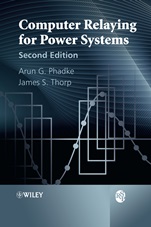
Computer Relaying for Power Systems
ISBN 9780470057131
Autor: Arun G. Phadke, James S. Thorp
Wydawca: Wiley
Dostępność: 3-6 tygodni
Cena: 543,90 zł
Przed złożeniem zamówienia prosimy o kontakt mailowy celem potwierdzenia ceny.
ISBN13: |
9780470057131 |
ISBN10: |
0470057130 |
Autor: |
Arun G. Phadke, James S. Thorp |
Oprawa: |
Hardback |
Rok Wydania: |
2009-07-17 |
Numer Wydania: |
2nd Edition |
Ilość stron: |
344 |
Wymiary: |
254x180 |
Tematy: |
TG |
Since publication of the first edition of Computer Relaying for Power Systems in 1988, computer relays have been widely accepted by power engineers throughout the world and in many countries they are now the protective devices of choice.
The authors have updated this new edition with the latest developments in technology and applications such as adaptive relaying, wide area measurements, signal processing, new GPS–based measurement techniques and the application of artificial intelligence to digital relays. New material also includes sigma–delta and oversampling A/D converters, self–polarizing and cross–polarizing in transmission lines protection and optical current and voltage transformers.
Phadke and Thorp have been working together in power systems engineering for more than 30 years. Their impressive work in the field has been recognized by numerous awards, including the prestigious 2008 Benjamin Franklin Medal in Electrical Engineering for their pioneering contributions to the development and application of microprocessor controllers in electric power systems.
Provides the student with an understanding of computer relaying
Authored by international authorities in computer relaying
Contents include relaying practices, mathematical basis for protective relaying algorithms, transmission line relaying, protection of transformers, machines and buses, hardware organization in integrated systems, system relaying and control, and developments in new relaying principles
Features numerous solved examples to explain several of the more complex topics, as well as a problem at the end of each chapter
Includes an updated list of references and a greatly expanded subject index.
Spis treści:
About the Authors.
Preface to the First Edition.
Preface to the Second Edition.
Glossary of Acronyms.
1 Introduction to computer relaying.
1.1 Development of computer relaying.
1.2 Historical background.
1.3 Expected benefits of computer relaying.
1.4 Computer relay architecture.
1.5 Analog to digital converters.
1.6 Anti–aliasing filters.
1.7 Substation computer hierarchy.
1.8 Summary.
Problems.
References.
2 Relaying practices.
2.1 Introduction to protection systems.
2.2 Functions of a protection system.
2.3 Protection of transmission lines.
2.4 Transformer, reactor and generator protection.
2.5 Bus protection.
2.6 Performance of current and voltage transformers.
2.7 Summary.
Problems.
References.
3 Mathematical basis for protective relaying algorithms.
3.1 Introduction.
3.2 Fourier series.
3.3 Other orthogonal expansions.
3.4 Fourier transforms.
3.5 Use of fourier transforms.
3.6 Discrete fourier transform.
3.7 Introduction to probability and random process.
3.8 Random processes.
3.9 Kalman filtering.
3.10 Summary.
Problems.
References.
4 Digital filters.
4.1 Introduction.
4.2 Discrete time systems.
4.3 Discrete time systems.
4.4 Z Transforms.
4.5 Digital filters.
4.6 Windows and windowing.
4.7 Linear phase.
4.8 Approximation – filter synthesis.
4.9 Wavelets.
4.10 Elements of artificial intelligence.
4.11 Conclusion.
Problems.
References.
5 Transmission line relaying.
5.1 Introduction.
5.2 Sources of error.
5.3 Relaying as parameter estimation.
5.4 Beyond parameter estimation.
5.5 Symmetrical component distance relay.
5.6 Newer analytic techniques.
5.7 Protection of series compensated lines.
5.8 Summary.
Problems.
References.
6 Protection of transformers, machines and buses.
6.1 Introduction.
6.2 Power transformer algorithms.
6.3 Generator protection.
6.4 Motor protection.
6.5 Digital bus pro
tection.
6.6 Summary.
Problems.
References.
7 Hardware organization in integrated systems.
7.1 The nature of hardware issues.
7.2 Computers for relaying.
7.3 The substation environment.
7.4 Industry environmental standards.
7.5 Countermeasures against EMI.
7.6 Supplementary equipment.
7.7 Redundancy and backup.
7.8 Servicing, training and maintenance.
7.9 Summary.
References.
8 System relaying and control.
8.1 Introduction.
8.2 Measurement of frequency and phase.
8.3 Sampling clock synchronization.
8.4 Application of phasor measurements to state estimation.
8.5 Phasor measurements in dynamic state estimation.
8.6 Monitoring.
8.7 Control applications.
8.8 Summary.
Problems.
References.
9 Relaying applications of traveling waves.
9.1 Introduction.
9.2 Traveling waves on single–phase lines.
9.3 Traveling waves on three–phase lines.
9.4 Directional wave relay.
9.5 Traveling wave distance relay.
9.6 Differential relaying with phasors.
9.7 Traveling wave differential relays.
9.8 Fault location.
9.9 Other recent developments.
9.10 Summary.
Problems.
References.
10 Wide area measurement applications.
10.1 Introduction.
10.2 Adaptive relaying.
10.3 Examples of adaptive relaying.
10.4 Wide area measurement systems (WAMS).
10.5 WAMS architecture.
10.6 WAMS based protection concepts.
10.7 Summary.
Problems.
References.
Appendix A.
Representative system data.
Transmission lines.
Transformers.
Generators.
Power system.
References.
Appendix B.
Standard sampling rates.
References.
Appendix C.
Conversion between different sampling rates.
References.
Appendix D.
Standard for transient data exchange.
References.
Index.
Okładka tylna:
Since publication of the first edition of Computer Relaying f
or Power Systems in 1988, computer relays have been widely accepted by power engineers throughout the world and in many countries they are now the protective devices of choice.
The authors have updated this new edition with the latest developments in technology and applications such as adaptive relaying, wide area measurements, signal processing, new GPS–based measurement techniques and the application of artificial intelligence to digital relays. New material also includes sigma–delta and oversampling A/D converters, self–polarizing and cross–polarizing in transmission lines protection and optical current and voltage transformers.
Phadke and Thorp have been working together in power systems engineering for more than 30 years. Their impressive work in the field has been recognized by numerous awards, including the prestigious 2008 Benjamin Franklin Medal in Electrical Engineering for their pioneering contributions to the development and application of microprocessor controllers in electric power systems.
Provides the student with an understanding of computer relaying
Authored by international authorities in computer relaying
Contents include relaying practices, mathematical basis for protective relaying algorithms, transmission line relaying, protection of transformers, machines and buses, hardware organization in integrated systems, system relaying and control, and developments in new relaying principles
Features numerous solved examples to explain several of the more complex topics, as well as a problem at the end of each chapter
Includes an updated list of references and a greatly expanded subject index.
Koszyk
Książek w koszyku: 0 szt.
Wartość zakupów: 0,00 zł
Informacje


Kontakt
Gambit
Centrum Oprogramowania
i Szkoleń Sp. z o.o.
Al. Pokoju 29b/22-24
31-564 Kraków
Siedziba Księgarni
ul. Kordylewskiego 1
31-542 Kraków
+48 12 410 5991
+48 12 410 5987
+48 12 410 5989
Subskrypcje
Administratorem danych osobowych jest firma Gambit COiS Sp. z o.o. Na podany adres będzie wysyłany wyłącznie biuletyn informacyjny.
Autoryzacja płatności

Informacje na temat autoryzacji płatności poprzez PayU.

© Copyright 2012: GAMBIT COiS Sp. z o.o. Wszelkie prawa zastrzeżone.
Projekt i wykonanie: Alchemia Studio Reklamy