


Wydawcy
Katalog tematyczny
- Archeologia (109)
- Ekonomia, finanse, business (13704)
- Filozofia (1445)
- Historia (3040)
- Języki i językoznawstwo (2356)
- Lifestyle, hobby i rozrywka (475)
- Medycyna (9704)
- Chirurgia (272)
- Inne gałęzie medycyny (1871)
- Medycyna kliniczna (4187)
- Choroby wewnętrzne (514)
- Dermatologia (51)
- Diagnostyka medyczna (3)
- Endokrynologia (144)
- Gastroenterologia (27)
- Geriatria (50)
- Ginekologia i położnictwo (134)
- Hematologia (46)
- Hepatologia (10)
- Kardiologia (71)
- Laryngologia (12)
- Nefrologia (10)
- Neurologia (500)
- Oftalmologia (50)
- Pediatria (33)
- Pulmunologia (32)
- Reumatologia (14)
- Terapia genowa (1)
- Układ mięśniowo-szkieletowy (1)
- Urologia (14)
- Medycyna niekonwencjonalna (14)
- Medycyna przedkliniczna (269)
- Medycyna, ogólnie (1740)
- Medyczne służby pomocnicze (745)
- Studia medyczne (16)
- Weterynaria (548)
- Nauki humanistyczne (4)
- Nauki o Ziemi i środowisku (2638)
- Nauki ścisłe (20412)
- Nauki społeczne (8486)
- Nauki techniczne (13450)
- Prawo (1696)
- Publikacje informacyjne i interdyscyplinarne (1288)
- Religia i wierzenia (917)
- Technika komputerowa (4067)
- Zdrowie, relacje międzyludzkie i rozwój osobisty (657)





Informacje szczegółowe o książce
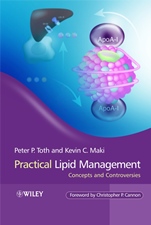
Practical Lipid Management: Concepts and Controversies
ISBN 9780470056905
Autor: Peter P. Toth, Kevin Maki
Wydawca: Wiley
Dostępność: 3-6 tygodni
Cena: 379,05 zł
Przed złożeniem zamówienia prosimy o kontakt mailowy celem potwierdzenia ceny.
ISBN13: |
9780470056905 |
ISBN10: |
0470056908 |
Autor: |
Peter P. Toth, Kevin Maki |
Oprawa: |
Hardback |
Rok Wydania: |
2008-10-10 |
Ilość stron: |
256 |
Wymiary: |
207x136 |
Tematy: |
MJ |
A practical text on the clinical management of dyslipidemias, Practical Lipid Management balances conceptual development and pathophysiology with a straightforward approach to the identification and treatment of abnormalities in lipid metabolism.
The book explores the role of novel risk markers in clinical practice, summarizes the current guidelines for lipid management, and offers a critical and systematic approach to interpreting the results of clinical trials. A feature of the book is a set of sidebars which explore current controversies and unanswered questions in clinical lipidology. The treatment of specific dyslipidemias is illustrated with case studies. Treatment algorithms are also provided.
Practical Lipid Management
· details the relationship between specific lipids, lipoproteins and cardiovascular disease
· provides guidance on the etiology and diagnosis of lipid abnormalities
· summarizes current understanding of atherogenesis
· reviews the evidence base for the use of therapeutic lifestyle change and specific lipid–lowering medications to reduce morbidity and mortality from cardiovascular disease
· includes a cutting edge discussion of the controversies arising from the results of the ENHANCE (Ezetimibe and Simvastatin in Hypercholesterolemia Enhances Atherosclerosis Regression) Trial
Practical Lipid Management provides a concise summary of best practice according to various international guidelines, making it a useful tool for all primary care physicians and others involve
d in the management of diseases such as diabetes, cardiovascular disease and stroke. It will serve as an evidence–based, rapid, and valuable resource for family physicians, internists, nurse practitioners, physician assistants, cardiologists, endocrinologists and allied health professionals involved in the care of patients with lipid disorders.
Spis treści:
Foreword.
Preface.
Acknowledgements.
Chapter 1 Epidemiology of Lipids, Lipid Management and Risk for Coronary Heart Disease: An Overview.
1.1 Early History of Cardiovascular Epidemiology.
1.2 Lipid Risk Factors are Central to Efforts at CHD Prevention.
1.3 LDL–C and CHD Risk.
1.4 LDL–C Lowering and CHD Risk Reduction.
1.5 Other Atherogenic Lipoproteins: Atherogenic Remnants.
1.6 HDL–C and CHD Risk.
1.7 Trends in Lipids and Lipid Management in the USA.
1.8 The National Cholesterol Education Program Evaluation Project Using Novel E–Technology (NEPTUNE) II Survey.
Controversy: Should a Measure of Atherogenic Lipoprotein Particle Number be used in Risk Assessment And/Or to Evaluate the Response to Lipid Therapy?
Chapter 2 Vascular Biology and Atherogenesis.
2.1 Introduction.
2.2 Arterial Structure.
2.3 Endothelial Cell Function and Dysfunction.
2.4 The Role of Monocytes and Lymphocytes.
2.5 Atheromatous Plaques.
Chapter 3 Detection, Evaluation, and Treatment Goals for Lipid Disorders in Adults.
3.1 Matching Aggressiveness of Treatment to Absolute Risk.
3.2 Screening for Dyslipidemias.
3.3 Risk Stratification.
3.4 Steps in the Risk Stratification Process – Major Risk Categories.
3.5 Tips for Calculating the Framingham Risk Score.
3.6 Subcategories for Consideration ofMore Aggressive Optional Treatment Goals.
3.7 Very High Risk Patients, Optional LDL–C Goal <70 mg dl−1 40.
3.8 Moderately High Risk Patients, OPTIONAL LDL–C Goal <100 mg dl−1 40.
3.9 Treatment Goals for Patients with Elevated Triglycerides.
3.10 Triglycerides and HDL–C as Targets for Therapy.
Controversy: Should Treatment Guidelines Include Targets for the Total/HDL Cholesterol Ratio?
Chapter 4 Therapeutic Lifestyle Changes in the Management of Lipid Disorders and the Metabolic Syndrome.
4.1 Nature and Nurture in the Development of CHD Risk Factors.
4.2 Lifestyle Factors as Determinants of CHD Risk in Populations.
4.3 Within Country Variations in Lifestyle and CHD Risk.
4.4 The Metabolic Syndrome.
4.5 Therapeutic Lifestyle Changes.
4.6 The TLC Diet.
4.7 Dietary Adjuncts: Viscous Fibers and Plant Sterol/Stanol Products.
4.8 Physical Activity and Weight Reduction.
4.9 Smoking Cessation.
4.10 Importance of Allied Health Professionals.
Chapter 5 Management of Elevated Low–Density Lipoprotein Cholesterol.
5.1 Relationship between LDL–C and Risk for Cardiovascular Events.
5.2 Clinical Trial Support for Very Aggressive LDL–C Reduction for Those at Highest Risk.
5.3 Genetic Disorders Associated with Elevated LDL–C.
5.4 Atherogenic Impact of LDL–C.
5.5 Management of Elevated LDL–C.
Controversy: How Low Should We Go?
Controversy: Risks and Benefits of High–Dose Statin Therapy Versus Combination Lipid Drug Therapy.
Controversy: Do the Benefits of Low–Density Lipoprotein Cholesterol Reduction Depend Strictly on “How Low You Go” or also on “How You Get There”?
Chapter 6 Management of Elevated Triglycerides and Non–High–Density Lipoprotei
n Cholesterol.
6.1 Clinical Factors Associated with Elevated TG and Non– HDL–C Levels.
6.2 Disorders of TG–Rich Lipoprotein Clearance.
6.3 Insulin Resistance and Hypertriglyceridemia.
6.4 Excessive Production of VLDL: The Primary Lipid Abnormality in the Insulin–Resistant State.
6.5 Reasons for Elevated Free Fatty Acid Levels in Insulin– Resistant States.
6.6 Body Fat Distribution and Insulin Resistance.
6.7 Insulin Resistance in the Nonobese Patient.
6.8 Hypertriglyceridemia and the Development of Atherogenic Dyslipidemia.
6.9 Lifestyle Management for the Metabolic Syndrome and Atherogenic Dyslipidemia.
6.10 Drug Therapies.
6.11 Intensification of Efforts to Lower LDL–C as a Means of Achieving the Non–HDL–C Goal.
6.12 Targeting Triglyceride–Rich Lipoprotein Reduction as a Means of Achieving Non–HDL–C Goal.
6.13 Fibrates.
6.14 Niacin.
6.15 Omega–3 Fatty Acids.
6.16 Management of Diabetic Dyslipidemia.
Controversy: Do we Need a Triglyceride Treatment Target to Insure a Predominance of Larger, More Buoyant LDLParticles?
Chapter 7 Management of Depressed High–Density Lipoprotein Cholesterol.
7.1 The Relationship between HDL and Risk For CVD.
7.2 Prevalence of Low HDL–C.
7.3 Goals for HDL Treatment.
7.4 Antiatherogenic Effects of HDL.
7.5 HDL and Insulin Resistance.
7.6 Effects of Lifestyle Modification on Serum HDL.
7.7 Pharmacologic Management of Low HDL.
Controversy: Do we Need HDL Treatment Goals?
Chapter 8 Lipid Management in Population Subsets: Women, the Elderly, Ethnic Minorities, Children, and Adolescents.
8.1 Women.
8.2 Lipids in Women.
8.3 Treatment of Dyslipidemia in Women.
Koszyk
Książek w koszyku: 0 szt.
Wartość zakupów: 0,00 zł
Informacje


Kontakt
Gambit
Centrum Oprogramowania
i Szkoleń Sp. z o.o.
Al. Pokoju 29b/22-24
31-564 Kraków
Siedziba Księgarni
ul. Kordylewskiego 1
31-542 Kraków
+48 12 410 5991
+48 12 410 5987
+48 12 410 5989
Subskrypcje
Administratorem danych osobowych jest firma Gambit COiS Sp. z o.o. Na podany adres będzie wysyłany wyłącznie biuletyn informacyjny.
Autoryzacja płatności

Informacje na temat autoryzacji płatności poprzez PayU.

© Copyright 2012: GAMBIT COiS Sp. z o.o. Wszelkie prawa zastrzeżone.
Projekt i wykonanie: Alchemia Studio Reklamy