


Wydawcy
Katalog tematyczny
- Archeologia (109)
- Ekonomia, finanse, business (13704)
- Filozofia (1445)
- Historia (3040)
- Języki i językoznawstwo (2356)
- Lifestyle, hobby i rozrywka (475)
- Medycyna (9704)
- Chirurgia (272)
- Inne gałęzie medycyny (1871)
- Medycyna kliniczna (4187)
- Medycyna niekonwencjonalna (14)
- Medycyna przedkliniczna (269)
- Medycyna, ogólnie (1740)
- Historia medycyny (3)
- Lekarze, sprawy zawodowe (8)
- Medycyna, aspekty prawne (10)
- Służba zdrowia (36)
- Wyposażenie medyczne (157)
- Zdrowie publiczne (460)
- Medyczne służby pomocnicze (745)
- Studia medyczne (16)
- Weterynaria (548)
- Nauki humanistyczne (4)
- Nauki o Ziemi i środowisku (2638)
- Nauki ścisłe (20412)
- Nauki społeczne (8486)
- Nauki techniczne (13450)
- Prawo (1696)
- Publikacje informacyjne i interdyscyplinarne (1288)
- Religia i wierzenia (917)
- Technika komputerowa (4067)
- Zdrowie, relacje międzyludzkie i rozwój osobisty (657)





Informacje szczegółowe o książce
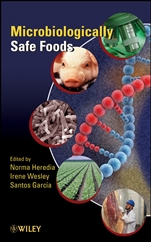
Microbiologically Safe Foods
ISBN 9780470053331
Autor: Norma L. Heredia, Irene V. Wesley, Jose Santos Garcia
Wydawca: Wiley
Dostępność: 3-6 tygodni
Cena: 784,35 zł
Przed złożeniem zamówienia prosimy o kontakt mailowy celem potwierdzenia ceny.
ISBN13: |
9780470053331 |
ISBN10: |
047005333X |
Autor: |
Norma L. Heredia, Irene V. Wesley, Jose Santos Garcia |
Oprawa: |
Hardback |
Rok Wydania: |
2009-04-29 |
Ilość stron: |
696 |
Wymiary: |
241x160 |
Tematy: |
MB |
Microbiologically Safe Foods
Edited by
Norma Heredia
Irene Wesley
Santos Garcia
A comprehensive overview of food contamination and how to guard against it
Spanning the entire "farm to fork" continuum, Microbiologically Safe Foods provides the most up–to–date treatment of food contamination and the state–of–the–art technologies that protect our food supply. An accurate assessment of today′s global food production chain and the microbial threats that face it, this reference summarizes important advances in scientific knowledge, food–processing practice, pre– and post–harvest food safety, quality control, and regulatory information.
Written by leading authorities, Microbiologically Safe Foods covers such key topics as:
Emerging foodborne pathogens
The use of predictive microbiology
The role of genetically modified organisms (GMOs) in food safety
Avian influenza and its implications for food safety
Innovative packaging and other technologies that inhibit spoilage organisms and prolong shelf life
Recent foodborne outbreaks involving particular products, and the microbial hazards at fault
The threat of bioterrorism
The impact of HACCP strategies on enhancing food safety
Prion disease and bovine spongiform encephalopathy (BSE)
Comprehensive, consistent, and current, Microbiologically Safe Foods is both an excellent educational text for food safety courses and training programs, and a key working reference for food scientists, processors, lab personnel, regulators, and others involved in the global food supply chain.
Spis treści:
CONTRIBUTORS.
FOREWORD.
PREFACE.
I MICROBIAL FOOD HAZARDS.
1 PUBLIC HEALTH IMPACT OF FOODBORNE ILLNESS: IMPETUS FOR THE INTERNATIONAL FOOD SAFETY EFFORT (Irene V. Wesley).
1.1 Introduction
.
1.2 Statistical Estimates.
1.3 Impact of Representative Foodborne Pathogens.
1.4 National Microbial Baseline Surveys.
1.5 Global Marketplace.
References.
2 FOODBORNE PATHOGENS AND TOXINS: AN OVERVIEW (Santos Garcia and Norma Heredia).
2.1 Introduction.
2.2 Aeromonas.
2.3 Arcobacter.
2.4 Bacillus cereus.
2.5 Brucella.
2.6 Campylobacter.
2.7 Clostridium botulinum.
2.8 Clostridium perfringens.
2.9 Escherichia coli.
2.10 Listeria.
2.11 Plesiomonas shigelloides.
2.12 Salmonella.
2.13 Shigella.
2.14 Staphylococcus aureus.
2.15 Vibrio.
2.16 Yersinia.
2.17 Mycotoxins and Fungi.
2.18 Cryptosporidium.
2.19 Cyclospora.
2.20 Entamoeba.
2.21 Giardia.
2.22 Anisakis simplex.
2.23 Ascaris.
2.24 Diphyllobothrium latum.
2.25 Taenia.
2.26 Trichinella spiralis.
2.27 Hepatitis A and E Viruses.
2.28 Norovirus.
References.
II EMERGING ISSUES.
3 CRONOBACTER GEN. NOV. (ENTEROBACTER) SAKAZAKII: CURRENT KNOWLEDGE AND FUTURE CONSIDERATIONS (Genisis Iris Dancer and Dong–Hyun Kang).
3.1 Introduction.
3.2 History of Illness Caused by (E). sakazakii.
3.3 Infant Susceptibility.
3.4 Novel Prevention Strategies.
3.5 Infant Formula Processing.
3.6 Biochemical Characterization and Taxonomy.
3.7 Environmental Sources of (E). sakazakii.
3.8 Resistance and Virulence Factors of (E). sakazakii.
3.9 Current Isolation and Detection Techniques.
References.
4 PRION DISEASES (Debbie McKenzie and Judd Aiken).
4.1 Introduction.
4.2 Transmissible Spongiform Encephalopathies.
4.3 Nature of the Illness Caused.
4.4 Pathogenesis.
4.5 Characteristics of the Agent.
4.6 Epidemiology.4.7 PrPSc Detection.
4.8 Physical Means of Destruction of the Organism.
4.9 Prevention and Control Measures.
References.
5 AVIAN INFLUENZA A (H5N1): POTENTIAL THREAT TO FOOD SAFETY (James Mark Simmerman and Peter K. Ben Embarek).
5.1 Introduction.
5.2 Emergence of H5N1 Avian Influenza.
5.3 Epidemiology of Human H5N1 Infection.
5.4 Clinical Presentation and Laboratory Diagnosis.
5.5 Food Safety Considerations.
5.6 Global Response.
References.
III FOOD SAFETY ISSUES AND THE MICROBIOLOGY OF SPECIFIC COMMODITIES.
6 FOOD SAFETY ISSUES AND THE MICROBIOLOGY OF BEEF (Robin C. Anderson, Steven C. Ricke, Bwalya Lungu, Michael G. Johnson, Christy Oliver, Shane M. Horrocks, and David J. Nisbet).
6.1 Introduction.
6.2 Enterohemorrhagic Escherichia coli O157:H7 in Beef.
6.3 Salmonella in Beef.
6.4 Listeria in Beef.
6.5 Campylobacter in Beef.
6.6 Control of Foodborne Pathogens in Beef.
6.7 Conclusions.
References.
7 FOOD SAFETY ISSUES AND THE MICROBIOLOGY OF MILK AND DAIRY PRODUCTS (Mansel W. Griffiths).
7.1 Introduction.
7.2 Microflora of Raw Milk.
7.3 Public Health Concerns from Dairy Products.
7.4 Milk and Cream.
7.5 Cheese and Fermented Dairy Products.
7.6 Ice Cream.
7.7 Butter.
7.8 Milk Powder.
7.9 Detection of Microorganisms in Milk.
7.10 Novel Processing Methods.
7.11 Global Trade and Regulations.
References.
8 FOOD SAFETY ISSUES AND THE MICROBIOLOGY OF POULTRY (Irene V. Wesley).
8.1 Introduction.
8.2 Characteristics of Foodborne Illness.
8.3 Approaches to Maintaining Product Quality and Reducing the Number of Microorganisms.
8.4 Conclusions.
References.
9 FOOD SAFETY ISSUES AND THE MICROBIOLOGY OF EGGS AND EGG PRODUCTS (Jean–Yves D’Aoust).
9.1 Shell Egg Development and Structure.
9.2 Microflora of Shell
Eggs.
9.3 Significance of the Detection of Salmonella.
9.4 Eggborne Outbreaks of Human Salmonellosis.
9.5 Thermal Processing of Egg Products.
9.6 Potentially Hazardous Egg Products in the Home.
9.7 Control.
References.
10 FOOD SAFETY ISSUES AND THE MICROBIOLOGY OF PORK (Gay Y. Miller and James S. Dickson).
10.1 Introduction.
10.2 Normal Flora of Raw Pork.
10.3 Spoilage.
10.4 Pathogens of Concern.
10.5 Risk of Contamination During Processing.
10.6 Survival and Growth of Pathogens and Spoilage Organisms in Pork Products.
10.7 Indicator Microorganisms.
10.8 Maintaining Product Quality and Reducing the Number of Microorganisms.
10.9 Microbiological Methods for Detection and Quantification.
10.10 Regulations.
References.
11 FOOD SAFETY ISSUES AND THE MICROBIOLOGY OF FISH AND SHELLFISH (Lucio Galaviz–Silva, Gracia Gomez–Anduro, Zinnia J. Molina–Garza, and Felipe Ascencio–Valle).
11.1 Introduction.
11.2 Normal Flora of Fish and Shellfish.
11.3 Microbial Hazards and Preventive Measures.
11.4 Spoilage.
11.5 Seafood Processing and Food Safety.
11.6 Product Quality and Microorganism Reduction Methods.
11.7 Microbiological Methods for Detection and Quantification of Seafood Pathogens.
11.8 Food Safety Challenges for Aquaculture and the Commercial Fishing Industry.
11.9 Effects of Climate on Waterborne and Foodborne Seafood Pathogens.
11.10 Conclusions.
References.
12 FOOD SAFETY ISSUES AND THE MICROBIOLOGY OF FRUITS AND VEGETABLES (Juan S. Leon, Lee–Ann Jaykus, and Christine L. Moe).
12.1 Introduction.
12.2 Normal Microflora of Fresh Produce.
12.3 Spoilage of Fresh Produce.
12.4 Human Pathogens Associated with Produce.
12.5 Factors that Influence Survival and Growth of Organisms.
12.6 Microbiological Methods for Detection and Quantification.
12.7 Indicator Microorganis
Koszyk
Książek w koszyku: 0 szt.
Wartość zakupów: 0,00 zł
Informacje


Kontakt
Gambit
Centrum Oprogramowania
i Szkoleń Sp. z o.o.
Al. Pokoju 29b/22-24
31-564 Kraków
Siedziba Księgarni
ul. Kordylewskiego 1
31-542 Kraków
+48 12 410 5991
+48 12 410 5987
+48 12 410 5989
Subskrypcje
Administratorem danych osobowych jest firma Gambit COiS Sp. z o.o. Na podany adres będzie wysyłany wyłącznie biuletyn informacyjny.
Autoryzacja płatności

Informacje na temat autoryzacji płatności poprzez PayU.

© Copyright 2012: GAMBIT COiS Sp. z o.o. Wszelkie prawa zastrzeżone.
Projekt i wykonanie: Alchemia Studio Reklamy