


Wydawcy
Katalog tematyczny
- Archeologia (109)
- Ekonomia, finanse, business (13704)
- Filozofia (1445)
- Historia (3040)
- Języki i językoznawstwo (2356)
- Lifestyle, hobby i rozrywka (475)
- Medycyna (9704)
- Nauki humanistyczne (4)
- Nauki o Ziemi i środowisku (2638)
- Nauki ścisłe (20412)
- Nauki społeczne (8486)
- Edukacja (229)
- Kryminologia, opieka spełeczna (284)
- Obronność (10)
- Polityka (1389)
- Psychologia (777)
- Socjologia (410)
- Społeczeństwo i kultura (187)
- Nauki techniczne (13450)
- Prawo (1696)
- Publikacje informacyjne i interdyscyplinarne (1288)
- Religia i wierzenia (917)
- Technika komputerowa (4067)
- Zdrowie, relacje międzyludzkie i rozwój osobisty (657)





Informacje szczegółowe o książce
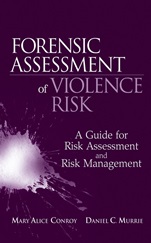
Forensic Assessment of Violence Risk: A Guide for Risk Assessment and Risk Management
ISBN 9780470049334
Autor: Mary Alice Conroy, Daniel C. Murrie
Wydawca: Wiley
Dostępność: 3-6 tygodni
Cena: 476,70 zł
Przed złożeniem zamówienia prosimy o kontakt mailowy celem potwierdzenia ceny.
ISBN13: |
9780470049334 |
ISBN10: |
0470049332 |
Autor: |
Mary Alice Conroy, Daniel C. Murrie |
Oprawa: |
Hardback |
Rok Wydania: |
2007-10-09 |
Ilość stron: |
384 |
Wymiary: |
238x170 |
Tematy: |
JC |
The authoritative source for conducting risk assessments and managing risk
Beginning with a brief historical overview of the field, Forensic Assessment of Violence Risk clarifies the risk assessment model, which begins by exploring the risk assessment question and concludes by connecting the completed risk assessment to effective strategies for risk management.
This vital resource discusses topics including:
Defining the referral question
Idiographic factors and the need for individualized assessment
Understanding the results of a risk assessment
How to proceed from risk assessment to risk management
"Conroy and Murrie successfully capture the advances in risk assessment and forensic assessment seen particularly in the last decade. From task definition to risk communication, prediction to management, adolescents to adults, and civil to criminal contexts, they provide a range of useful information, examples, and conclusions. Forensic Assessment of Violence Risk is valuable for anyone involved in policy–making, litigation, assessment, or interventions related to the risk of violent behavior."
—Kirk Heilbrun, PhD, Department of Psychology, Drexel University
"Forensic Assessment of Violence Risk is both an accessible overview for the professional just beginning to conduct risk assessments and a stimulating update for the seasoned forensic risk assessment practitioner. It strikes a good balance between discussion of recent research and practical guidelines for practice."
—Mark D. Cunningham, PhD, ABPP, Dallas, Texas
"This guide is indispensable for all forensic mental health professionals who assess violence risk for juveniles, psychiatric patients, sex offenders, and in the context of death penalty cases. The model Conroy and Murrie propose represents the integration of what is currently empirically established in terms of base rates for violence with the need to consider idiograp
hic factors for the individual being evaluated."
—Alan M. Goldstein, PhD, ABPP, Board Certified in Forensic Psychology, Professor Emeritus, John Jay College of Criminal Justice—CUNY
Spis treści:
Preface.
Acknowledgments.
1 Historical Overview of Risk Assessment.
2 Introducing a Broad Model for Risk Assessment.
3 Risk of What? Defining the Referral Question.
4 What Do We Know Overall? Consider Normative Data and Population Base Rates.
5 What Do We Know about Individuals Like This One? Empirically Supported Risk and Protective Factors.
6 What Do We Know about This Individual? Idiographic Factors and the Need for Individualized Assessment.
7 What Can We Say about the Results of a Risk Assessment? Risk Communication.
8 From Risk Assessment to Risk Management.
9 Risk Assessment of Patients with Serious Mental Illness.
10 Risk Assessment with Sexual Offenders.
11 Risk Assessment with Juvenile Offenders.
12 Risk Assessment of Death Penalty Defendants.
Epilogue.
Appendix A Risk Assessment Instruments.
Appendix B Sample Risk Assessment Reports.
References.
Index.
Nota biograficzna:
Mary Alice Conroy, PhD, ABPP, directs the Psychological Services Center at Sam Houston State University. She is the President of the American Academy of Forensic Psychology. During a twenty–year career with the U.S. Bureau of Prisons, she conducted over 1,200 risk assessments, including risk management planning. She conducts numerous national and training workshops on forensic assessment for lawyers, judges, correctional personnel, and mental health professionals.
Daniel C. Murrie, PhD, is an Associate Professor of Psychology at Sam Houston State University. He has authored numerous studies related to forensic psychological assessment and maintains a private practice of forensic psychological evaluation, specializing in risk assessment.
Okładka tylna:
The authoritative source for conducting risk assessments and managing risk
Beginning with a brief historical overview of the field, Forensic Assessment of Violence Risk clarifies the risk assessment model, which begins by exploring the risk assessment question and concludes by connecting the completed risk assessment to effective strategies for risk management.
This vital resource discusses topics including:
Defining the referral question
Idiographic factors and the need for individualized assessment
Understanding the results of a risk assessment
How to proceed from risk assessment to risk management
"Conroy and Murrie successfully capture the advances in risk assessment and forensic assessment seen particularly in the last decade. From task definition to risk communication, prediction to management, adolescents to adults, and civil to criminal contexts, they provide a range of useful information, examples, and conclusions. Forensic Assessment of Violence Risk is valuable for anyone involved in policy–making, litigation, assessment, or interventions related to the risk of violent behavior."
—Kirk Heilbrun, PhD, Department of Psychology, Drexel University
"Forensic Assessment of Violence Risk is both an accessible overview for the professional just beginning to conduct risk assessments and a stimulating update for the seasoned forensic risk assessment practitioner. It strikes a good balance between discussion of recent research and practical guidelines for practice."
—Mark D. Cunningham, PhD, ABPP, Dallas, Texas
"This guide is indispensable for all forensic mental health professionals who assess violence risk for juveniles, psychiatric patients, sex offenders, and in the context of death penalty cases. The model Conroy and Murrie propose represents the integration of what is currently empirically established in terms of base rates for violence with the need to consider id
iographic factors for the individual being evaluated."
—Alan M. Goldstein, PhD, ABPP, Board Certified in Forensic Psychology, Professor Emeritus, John Jay College of Criminal Justice—CUNY
Koszyk
Książek w koszyku: 0 szt.
Wartość zakupów: 0,00 zł
Informacje


Kontakt
Gambit
Centrum Oprogramowania
i Szkoleń Sp. z o.o.
Al. Pokoju 29b/22-24
31-564 Kraków
Siedziba Księgarni
ul. Kordylewskiego 1
31-542 Kraków
+48 12 410 5991
+48 12 410 5987
+48 12 410 5989
Subskrypcje
Administratorem danych osobowych jest firma Gambit COiS Sp. z o.o. Na podany adres będzie wysyłany wyłącznie biuletyn informacyjny.
Autoryzacja płatności

Informacje na temat autoryzacji płatności poprzez PayU.

© Copyright 2012: GAMBIT COiS Sp. z o.o. Wszelkie prawa zastrzeżone.
Projekt i wykonanie: Alchemia Studio Reklamy