


Wydawcy
Katalog tematyczny
- Archeologia (109)
- Ekonomia, finanse, business (13704)
- Filozofia (1445)
- Historia (3040)
- Języki i językoznawstwo (2356)
- Lifestyle, hobby i rozrywka (475)
- Medycyna (9704)
- Nauki humanistyczne (4)
- Nauki o Ziemi i środowisku (2638)
- Nauki ścisłe (20412)
- Astronomia (294)
- Biologia (5119)
- Biochemia (575)
- Biologia człowieka (14)
- Biologia komórkowa (377)
- Biologia molekularna (398)
- Biologia rozwoju (130)
- Biologia, ogólnie (1277)
- Botanika (280)
- Hydrobiologia (92)
- Mikrobiologia (363)
- Mykologia (22)
- Zoologia (303)
- Chemia (6540)
- Fizyka (3309)
- Matematyka (4574)
- Nauki ścisłe, ogólnie (503)
- Nauki społeczne (8486)
- Nauki techniczne (13450)
- Prawo (1696)
- Publikacje informacyjne i interdyscyplinarne (1288)
- Religia i wierzenia (917)
- Technika komputerowa (4067)
- Zdrowie, relacje międzyludzkie i rozwój osobisty (657)





Informacje szczegółowe o książce
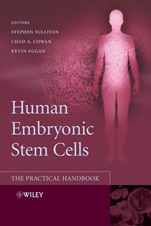
Human Embryonic Stem Cells: The Practical Handbook
ISBN 9780470033562
Autor: Stephen Sullivan, Chad A Cowan, Kevin Eggan
Wydawca: Wiley
Dostępność: 3-6 tygodni
Cena: 932,40 zł
Przed złożeniem zamówienia prosimy o kontakt mailowy celem potwierdzenia ceny.
ISBN13: |
9780470033562 |
ISBN10: |
0470033568 |
Autor: |
Stephen Sullivan, Chad A Cowan, Kevin Eggan |
Oprawa: |
Hardback |
Rok Wydania: |
2007-06-08 |
Ilość stron: |
424 |
Wymiary: |
252x174 |
Tematy: |
PS |
Since their isolation in 1998, human embryonic stem (ES) cells have been used as a powerful experimental model for studying the mechanisms of stem cell self–renewal, pluripotency, and differentiation in humans. However, the protocols by which these cells are grown still differ considerably from laboratory to laboratory and standardisation is needed in this young area of research.
Human Embryonic Stem Cells: The Practical Handbook contains all basic methods for sourcing, deriving, culturing, and manipulating human ES cells. The editors have gathered the leading scientists in the field to describe the protocols that they have carried out and tested in their own labs.
The bookContains practical information for newcomers to the field: from how to source human ES cells from international cell banks to organizing the laboratory to accommodate work with these cells.
Provides protocols for routine culture as well as specialized protocols for directing differentiation into specific cell lineages.
Addresses the different proclivities and behaviours of individual human ES cell lines: authors state which lines they tried their protocols on and, more importantly, which lines worked best.
Includes troubleshooting sections that address common problems and offer advice on how these can be overcome.
Follows a simple, concise, and consistent structure: background material and hypothesizing are kept to a minimum to insure clarity and usability at the bench.
Human Embryonic Stem Cells: The Practical Handbook is the essential source of up–to–date, practical information for all researchers and clinicians working with human embryonic stem cells.
Spis treści:
Foreword. Davor Solter
Preface.
Section 1: Obtaining and culturing human embryonic stem cells.
1 Organiza
tion and good aseptic technique in the human embryonic stem cell laboratory.
Minal J Patel, Emma L Stephenson, and Stephen L Minger
2 Sourcing human embryonic stem cell lines.
Glyn Stacey
3 Human embryo culture for human embryonic stem cell derivation.
R. Douglas Powers and Jeannine Witmyer
4 Derivation of human embryonic stem cell lines.
Stephen Sullivan, Dieter Egli, Hidenori Akutsu, Douglas A. Melton, Kevin Eggan and Chad A. Cowan
5 Standard culture of human embryonic stem cells.
Jeremy M. Crook, Rachel Horne, and Alan Colman
6 Culture of human embryonic stem cells in chemically defined conditions.
Julie Hsu Clark and Sheng Ding
Section 2: Characterization of undifferentiated embryonic stem cells.
7 Phenotypic analysis of human embryonic stem cells.
Jonathan S. Draper, Cheryle A. Séguin and Peter W. Andrews
8 Genetic and epigenetic analysis of human embryonic stem cells.
Laurie A. Boyer, Rudolf Jaenisch, and Maisam Mitalipova
Section 3: Manipulation of human embryonic stem cells.
9 In vivo differentiation of human embryonic stem cells.
Scott A. Noggle, Francesca M. Spagnoli, Ali H. Brivanlou
10 In vitro differentiation of human embryonic stem cells.
A. Henry Sathananthan and Alan Trounson
11 Differentiation of human embryonic stem cells into extraembryonic cell types.
Cheryle A. Séguin and Jonathan S. Draper
12 Directed differentiation of human embryonic stem cells into:
(a) Early endoderm cells.
Kenji Osafune, Alice E. Chen and Douglas A. Melton
(b) Hepatic cells.
Neta Lavon and Nissim Benvenisty
(c) Pancreatic cells.
Hiram Chipperfield
13 Directed differentiation of human embryonic stem cells into:
(a) Cardiomyocytes.
Christine Mummery, Robert Passier and Chris Denning
(b) Endothelial cells.
Carrie Soukup, Shulamit Levenberg and Ondine Cleaver
(c) Osteogenic cells.
Jeffrey M. Karp, Alborz Mah
davi, Lino S. Ferreira, Ali Khademhosseini and Robert Langer
(d) Hematopoietic in vivo repopulating cells.
Shannon McKinney–Freeman, Thorsten M. Schlaeger and George Q. Daley
(e) Lymphocytes.
Petter S. Woll and Dan S. Kaufman
(f) Myeloid cells.
Chantal Cerdan and Mickie Bhatia
14 Directed differentiation of human embryonic stem cells into:
(a) Forebrain neurons.
Emily A. Davis and Lawrence S.B. Goldstein
(b) Dopaminergic neuron.
Jan Pruszak and Ole Isacson
(c) Spinal motor neurons.
Bao–Yang Hu and Su–Chun Zhang
15 (a) Gene targeting: knock out and knock in by homologous recombination.
Thomas P. Zwaka
(b) RNA interference in human embryonic stem cells.
M. William Lensch, Asmin Tulpule and Holm Zaehres
(c) Generation of gene reporters using bacterial artificial chromosome recombineering. Andrew J. Washkowitz and David A. Shaywitz
Afterword. Azim Surani
Index.
Nota biograficzna:
Stephen Sullivan: Trinity College, Dublin, Ireland
Kevin Eggan: Harvard University, Cambridge, MA, USA
Chad A. Cowan: Harvard University, Cambridge, MA, USA
Okładka tylna:
Since their isolation in 1998, human embryonic stem (ES) cells have been used as a powerful experimental model for studying the mechanisms of stem cell self–renewal, pluripotency, and differentiation in humans. However, the protocols by which these cells are grown still differ considerably from laboratory to laboratory and standardisation is needed in this young area of research.
Human Embryonic Stem Cells: The Practical Handbook contains all basic methods for sourcing, deriving, culturing, and manipulating human ES cells. The editors have gathered the leading scientists in the field to describe the protocols that they have carried out and tested in their own labs.
The bookCont
ains practical information for newcomers to the field: from how to source human ES cells from international cell banks to organizing the laboratory to accommodate work with these cells.
Provides protocols for routine culture as well as specialized protocols for directing differentiation into specific cell lineages.
Addresses the different proclivities and behaviours of individual human ES cell lines: authors state which lines they tried their protocols on and, more importantly, which lines worked best.
Includes troubleshooting sections that address common problems and offer advice on how these can be overcome.
Follows a simple, concise, and consistent structure: background material and hypothesizing are kept to a minimum to insure clarity and usability at the bench.
Human Embryonic Stem Cells: The Practical Handbook is the essential source of up–to–date, practical information for all researchers and clinicians working with human embryonic stem cells.
Koszyk
Książek w koszyku: 0 szt.
Wartość zakupów: 0,00 zł
Informacje


Kontakt
Gambit
Centrum Oprogramowania
i Szkoleń Sp. z o.o.
Al. Pokoju 29b/22-24
31-564 Kraków
Siedziba Księgarni
ul. Kordylewskiego 1
31-542 Kraków
+48 12 410 5991
+48 12 410 5987
+48 12 410 5989
Subskrypcje
Administratorem danych osobowych jest firma Gambit COiS Sp. z o.o. Na podany adres będzie wysyłany wyłącznie biuletyn informacyjny.
Autoryzacja płatności

Informacje na temat autoryzacji płatności poprzez PayU.

© Copyright 2012: GAMBIT COiS Sp. z o.o. Wszelkie prawa zastrzeżone.
Projekt i wykonanie: Alchemia Studio Reklamy