


Wydawcy
Katalog tematyczny
- Archeologia (1)
- Ekonomia, finanse, business (698)
- Filozofia (20)
- Historia (57)
- Języki i językoznawstwo (4)
- Lifestyle, hobby i rozrywka (32)
- Medycyna (1025)
- Nauki humanistyczne (2)
- Nauki o Ziemi i środowisku (430)
- Nauki ścisłe (1680)
- Nauki społeczne (1297)
- Nauki techniczne (530)
- Budownictwo lądowe (6)
- Chemia przemysłowa (27)
- Elektronika i telekomunikacja (163)
- Energetyka (25)
- Inne nauki stosowane (16)
- Inżynieria biochemiczna (11)
- Inżynieria transportu (17)
- Mechanika i materiały (176)
- Nauka o środowisku (27)
- Rolnictwo (8)
- Technika, ogólnie (46)
- Prawo (1437)
- Publikacje informacyjne i interdyscyplinarne (32)
- Religia i wierzenia (15)
- Technika komputerowa (237)
- Zdrowie, relacje międzyludzkie i rozwój osobisty (4)





Informacje szczegółowe o książce
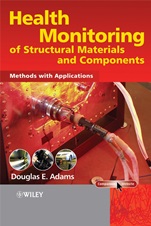
Health Monitoring of Structural Materials and Components: Methods with Applications
ISBN 9780470033135
Autor: Douglas Adams
Wydawca: Wiley
Dostępność: 3-6 tygodni
Cena: 622,65 zł
Przed złożeniem zamówienia prosimy o kontakt mailowy celem potwierdzenia ceny.
ISBN13: |
9780470033135 |
ISBN10: |
0470033134 |
Autor: |
Douglas Adams |
Oprawa: |
Hardback |
Rok Wydania: |
2007-04-20 |
Ilość stron: |
476 |
Wymiary: |
250x174 |
Tematy: |
TG |
The first complete introduction to health monitoring, encapsulating both technical information and practical case studies spanning the breadth of the subject.Written by a highly–respected figure in structural health monitoring, this book provides readers with the technical skills and practical understanding required to solve new problems encountered in the emerging field of health monitoring.The book presents a suite of methods and applications in loads identification (usage monitoring), in–situ damage identification (diagnostics), and damage and performance prediction (prognostics).Concepts in modelling, measurements, and data analysis are applied through real–world case studies to identify loading, assess damage, and predict the performance of structural components, as well as examine engine components, automotive accessories, aircraft parts, spacecraft components, civil structures and defence system components.In particular the book, provides the reader with a fundamental and practical understanding of the material, discusses models demonstrating the physical basis for health monitoring techniques, gives a detailed review of the best practices in dynamic measurements including sensing, presents numerous data analysis techniques using model– and signal–based methods, discusses case studies involving real–world applications of health monitoring, offers end–of–chapter problems to enhance the study of the topic for students and instructors; and includes an accompanying website with MATLAB programs providing hands–on training to readers for writing health monitoring model simulation and data analysis algorithms.Health Monitoring of Structural Materials and Components is an excellent introductory text for newcomers to the subject as well as an excellent study tool for students and lecturers. Practitioners and researchers, those with a greater understanding and application of the technical skills involved, will also
find this essential reading as a reference text to address current and future challenges in this field. The wide variety of case studies will appeal to a broad spectrum of engineers in the aerospace, civil, mechanical, machinery and defence communities.
In particular the book:
provides the reader with a fundamental and practical understanding of the material;
discusses models demonstrating the physical basis for health monitoring techniques;
gives a detailed review of the best practices in dynamic measurements including sensing;
presents numerous data analysis techniques using model– and signal–based methods;
discusses case studies involving real–world applications of health monitoring;
offers end–of–chapter problems to enhance the study of the topic for students and instructors; and
includes an accompanying website with MATLAB programs providing hands–on training to readers for writing health monitoring model simulation and data analysis algorithms.
Spis treści:
Preface.
Acknowledgments.
1 Introduction.
1.1 Basics of Health Monitoring.
1.2 Commercial Needs for Health Monitoring Technology.
1.3 Defense Needs for Health Monitoring Technology.
1.4 Technical Approach to Health Monitoring.
1.5 Definitions of Common Terminology.
1.6 Comparison of Nondestructive Testing (NDT) and Health Monitoring Techniques.
1.7 Potential Impact of Health Monitoring Technologies.
1.8 Overview of Technical Areas in Health Monitoring.
1.9 Summary.
References.
Problems.
2 Modeling Components.
2.1 Modeling Needs.
2.2 First–Principle Models.
2.3 Data–Driven Models.
2.4 Load Models.
2.5 Summary.
References
Problems.
3 Modeling Damage.
3.1 Static Damage Models.
3.2 Dynamic Models for Damage.
3.3 Failure Models.
3.4 Performance Models.
3.5 Summary.
References.
Problems.
4 Measurements.
4.1 Measurement Needs.
4.2 Data Environment.
4.3 Transducer Attachment Methods.
4.4 Transducers.
4.5 Data Acquisition.
4.6 Summary.
References.
Problems.
5 Data Analysis.
5.1 Data Analysis Needs and Framework.
5.2 Filter Data.
5.3 Estimation of Unmeasured Variables (State Inference).
5.4 Temporal Analysis.
5.5 Transformation of Data.
5.6 Averaging of Data.
5.7 Spatial Data Analysis.
5.8 Feature Extraction.
5.9 Variability Analysis.
5.10 Loads Identification.
5.11 Damage Identification.
5.12 Regression Analysis for Prognosis.
5.13 Combining Measurement and Data Analysis.
5.14 Summary.
References.
Problems.
6 Case Studies: Loads Identification.
6.1 Metallic Thermal Protection System Panel.
6.2 Gas Turbine Engine Wire Harness and Connector.
6.3 Fuselage Rivet Process Monitoring.
6.4 Large Engine Valve Assembly.
6.5 Suspension with Loosening Bolt.
6.6 Sandwich Panel Undergoing Combined Thermo–Acoustic Loading.
6.7 Summary.
References.
Problems.
7 Case Studies: Damage Identification.
7.1 Vibration–Based Methods.
7.2 Wave Propagation–Based Methods.
7.3 Damage Identification Under Load.
7.4 Summary.
References.
Problems.
8 Case Studies: Damage and Performance Prediction (Prognosis).
8.1 S2 Glass Cylinder (Performance Prediction).
8.2 Stability Bar Linkage (Damage Growth Modeling).
8.3 Summary.
References.
Problems.
Appendix A.
Appendix B.
Index.
Nota biograficzna:
Douglas E. Adams is a recognized lecturer in the field of structural health monitoring, having received numerous awards for his teaching at Purdue University. Notably he has become the youngest ever member of the faculty to be inducted into the Purdue Teaching academy, having achieved consistently high teaching ratings. In combination with excellence in teaching he is also well ac
complished in the research field, receiving the Presidential Early Career award from George W. Bush and becoming the Structural Health Monitoring Person of the Year in 2003. His area of expertise is in nonlinear structural dynamics and experimental system identification with application to health monitoring and mechanical components, having written over 85 technical publications. In recent years he has been able to commercialize his findings, with notable technologies for detecting cracks in wheel assemblies being deployed in Iraq. Over the last five years he has achieved over $3 million in research funding whilst dedicating himself to education and teaching, thus developing an excellent knowledge of the field and achieving precedence within it.
Okładka tylna:
The first complete introduction to health monitoring, encapsulating both technical information and practical case studies spanning the breadth of the subject.Written by a highly–respected figure in structural health monitoring, this book provides readers with the technical skills and practical understanding required to solve new problems encountered in the emerging field of health monitoring.The book presents a suite of methods and applications in loads identification (usage monitoring), in–situ damage identification (diagnostics), and damage and performance prediction (prognostics).Concepts in modelling, measurements, and data analysis are applied through real–world case studies to identify loading, assess damage, and predict the performance of structural components, as well as examine engine components, automotive accessories, aircraft parts, spacecraft components, civil structures and defence system components.In particular the book, provides the reader with a fundamental and practical understanding of the material, discusses models demonstrating the physical basis for health monitoring techniques, gives a detailed review of the best practices in dy
Koszyk
Książek w koszyku: 0 szt.
Wartość zakupów: 0,00 zł
Informacje


Kontakt
Gambit
Centrum Oprogramowania
i Szkoleń Sp. z o.o.
Al. Pokoju 29b/22-24
31-564 Kraków
Siedziba Księgarni
ul. Kordylewskiego 1
31-542 Kraków
+48 12 410 5991
+48 12 410 5987
+48 12 410 5989
Subskrypcje
Administratorem danych osobowych jest firma Gambit COiS Sp. z o.o. Na podany adres będzie wysyłany wyłącznie biuletyn informacyjny.
Autoryzacja płatności

Informacje na temat autoryzacji płatności poprzez PayU.

© Copyright 2012: GAMBIT COiS Sp. z o.o. Wszelkie prawa zastrzeżone.
Projekt i wykonanie: Alchemia Studio Reklamy