


Wydawcy
Katalog tematyczny
- Archeologia (109)
- Ekonomia, finanse, business (13704)
- Filozofia (1445)
- Historia (3040)
- Języki i językoznawstwo (2356)
- Lifestyle, hobby i rozrywka (475)
- Medycyna (9704)
- Nauki humanistyczne (4)
- Nauki o Ziemi i środowisku (2638)
- Nauki ścisłe (20412)
- Astronomia (294)
- Biologia (5119)
- Chemia (6540)
- Chemia analityczna (361)
- Chemia fizyczna (346)
- Chemia nieorganiczna (137)
- Chemia organiczna (535)
- Krystalografia (27)
- Minerologia (46)
- Fizyka (3309)
- Matematyka (4574)
- Nauki ścisłe, ogólnie (503)
- Nauki społeczne (8486)
- Nauki techniczne (13450)
- Prawo (1696)
- Publikacje informacyjne i interdyscyplinarne (1288)
- Religia i wierzenia (917)
- Technika komputerowa (4067)
- Zdrowie, relacje międzyludzkie i rozwój osobisty (657)





Informacje szczegółowe o książce
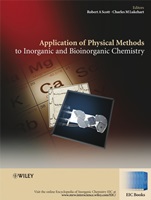
Applications of Physical Methods to Inorganic and Bioinorganic Chemistry
ISBN 9780470032176
Autor: Robert A. Scott, Charles M. Lukehart
Wydawca: Wiley
Dostępność: 3-6 tygodni
Cena: 994,35 zł
Przed złożeniem zamówienia prosimy o kontakt mailowy celem potwierdzenia ceny.
ISBN13: |
9780470032176 |
ISBN10: |
0470032170 |
Autor: |
Robert A. Scott, Charles M. Lukehart |
Oprawa: |
Hardback |
Rok Wydania: |
2007-10-26 |
Ilość stron: |
594 |
Wymiary: |
288x226 |
Tematy: |
PN |
All areas of (bio–) inorganic chemistry depend on a variety of physical methods and instruments to characterize molecules and materials and their reactions. It is difficult, however, for newcomers to the field, and even experts in allied fields, to establish the utility of a given physical method for the characterization of their particular system.
This book provides a practical introduction to a comprehensive set of physical methods that have been applied to (bio–)inorganic systems, with an emphasis on answering questions such as, "what kind of information would this method provide?" or "what type of sample can be examined?" and, more importantly, "what information will not be available if I employ this method (i.e, what are its limitations)? The book provides a quick reference guide (like the "Quick Start" manuals that often come with computers and peripherals) that non–experts can consult to select physical methods appropriate for the characterization of a given materials.
Each method is introduced by a Methods Summary. These summaries are structured consistently to quickly answer practical questions about what information is, and is not, available using each technique, and what kinds of materials can be probed. Thus, at a glance, a non–expert can identify potentially useful methods, and then concentrate on those chapters to determine which methods will be most useful for solving their problem with specific examples of how that method is utilized. Researchers will also find sufficient information to determine if collaboration with others is the best course of action.
Spis treści:
List of Contributors.
Series Preface.
Volume Preface.
Circular Dichroism (CD) Spectroscopy (P. Anthony Presta and Martin J. Stillman).
Electrochemistry (Mark C. Elvington and Karen J. Brewer).
Electron Paramagnetic Resonance (EPR) Spectroscopy (Brian J. Hales).
Electron Spin Echo Envelope Modulation (ESEEM) Spectrosco
py (John McCracken).
Electronic Spectroscopy (Joseph L. Hughes and Elmars Krausz).
Electron–Nuclear Double Resonance (ENDOR) Spectroscopy (Joshua Telser).
Freeze–Quench Kinetics (Simon de Vries).
High–Energy Electron Diffraction (Jian–Min Zuo).
High Resolution Electron Energy–Loss Spectroscopy (Manuel P. Soriaga, Xiaole Chen, Ding Li and John L. Stickney).
Magnetic Circular Dichroism (MCD) Spectroscopy (John Mack and Martin J. Stillman).
Metal Analysis (Katarzyna Wrobel, Kazimierz Wrobel and Joseph A. Caruso).
Microwave Rotational Spectroscopy (Yunjie Xu and Wolfgang Jager).
Mossbauer Spectroscopy (Volker Schunemann and Hauke Paulsen).
Neutron Diffraction (Muhammed Yousufuddin and Robert Bau).
Neutron Scattering (J.Z. Larese).
Nuclear Magnetic Resonance (NMR) Spectroscopy of Inorganic/Organometallic Molecules (Jonathan A. Iggo, Jianke Liu and Yaroslav Z. Khimyak).
Nuclear Magnetic Resonance (NMR) Spectroscopy of Metallobiomolecules (Kara L. Bren).
Nuclear Quadrupole Resonance (NQR) Spectroscopy (Gary P. Wulfsberg).
Nuclear Resonance Vibration Spectroscopy (NRVS) (Weiqiao Zeng, Nathan J. Silvernail, W. Robert Scheidt and J. Timothy Sage).
Perturbed Angular Correlations of y–rays (PAC) Spectroscopy (Lars Hemmingsen and Tilman Butz).
Photoelectron Spectroscopy (Nadine E. Gruhn and Dennis L. Lichtenberger).
Photoluminescence and Electroluminescence, Solid State (Joel R. Deye and Keith A. Walters).
Rapid Scan, Stopped–Flow Kinetics (Rui–Young Wang).
Vibrational Spectroscopy (R. Brian Dyer and William H. Woodruff).
X–Ray Absorption Spectroscopy (Krisztina A. Bencze, Kalyan C. Kondapalli and Timothy L. Stemmler).
X–Ray Powder Diffraction (Abraham Clearfield and Nattamai Bhuvanesh).
Index.
Okładka tylna:
All areas of (bio–) inorganic chemistry depend on a variety of physical methods and instruments to characterize mole
cules and materials and their reactions. It is difficult, however, for newcomers to the field, and even experts in allied fields, to establish the utility of a given physical method for the characterization of their particular system.
This book provides a practical introduction to a comprehensive set of physical methods that have been applied to (bio–)inorganic systems, with an emphasis on answering questions such as, "what kind of information would this method provide?" or "what type of sample can be examined?" and, more importantly, "what information will not be available if I employ this method (i.e, what are its limitations)? The book provides a quick reference guide (like the "Quick Start" manuals that often come with computers and peripherals) that non–experts can consult to select physical methods appropriate for the characterization of a given materials.
Each method is introduced by a Methods Summary. These summaries are structured consistently to quickly answer practical questions about what information is, and is not, available using each technique, and what kinds of materials can be probed. Thus, at a glance, a non–expert can identify potentially useful methods, and then concentrate on those chapters to determine which methods will be most useful for solving their problem with specific examples of how that method is utilized. Researchers will also find sufficient information to determine if collaboration with others is the best course of action.
Koszyk
Książek w koszyku: 0 szt.
Wartość zakupów: 0,00 zł
Informacje


Kontakt
Gambit
Centrum Oprogramowania
i Szkoleń Sp. z o.o.
Al. Pokoju 29b/22-24
31-564 Kraków
Siedziba Księgarni
ul. Kordylewskiego 1
31-542 Kraków
+48 12 410 5991
+48 12 410 5987
+48 12 410 5989
Subskrypcje
Administratorem danych osobowych jest firma Gambit COiS Sp. z o.o. Na podany adres będzie wysyłany wyłącznie biuletyn informacyjny.
Autoryzacja płatności

Informacje na temat autoryzacji płatności poprzez PayU.

© Copyright 2012: GAMBIT COiS Sp. z o.o. Wszelkie prawa zastrzeżone.
Projekt i wykonanie: Alchemia Studio Reklamy