


Wydawcy
Katalog tematyczny
- Archeologia (109)
- Ekonomia, finanse, business (13704)
- Filozofia (1445)
- Historia (3040)
- Języki i językoznawstwo (2356)
- Lifestyle, hobby i rozrywka (475)
- Medycyna (9704)
- Nauki humanistyczne (4)
- Nauki o Ziemi i środowisku (2638)
- Nauki ścisłe (20412)
- Nauki społeczne (8486)
- Nauki techniczne (13450)
- Budownictwo lądowe (1045)
- Chemia przemysłowa (2258)
- Elektronika i telekomunikacja (3287)
- Energetyka (1122)
- Inne nauki stosowane (363)
- Inżynieria biochemiczna (507)
- Inżynieria transportu (232)
- Mechanika i materiały (3316)
- Nauka o środowisku (321)
- Rolnictwo (507)
- Technika, ogólnie (475)
- Prawo (1696)
- Publikacje informacyjne i interdyscyplinarne (1288)
- Religia i wierzenia (917)
- Technika komputerowa (4067)
- Zdrowie, relacje międzyludzkie i rozwój osobisty (657)





Informacje szczegółowe o książce
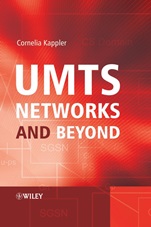
UMTS Networks and Beyond
ISBN 9780470031902
Autor: Cornelia Kappler
Wydawca: Wiley
Dostępność: 3-6 tygodni
Cena: 459,90 zł
Przed złożeniem zamówienia prosimy o kontakt mailowy celem potwierdzenia ceny.
ISBN13: |
9780470031902 |
ISBN10: |
0470031905 |
Autor: |
Cornelia Kappler |
Oprawa: |
Hardback |
Rok Wydania: |
2009-02-24 |
Ilość stron: |
386 |
Wymiary: |
246x173 |
Tematy: |
TJ |
An all–encompassing coverage on UMTS Networks including an in–depth discussion of current work on UMTS evolution and 4G .
UMTS Networks and Beyond offers a comprehensive introduction to the networking aspects of UMTS and the networks coming after UMTS. The book is unique in that it systematically compares how a particular problem, e.g. obtaining connectivity, is solved in UMTS and how the same problem is solved in a Computer Network such as the Internet. It also highlights why the respective solutions are so different.
The first part of the book provides a detailed technical discussion of UMTS, including original vision, architecture, protocol stacks and overall functionality. It places UMTS in the context of its evolution of from GSM and its convergence with Computer Networks. The second part of the book discusses today’s vision of 4G, and introduces upcoming networking technologies. Emphasis is on LTE / SAE as successor of UMTS; UMB, WiMAX and NGN are also discussed. The book gives an overview of what these technologies are likely to offer, of their architectures, protocols and functionality. It also discusses their differences and similarities, and whether they will qualify as 4G.
Key Features:
•Provides readers, particularly those with a background in IP–based networks, with a technical understanding of what UMTS does, how it works and how it is likely to evolve
•Explains the differences in design between UMTS Networks and Computer Networks and discusses how these design divergences can be reconciled in the future
•Shows how economic considerations shape the design of UMTS
•Motivates why particular design choices are made in UMTS
•Gives an in–depth introduction to LTE / SAE
•Provides a detailed picture of the state of the art in 4G
•Illustrates the theory with numerous tables and figures
This comprehensive textbook is essential
reading for advanced students and lecturers in communications systems and networking. It is also of interest to engineers and researchers in the field of UMTS and communications systems.
Spis treści:
Preface.
1. Introduction.
1.1 Mobile Telecommunication Networks and Computer Networks.
1.2 Network design principles and business models.
1.3 Summary.
2. UMTS Motivation and Context.
2.1 Mobile telecommunication market evolution.
2.2 Mobile telecommunication technology evolution.
2.3 UMTS Genesis.
2.4 Comparison of UMTS with other mobile technologies.
2.5 Summary.
3. Standardization.
3.1 The importance of standardization.
3.2 Standardization Bodies.
3.3 Summary.
4. UMTS Architecture and Functionality.
4.1 Telecommunication Network architecture overview.
4.2 High–level architecture of 3G Networks.
4.3 GSM Architecture.
4.4 GPRS architecture.
4.5 UMTS Architecture.
4.6 3GPP System architecture.
4.7 WLAN architecture.
4.8 Summary.
5. UMTS Radio Interface – the Physical Layer.
5.1 Information coding .
5.2 Sharing the electromagnetic spectrum.
5.3 Summary.
6. Packet–switched Domain – Architecture and Protocols.
6.1 Architecture .
6.2 Protocols.
6.3 Summary.
7. Circuit–switched Domain – Architecture and Protocols.
7.1 Architecture .
7.2 Protocols.
7.3 Summary.
8. UMTS Radio Access Network – Architecture and Protocols.
8.1 Architecture .
8.2 Protocols and Channels.
8.3 Summary.
9. User Equipment – Architecture and Protocols.
9.1 Architecture.
9.2 Summary.
10. IP Multimedia System – Architecture and Protocols.
10.1 IMS service support.
10.2 Architecture .
10.3 Protocols.
10.4 Summary.
11. Basic UMTS Functionality.
11.1 Public Land Mobile Network (PLMN).
11.2 The bearer concept.<
br>11.3 UE preparation.
11.4 RRC Connection set–up procedure.
11.5 GPRS Attach procedure.
11.6 PDP Context establishment procedure.
11.7 Detaching from the Network.
11.8 Basic UMTS functionality in roaming scenarios.
11.9 Basic WLAN functionality.
11.10 Discussion .
11.11 Summary .
12. Mobility.
12.1 Problem description.
12.2 Mobility in UMTS.
12.3 Link–layer mobility in a WLAN .
12.4 Mobility in Computer Networks.
12.5 Discussion.
12.6 Summary.
13. Security.
13.1 Problem description.
13.2 General solution approach.
13.3 Security in UMTS.
13.4 Security in a WLAN.
13.5 Security in Computer Networks.
13.6 Discussion.
13.7 Summary.
14. Quality of Service.
14.1 Problem description.
14.2 QoS in Computer Networks.
14.3 QoS in UMTS.
14.4 Link–layer QoS in a WLAN.
14.5 Discussion.
14.6 Summary.
15. Session Control.
15.1 Problem description.
15.2 SIP.
15.3 SIP in the IMS.
15.4 Discussion.
15.5 Summary.
16. Charging.
16.1 Problem Description.
16.2 Charging in Computer Networks and WLAN.
16.3 Charging in UMTS.
16.4 Discussion.
16.5 Summary.
17. Policy Control.
17.1 Problem Description.
17.2 Policy control in Computer Networks.
17.3 Policy control in UMTS.
17.4 Discussion.
17.5 Summary.
18. WLAN and other alternative access methods.
18.1 Interworking WLAN.
18.2 Generic Access Network.
18.3 Comparison and discussion.
18.4 Femtocells.
18.5 Summary.
19. UMTS releases summary.
19.1 Release 99.
19.2 Release 4.
19.3 Release 5.
19.4 Release 6.
19.5 Release 7.
19.6 Outlook.
PART I: EPILOGUE – CONVERGENCE IN UMTS.
20. 4G Motivation and Context.
20.1 Today’s mobile Telecommunication Networks.
20.2 Near–term evolution towards 4G.
20.3 IMT–Advanced.
20.4 Discussion .
20.5 Summary .
21. Evolution towards 4G: 3GPP.
21.1 3GPP Rel–8 – architecture and protocols.
21.2 E–UTRA .
21.3 EPC – architecture and protocols.
21.4 3GPP Rel–8 Functionality.
21.5 Discussion.
21.6 Summary.
22. Evolution towards 4G: Non–3GPP technologies.
22.1 cdma2000.
22.1.1 cdma2000–1xRTT and cdma2000–1xEV–DO.
22.1.2 UMB.
22.2 Mobile WiMAX .
22.3 Next Generation Networks.
22.4 Discussion.
22.5 Summary.
23. Beyond 4G?.
23.1 Self–managing Networks.
23.2 Ubiquitous Computing, the Internet of Things and Ambient Intelligence.
23.3 Clean Slate Approach.
23.4 Summary.
PART II EPILOGUE – CONVERGENCE REVISITED.
Appendix A: Terminology.
Appendix B: The Systematics of 3GPP Specification Numbering.
References.
Acronyms.
Index.
Okładka tylna:
An all–encompassing coverage on UMTS Networks including an in–depth discussion of current work on UMTS evolution and 4G .
UMTS Networks and Beyond offers a comprehensive introduction to the networking aspects of UMTS and the networks coming after UMTS. The book is unique in that it systematically compares how a particular problem, e.g. obtaining connectivity, is solved in UMTS and how the same problem is solved in a Computer Network such as the Internet. It also highlights why the respective solutions are so different.
The first part of the book provides a detailed technical discussion of UMTS, including original vision, architecture, protocol stacks and overall functionality. It places UMTS in the context of its evolution of from GSM and its convergence with Computer Networks. The second part of the book discusses today’s vision of 4G, and introduces upcoming networking technologies. Emphasis is on LTE / SAE as successor of UMTS; UMB, WiMAX and NGN are also discussed. The book gives an overview of what these technologies are
Koszyk
Książek w koszyku: 0 szt.
Wartość zakupów: 0,00 zł
Informacje


Kontakt
Gambit
Centrum Oprogramowania
i Szkoleń Sp. z o.o.
Al. Pokoju 29b/22-24
31-564 Kraków
Siedziba Księgarni
ul. Kordylewskiego 1
31-542 Kraków
+48 12 410 5991
+48 12 410 5987
+48 12 410 5989
Subskrypcje
Administratorem danych osobowych jest firma Gambit COiS Sp. z o.o. Na podany adres będzie wysyłany wyłącznie biuletyn informacyjny.
Autoryzacja płatności

Informacje na temat autoryzacji płatności poprzez PayU.

© Copyright 2012: GAMBIT COiS Sp. z o.o. Wszelkie prawa zastrzeżone.
Projekt i wykonanie: Alchemia Studio Reklamy