


Wydawcy
Katalog tematyczny
- Archeologia (109)
- Ekonomia, finanse, business (13704)
- Filozofia (1445)
- Historia (3040)
- Języki i językoznawstwo (2356)
- Lifestyle, hobby i rozrywka (475)
- Medycyna (9704)
- Nauki humanistyczne (4)
- Nauki o Ziemi i środowisku (2638)
- Nauki ścisłe (20412)
- Nauki społeczne (8486)
- Nauki techniczne (13450)
- Prawo (1696)
- Publikacje informacyjne i interdyscyplinarne (1288)
- Religia i wierzenia (917)
- Technika komputerowa (4067)
- Zdrowie, relacje międzyludzkie i rozwój osobisty (657)





Informacje szczegółowe o książce
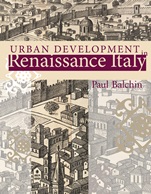
Urban Development in Renaissance Italy
ISBN 9780470031544
Autor: Paul N. Balchin
Wydawca: Wiley
Dostępność: 3-6 tygodni
Cena: 530,25 zł
Przed złożeniem zamówienia prosimy o kontakt mailowy celem potwierdzenia ceny.
ISBN13: |
9780470031544 |
ISBN10: |
0470031549 |
Autor: |
Paul N. Balchin |
Oprawa: |
Hardback |
Rok Wydania: |
2008-04-21 |
Ilość stron: |
508 |
Wymiary: |
226x180 |
Tematy: |
AM |
Providing a comprehensive account of one of the most formative historical periods, this book uniquely describes Renaissance architecture as the physical manifestation of economic, social and political change. Shifts in architectural and design are described in parallel with Italy’s economic and demographic growth, external and internal conflict and the evolution of urban and regional government. Urban Development in Renaissance Italy covers the full extent of the Renaissance period, charting the era’s medieval roots and its transformation into Mannerist and Baroque tendencies. Encompassing Palermo and Naples, the book fully covers northern, central and southern Italy, surpassing the conventional literature that tends to focus solely on northern Italy. Transforming medieval towns into city states, Renaissance governments invested heavily in developing the built environment to create a sense of awe and civic pride; while aristocratic dynasties, bankers and merchants commissioned sumptuous properties as a means of expressing their wealth and position in society; and holy orders built imposing churches to extend their influence. Architecture and planning, it is argued by Dr Paul Balchin provided a clear and significant path to political and economic power. It is within this context that the centre of political and economic gravity shifted over time within Italy from the republic of Venice in the 14 th century to Medici Florence in the 15 th century, and on to Papal Rome in the 16 th and early 17th centuries.
List of Figures. Lit of Tables. Preface. 1. Introduction. Part 1: The Later Middle Ages. 2. The development of urban government and public patronage in the later Middle Ages. 3. Public patronage and urban development. 4. Economic development in the later Middle Ages. 5. Economic growth and the private development of the built environment. Part 2: The 15th Century. 6. Oligarchic and signorial government in the 15th century. 7. Public development and the re–emergence of classical architrecutre and town planning. 8. Population trends and economic equilibrium in the 15th century. 9. Private patronage and the re–emergence of classical architecture in the 15th century. Part 3: The 16th Century. 10. The ascendancy of principalities and Spanish rule in 16th century. 11. Public patronage, architecture and town planning from Classicism to Mannerism. 12. Economic growth and urban development in the 16th century. 13. Private patronage and architecture: affluence and conspicuous consumption. Part 4: The 17th Century. 14. The development of government in Italy in the early 17th century and its effects on the built environment. 15. Public patronage: the emergence of Baroque architecture and town planning. 16. Economic stagnation and urban development in the early 17th century. 17. Private patronage and Baroque architecture. Appendix: Principal Architects and Where They Mainly Practised. Glossary: General and Architectural Terms. Bibliography. Index.
Dr Paul Balchin is former Reader in Urban Economics at the University of Greenwich and Visiting Lecturer in European Town Planning at Kingston University. Published widely, he is author and co–author of several books on different aspects of the built environment, including publications on planning in the European Union.
Koszyk
Książek w koszyku: 0 szt.
Wartość zakupów: 0,00 zł
Informacje


Kontakt
Gambit
Centrum Oprogramowania
i Szkoleń Sp. z o.o.
Al. Pokoju 29b/22-24
31-564 Kraków
Siedziba Księgarni
ul. Kordylewskiego 1
31-542 Kraków
+48 12 410 5991
+48 12 410 5987
+48 12 410 5989
Subskrypcje
Administratorem danych osobowych jest firma Gambit COiS Sp. z o.o. Na podany adres będzie wysyłany wyłącznie biuletyn informacyjny.
Autoryzacja płatności

Informacje na temat autoryzacji płatności poprzez PayU.

© Copyright 2012: GAMBIT COiS Sp. z o.o. Wszelkie prawa zastrzeżone.
Projekt i wykonanie: Alchemia Studio Reklamy