


Wydawcy
Katalog tematyczny
- Archeologia (109)
- Ekonomia, finanse, business (13704)
- Filozofia (1445)
- Historia (3040)
- Języki i językoznawstwo (2356)
- Lifestyle, hobby i rozrywka (475)
- Medycyna (9704)
- Nauki humanistyczne (4)
- Nauki o Ziemi i środowisku (2638)
- Nauki ścisłe (20412)
- Astronomia (294)
- Biologia (5119)
- Chemia (6540)
- Chemia analityczna (361)
- Chemia fizyczna (346)
- Chemia nieorganiczna (137)
- Chemia organiczna (535)
- Krystalografia (27)
- Minerologia (46)
- Fizyka (3309)
- Matematyka (4574)
- Nauki ścisłe, ogólnie (503)
- Nauki społeczne (8486)
- Nauki techniczne (13450)
- Prawo (1696)
- Publikacje informacyjne i interdyscyplinarne (1288)
- Religia i wierzenia (917)
- Technika komputerowa (4067)
- Zdrowie, relacje międzyludzkie i rozwój osobisty (657)





Informacje szczegółowe o książce
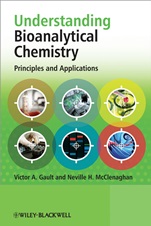
Understanding Bioanalytical Chemistry: Principles and Applications
ISBN 9780470029077
Autor: Victor A. Gault, Neville H. McClenaghan
Wydawca: Wiley
Dostępność: 3-6 tygodni
Cena: 283,50 zł
Przed złożeniem zamówienia prosimy o kontakt mailowy celem potwierdzenia ceny.
ISBN13: |
9780470029077 |
ISBN10: |
0470029072 |
Autor: |
Victor A. Gault, Neville H. McClenaghan |
Oprawa: |
Paperback |
Rok Wydania: |
2009-01-23 |
Ilość stron: |
300 |
Wymiary: |
243x170 |
Tematy: |
PN |
Although chemistry is core to the life and health sciences, it is often viewed as a challenging subject.
Conventional textbooks tend to present chemistry in a way that is not always easily accessible to students, particularly those coming from diverse educational backgrounds, who may not have formally studied chemistry before.
This prompted the authors to write this particular textbook, taking a new, fresh and innovative approach to teaching and learning of chemistry, focussing on bioanalysis to set knowledge in context. This textbook is primarily targeted to undergraduate life and health science students, but may be a useful resource for practising scientists in a range of disciplines.
In this textbook the authors have covered basic principles, terminology and core technologies, which
include key modern experimental techniques and equipment used to analyse important biomolecules in diagnostic, industrial and research settings.
Written by two authors with a wealth of experience in teaching, research and academic enterprise, this textbook represents an invaluable tool for students and instructors across the diverse range of biological and health science courses.
Innovative, stand alone teaching and learning resource to enhance delivery of undergraduate chemistry provision to life and health scientists.Develops student knowledge and understanding of core concepts with reference to relevant, real–life, examples.Clearly written and user–friendly, with numerous full colour illustrations, annotated images, diagrams and tables to enhance learning.Incorporates a modern approach to teaching and learning to motivate the reader and encourage student–centred learning.
Spis treści:
Contents
Preface
1 Introduction to biomolecules
1.1 Overview of chemical and physical attributes of biomolecules
1.2 Classification of biomolec
ules
1.3 Features and characteristics of major biomolecules
1.4 Structure–function relationships
1.5 Significance of biomolecules in nature and science
2 Analysis and quantification of biomolecules
2.1 Importance of accurate determination of biomolecules
2.2 Major methods to detect and quantify biomolecules
2.3 Understanding mass, weight, volume and density
2.4 Understanding moles and molarity
2.5 Understanding solubility and dilutions
3 Transition metals in health and disease
3.1 Structure and characteristics of key transition metals
3.2 Importance of transition metals in physiological processes
3.3 Transition metals as mediators of disease processes
3.4 Therapeutic implications of transition metals
3.5 Determination of transition metals in nature
4 Ions, electrodes and biosensors
4.1 Impact of ions and oxidation–reduction reactions on physical and life processes
4.2 pH, biochemical buffers and physiological regulation
4.3 Chemical and physical sensors and biosensors
4.4 Important measurements using specific electrodes
4.5 Specific applications of biosensors in life and health sciences
5 Applications of spectroscopy
5.1 An introduction to spectroscopic techniques
5.2 Major types of spectroscopy
5.3 Principles and applications of ultraviolet/visible spectrophotometry
5.4 Principles and applications of infrared spectroscopy
5.5 Principles and applications of fluorescence spectrofluorimetry
6 Centrifugation and separation
6.1 Importance of separation methods to isolate biomolecules
6.2 Basic principles underlying centrifugation
6.3 Features and components of major types of centrifuge
6.4 Major centrifugation methods for bioanalysis
6.5 Flow cytometry: principles and applications of this core method of separation
7 Chromatography of biomolecules
7.1 Chromatography: a key method for separation and ide
ntification of biomolecules
7.2 Principles, types and modes of chromatography
7.3 Applications of chromatography in life and health sciences
7.4 High–performance liquid chromatography and advanced separation technologies
7.5 Additional state–of–the–art chromatography techniques
8 Principles and applications of electrophoresis
8.1 Principles and theory of electrophoretic separation
8.2 Major types of electrophoresis
8.3 Electrophoresis in practice
8.4 Applications of electrophoresis in life and health sciences
8.5 Advanced electrophoretic separation methodologies for genomics and proteomics
9 Applications of mass spectrometry
9.1 Major types of mass spectrometry
9.2 Understanding the core principles of mass spectrometry
9.3 Major types of mass spectrometry in practice
9.4 Mass spectrometry: a key tool for bioanalysis in life and health sciences
9.5 Mass spectrometry: future perspectives
10 Immunochemical techniques and biological tracers
10.1 Antibodies: the keys to immunochemical measurements
10.2 Analytical applications of biological tracers
10.3 Principles and applications of radioimmunoassay (RIA)
10.4 Principles and applications of enzyme–linked immunosorbent assay (ELISA)
10.5 Immunohistochemistry: an important diagnostic tool
11 Bioanalysis by magnetic resonance technologies: NMR and MRI
11.1 Nuclear magnetic resonance (NMR) and magnetic resonance imaging (MRI) technologies: key tools for the life and health sciences
11.2 Principles of NMR and the importance of this biomolecular analytical technique
11.3 Established and emerging applications of NMR
11.4 Principles and uses of MRI
11.5 MRI as a principal diagnostic and research tool
12 Bioanalytical approaches from diagnostic, research and pharmaceutical perspectives
12.1 Clinical genomics, proteomics and metabolomics
12.2 Clinical diagnosis a
nd screening
12.3 Research and development
12.4 Emerging pharmaceutical products
12.5 Future perspectives
13 Self–Assessment
Appendix 1: International system of units (SI) and common prefixes
Appendix 2: The periodic table of the elements
Appendix 3: Common solvents and biological buffers
Appendix 4: Answers to self–assessment questions
Index
Okładka tylna:
Although chemistry is core to the life and health sciences, it is often viewed as a challenging subject.
Conventional textbooks tend to present chemistry in a way that is not always easily accessible to students, particularly those coming from diverse educational backgrounds, who may not have formally studied chemistry before.
This prompted the authors to write this particular textbook, taking a new, fresh and innovative approach to teaching and learning of chemistry, focussing on bioanalysis to set knowledge in context. This textbook is primarily targeted to undergraduate life and health science students, but may be a useful resource for practising scientists in a range of disciplines.
In this textbook the authors have covered basic principles, terminology and core technologies, which
include key modern experimental techniques and equipment used to analyse important biomolecules in diagnostic, industrial and research settings.
Written by two authors with a wealth of experience in teaching, research and academic enterprise, this textbook represents an invaluable tool for students and instructors across the diverse range of biological and health science courses.
Innovative, stand alone teaching and learning resource to enhance delivery of undergraduate chemistry provision to life and health scientists.Develops student knowledge and understanding of core concepts with reference to relevant, real–life, examples.Clearly written and user–frien
dly, with numerous full colour illustrations, annotated images, diagrams and tables to enhance learning.Incorporates a modern approach to teaching and learning to motivate the reader and encourage student–centred learning.
Koszyk
Książek w koszyku: 0 szt.
Wartość zakupów: 0,00 zł
Informacje


Kontakt
Gambit
Centrum Oprogramowania
i Szkoleń Sp. z o.o.
Al. Pokoju 29b/22-24
31-564 Kraków
Siedziba Księgarni
ul. Kordylewskiego 1
31-542 Kraków
+48 12 410 5991
+48 12 410 5987
+48 12 410 5989
Subskrypcje
Administratorem danych osobowych jest firma Gambit COiS Sp. z o.o. Na podany adres będzie wysyłany wyłącznie biuletyn informacyjny.
Autoryzacja płatności

Informacje na temat autoryzacji płatności poprzez PayU.

© Copyright 2012: GAMBIT COiS Sp. z o.o. Wszelkie prawa zastrzeżone.
Projekt i wykonanie: Alchemia Studio Reklamy