


Wydawcy
Katalog tematyczny
- Archeologia (109)
- Ekonomia, finanse, business (13704)
- Filozofia (1445)
- Historia (3040)
- Języki i językoznawstwo (2356)
- Lifestyle, hobby i rozrywka (475)
- Medycyna (9704)
- Chirurgia (272)
- Inne gałęzie medycyny (1871)
- Medycyna kliniczna (4187)
- Choroby wewnętrzne (514)
- Dermatologia (51)
- Diagnostyka medyczna (3)
- Endokrynologia (144)
- Gastroenterologia (27)
- Geriatria (50)
- Ginekologia i położnictwo (134)
- Hematologia (46)
- Hepatologia (10)
- Kardiologia (71)
- Laryngologia (12)
- Nefrologia (10)
- Neurologia (500)
- Oftalmologia (50)
- Pediatria (33)
- Pulmunologia (32)
- Reumatologia (14)
- Terapia genowa (1)
- Układ mięśniowo-szkieletowy (1)
- Urologia (14)
- Medycyna niekonwencjonalna (14)
- Medycyna przedkliniczna (269)
- Medycyna, ogólnie (1740)
- Medyczne służby pomocnicze (745)
- Studia medyczne (16)
- Weterynaria (548)
- Nauki humanistyczne (4)
- Nauki o Ziemi i środowisku (2638)
- Nauki ścisłe (20412)
- Nauki społeczne (8486)
- Nauki techniczne (13450)
- Prawo (1696)
- Publikacje informacyjne i interdyscyplinarne (1288)
- Religia i wierzenia (917)
- Technika komputerowa (4067)
- Zdrowie, relacje międzyludzkie i rozwój osobisty (657)





Informacje szczegółowe o książce
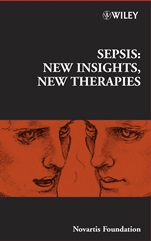
Sepsis: New Insights, New Therapies
ISBN 9780470027981
Autor: Derek J. Chadwick, Jamie A. Goode
Wydawca: Wiley
Dostępność: 3-6 tygodni
Cena: 836,85 zł
Przed złożeniem zamówienia prosimy o kontakt mailowy celem potwierdzenia ceny.
ISBN13: |
9780470027981 |
ISBN10: |
0470027983 |
Autor: |
Derek J. Chadwick, Jamie A. Goode |
Oprawa: |
Hardback |
Rok Wydania: |
2007-01-26 |
Ilość stron: |
302 |
Wymiary: |
231x164 |
Tematy: |
MJ |
Sepsis, the complex, systemic, clinical syndrome resulting from the innate host inflammatory response to infection, is an increasingly common condition, particularly in an ageing population with multiple comorbidities. The mortality rate remains high – about 30% in the USA and Europe and much higher in the developing world. Indeed, the annual number of deaths from sepsis rivals those due to myocardial infarction and exceeds the mortality rate of virtually every common cancer, yet the syndrome has received relatively little attention as a modifiable disease process.
Most therapeutic strategies target pro–inflammatory mediators, but these have frequently not improved survival of patients when studied in large, multicentre clinical trials. Greater appreciation of the complex pathophysiology by which sepsis induces multiple organ failure has stimulated research into new therapeutic approaches. Depending on the phase of the septic syndrome, these could even involve stimulation of inflammatory, immune or other systems, so the timing of intervention is important. With advances in supportive care in the intensive care unit, the ability to titrate treatment individually is becoming both a reality and a necessity. This important book brings together contributions from an international group of experts in diverse fields, including adaptive immunity, inflammation, neuroendocrinology, bioenergetics and metabolism, to consider all aspects of sepsis and its treatment.
“The pattern of critical illness has changed, such that sepsis, multiple organ failure and impaired patient immunity now dominate clinical practice. Sadly, despite many therapeutic advances, the mortality of this complex syndrome remains high, posing a major challenge. This book highlights the complexity of the disorder and signals the directions for future therapeutic endeavour.”
Dr Jack Tinker, Emeritus Dean The Royal Society of Medicine, London
Spis treści:
S
ymposim on Sepsis: new insights, new therapies, held at the Novartis Foundation, London, 14–16 February 2006.
Editors: Derek J. Cahdwick (Organizer) and Jamie Goode.
This Symposim was based on a proposal made by Mitchell Fink and Mervyn Singer.
Chair’s introduction (Mitchell P. Fink).
Discussion.
Strategies to modulate cellular energetic metabolism during sepsis (Alessandro Protti and Mervyn Singer).
Discussion.
Immunostimulation is a rational therapeutic strategy in sepsis (Jérôme Pugin).
Discussion.
Blockade of apoptosis as a rational therapeutic strategy for the treatment of sepsis (Alfred Ayala, Doreen E. Wesche–Soldato, Mario Perl, Joanne L. Lomas–Neira, Ryan Swan and Chun–Shiang Chung).
Discussion.
Modulating neutrophil apoptosis (John C. Marshall, Zeenat Malam and Songhui Jia).
Discussion.
HMGB1 as a potential therapeutic target(Haichao Wang, Wei Li, Richard Goldstein, Kevin J. Traceyand Andrew E. Sama).
Discussion.
Poly (ADP–ribose) polymerase activation and circulatory shock (Csaba Szabó).
Discussion.
Choosing the right substrate (Xavier Leverve, Cécile Batandier and Eric Fontaine).
Discussion.
Inhibiting glycogen synthase kinase 3β in sepsis (Laura Dugo, Marika Collin, David A. Allen, Nimesh S.A. Patel, Inge Bauer, Eero M. A. Mervaala, Marjut Louhelainen, Simon J. Foster, Muhammad M. Yaqoob and Christoph Thiemermann).
Discussion.
Ethyl pyruvate: a novel treatment for sepsis (Mitchell P. Fink).
Discussion.
General discussion I.
Cytoprotective and anti–inflammatory actions of carbon monoxide in organ injury and sepsis models<
b>(Stefan W. Ryter and Augustine M. K. Choi).
Discussion.
The hypothalamic pituitary adrenal axis in sepsis (Andrea Polito, Jérôme Aboab andDjillali Annane).
Discussion.
Modulating the endocrine response in sepsis: insulin and blood glucose control (Ilse Vanhorebeek, Lies Langouche and Greet Van den Berghe).
Discussion.
The neuronal strategy for inflammation(Luis Ulloaand Ping Wang).
Discussion.
Beta–blockade in burns (C. T. Pereira, M. G. Jeschke and D. N. Herndon).
Discussion.
System interactions (Mervyn Singer).
Discussion.
Protecting the permeability pore and mitochondrial biogenesis (C. A. Piantadosi, M. S. Carraway, D. W. Haden and H. B. Suliman).
Discussion.
Contributor Index.
Subject index.
Nota biograficzna:
The Novartis Foundation is an international scientific and educational charity which promotes the study and general knowledge of science and in particular encourages international co–operation in scientific research.
Chairman: Mitchell Fink
Okładka tylna:
Sepsis, the complex, systemic, clinical syndrome resulting from the innate host inflammatory response to infection, is an increasingly common condition, particularly in an ageing population with multiple comorbidities. The mortality rate remains high – about 30% in the USA and Europe and much higher in the developing world. Indeed, the annual number of deaths from sepsis rivals those due to myocardial infarction and exceeds the mortality rate of virtually every common cancer, yet the syndrome has received relatively little attention as a modifiable disease process.
Most therapeutic strategies target pro–inflammatory mediators, but these have frequently not
improved survival of patients when studied in large, multicentre clinical trials. Greater appreciation of the complex pathophysiology by which sepsis induces multiple organ failure has stimulated research into new therapeutic approaches. Depending on the phase of the septic syndrome, these could even involve stimulation of inflammatory, immune or other systems, so the timing of intervention is important. With advances in supportive care in the intensive care unit, the ability to titrate treatment individually is becoming both a reality and a necessity. This important book brings together contributions from an international group of experts in diverse fields, including adaptive immunity, inflammation, neuroendocrinology, bioenergetics and metabolism, to consider all aspects of sepsis and its treatment.
“The pattern of critical illness has changed, such that sepsis, multiple organ failure and impaired patient immunity now dominate clinical practice. Sadly, despite many therapeutic advances, the mortality of this complex syndrome remains high, posing a major challenge. This book highlights the complexity of the disorder and signals the directions for future therapeutic endeavour.”
Dr Jack Tinker, Emeritus Dean The Royal Society of Medicine, London
Koszyk
Książek w koszyku: 0 szt.
Wartość zakupów: 0,00 zł
Informacje


Kontakt
Gambit
Centrum Oprogramowania
i Szkoleń Sp. z o.o.
Al. Pokoju 29b/22-24
31-564 Kraków
Siedziba Księgarni
ul. Kordylewskiego 1
31-542 Kraków
+48 12 410 5991
+48 12 410 5987
+48 12 410 5989
Subskrypcje
Administratorem danych osobowych jest firma Gambit COiS Sp. z o.o. Na podany adres będzie wysyłany wyłącznie biuletyn informacyjny.
Autoryzacja płatności

Informacje na temat autoryzacji płatności poprzez PayU.

© Copyright 2012: GAMBIT COiS Sp. z o.o. Wszelkie prawa zastrzeżone.
Projekt i wykonanie: Alchemia Studio Reklamy