


Wydawcy
Katalog tematyczny
- Archeologia (109)
- Ekonomia, finanse, business (13704)
- Filozofia (1445)
- Historia (3040)
- Języki i językoznawstwo (2356)
- Lifestyle, hobby i rozrywka (475)
- Medycyna (9704)
- Nauki humanistyczne (4)
- Nauki o Ziemi i środowisku (2638)
- Nauki ścisłe (20412)
- Nauki społeczne (8486)
- Nauki techniczne (13450)
- Budownictwo lądowe (1045)
- Chemia przemysłowa (2258)
- Elektronika i telekomunikacja (3287)
- Energetyka (1122)
- Inne nauki stosowane (363)
- Inżynieria biochemiczna (507)
- Inżynieria transportu (232)
- Mechanika i materiały (3316)
- Nauka o środowisku (321)
- Rolnictwo (507)
- Technika, ogólnie (475)
- Prawo (1696)
- Publikacje informacyjne i interdyscyplinarne (1288)
- Religia i wierzenia (917)
- Technika komputerowa (4067)
- Zdrowie, relacje międzyludzkie i rozwój osobisty (657)





Informacje szczegółowe o książce
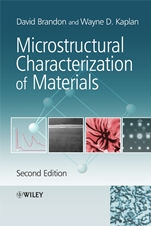
Microstructural Characterization of Materials
ISBN 9780470027851
Autor: David Brandon, Wayne D. Kaplan
Wydawca: Wiley
Dostępność: 3-6 tygodni
Cena: 311,85 zł
Przed złożeniem zamówienia prosimy o kontakt mailowy celem potwierdzenia ceny.
ISBN13: |
9780470027851 |
ISBN10: |
0470027851 |
Autor: |
David Brandon, Wayne D. Kaplan |
Oprawa: |
Paperback |
Rok Wydania: |
2008-03-14 |
Numer Wydania: |
2nd Edition |
Ilość stron: |
550 |
Wymiary: |
243x171 |
Tematy: |
TG |
Microstructural Characterization of Materials– 2nd Edition
David Brandon and Wayne D. Kaplan.
Israel Institute of Technology, Haifa, Israel
Microstructural characterization is usually achieved by allowing some form of probe to interact with a carefully prepared specimen. The most commonly used probes are visible light, X–ray radiation, a high–energy electron beam, or a sharp, flexible needle. These four types of probe form the basis for optical microscopy, X–ray diffraction, electron microscopy, and scanning probe microscopy.
The book is an introduction to the expertise involved in assessing the microstructure of engineering materials and to the experimental methods used for this purpose. Similar to the first edition, this 2nd edition of Microstructural Characterization of Materials explores the methodology of materials characterization under the three headings of crystal structure, microstructural morphology, and microanalysis. The principal methods of characterization, including diffraction analysis, optical microscopy, electron microscopy, and chemical microanalytical techniques are treated both qualitatively and quantitatively. An additional chapter has been added to the new edition to cover surface probe microscopy, and there are new sections on digital image recording and analysis, orientation imaging microscopy, focused ion–beam instruments, atom–probe microscopy, and 3–D image reconstruction. As well as being fully updated, this second edition also includes revised and expanded examples and exercises.
The book should appeal to senior undergraduate and graduate students of material science, materials engineering, and materials chemistry, as well as to qualified engineers and more advanced researchers, who should find the book a useful and comprehensive general reference source.
Spis treści:
Preface to the Second Edition.
Preface to the First Edition.
1. The Concept
of Microstructure.
1.1. Microstructural Features.
1.2. Crystallography and Crystal Structure.
2. Diffraction Analysis of Crystal Structure.
2.1. Scattering of Radiation by Crystals.
2.2. Reciprocal Space.
2.3. X–ray Diffraction Methods.
2.4. Diffraction Analysis.
2.5. Electron Diffraction.
3. Optical Microscopy.
3.1. Geometrical Optics.
3.2. Construction of the Microscope.
3.3. Specimen Preparation.
3.4. Image contrast.
3.5. Working with Digital Images.
3.6. Resolution, contrast and Image Interpretation.
4. Transmission Electron Microscopy.
4.1. Basic Principles.
4.2. Specimen Preparation.
4.3. The Origin of Contrast.
4.4. Kinematic Interpretation of Diffraction Contrast.
4.5. Dynamic Diffraction and Absorption effects.
4.6. Lattice Imaging at High Resolution.
4.7. Scanning Transmission Electron Microscopy.
5. Scanning Electron Microscopy.
5.1. Components of The Scanning electron Microscope.
5.2. Electron Beam–Specimen Interactions.
5.3. Electron Excitation of X–Rays.
5.4. Backscattered Electrons.
5.5. Secondary Electron Emission.
5.6. Alternative Imaging Modes.
5.7. Specimen Preparation and Topology.
5.8. Focused Ion Beam Microscopy.
6. Microanalysis in Electron Microscopy.
6.1. X–Ray Microanalysis.
6.2. Electron Energy Loss Spectroscopy.
7. Scanning Probe Microscopy and Related Techniques.
7.1. Surface Forces and Surface Morphology.
7.2. Scanning Probe Microscopes.
7.3. Field–Ion Microscopy and Atom Probe tomography.
8. Chemical Analysis of Surface Composition.
8.1. X–ray Photoelectron Spectroscopy.
8.2. Auger Electron Spectroscopy.
8.3. Secondary–Ion Mass Spectrometry.
9. Quantitative and Tomographic Analysis of Microstructure.
9.1. Basic Stereological Concepts.
9.2. Accessible and Inaccessible Parameters.
9.3. Optimizing
Accuracy.
9.4. Automated Image Analysis.
9.5. Tomography and Three–Dimensional Reconstruction.
Appendices.
Index.
Okładka tylna:
Microstructural Characterization of Materials– 2nd Edition
David Brandon and Wayne D. Kaplan.
Israel Institute of Technology, Haifa, Israel
Microstructural characterization is usually achieved by allowing some form of probe to interact with a carefully prepared specimen. The most commonly used probes are visible light, X–ray radiation, a high–energy electron beam, or a sharp, flexible needle. These four types of probe form the basis for optical microscopy, X–ray diffraction, electron microscopy, and scanning probe microscopy.
The book is an introduction to the expertise involved in assessing the microstructure of engineering materials and to the experimental methods used for this purpose. Similar to the first edition, this 2nd edition of Microstructural Characterization of Materials explores the methodology of materials characterization under the three headings of crystal structure, microstructural morphology, and microanalysis. The principal methods of characterization, including diffraction analysis, optical microscopy, electron microscopy, and chemical microanalytical techniques are treated both qualitatively and quantitatively. An additional chapter has been added to the new edition to cover surface probe microscopy, and there are new sections on digital image recording and analysis, orientation imaging microscopy, focused ion–beam instruments, atom–probe microscopy, and 3–D image reconstruction. As well as being fully updated, this second edition also includes revised and expanded examples and exercises.
The book should appeal to senior undergraduate and graduate students of material science, materials engineering, and materials chemistry, as well as to qualified engineers and more advanced researchers, who should find the book a u
seful and comprehensive general reference source.
Koszyk
Książek w koszyku: 0 szt.
Wartość zakupów: 0,00 zł
Informacje


Kontakt
Gambit
Centrum Oprogramowania
i Szkoleń Sp. z o.o.
Al. Pokoju 29b/22-24
31-564 Kraków
Siedziba Księgarni
ul. Kordylewskiego 1
31-542 Kraków
+48 12 410 5991
+48 12 410 5987
+48 12 410 5989
Subskrypcje
Administratorem danych osobowych jest firma Gambit COiS Sp. z o.o. Na podany adres będzie wysyłany wyłącznie biuletyn informacyjny.
Autoryzacja płatności

Informacje na temat autoryzacji płatności poprzez PayU.

© Copyright 2012: GAMBIT COiS Sp. z o.o. Wszelkie prawa zastrzeżone.
Projekt i wykonanie: Alchemia Studio Reklamy