


Wydawcy
Katalog tematyczny
- Archeologia (109)
- Ekonomia, finanse, business (13704)
- Filozofia (1445)
- Historia (3040)
- Języki i językoznawstwo (2356)
- Lifestyle, hobby i rozrywka (475)
- Medycyna (9704)
- Chirurgia (272)
- Inne gałęzie medycyny (1871)
- Medycyna kliniczna (4187)
- Choroby wewnętrzne (514)
- Dermatologia (51)
- Diagnostyka medyczna (3)
- Endokrynologia (144)
- Gastroenterologia (27)
- Geriatria (50)
- Ginekologia i położnictwo (134)
- Hematologia (46)
- Hepatologia (10)
- Kardiologia (71)
- Laryngologia (12)
- Nefrologia (10)
- Neurologia (500)
- Oftalmologia (50)
- Pediatria (33)
- Pulmunologia (32)
- Reumatologia (14)
- Terapia genowa (1)
- Układ mięśniowo-szkieletowy (1)
- Urologia (14)
- Medycyna niekonwencjonalna (14)
- Medycyna przedkliniczna (269)
- Medycyna, ogólnie (1740)
- Medyczne służby pomocnicze (745)
- Studia medyczne (16)
- Weterynaria (548)
- Nauki humanistyczne (4)
- Nauki o Ziemi i środowisku (2638)
- Nauki ścisłe (20412)
- Nauki społeczne (8486)
- Nauki techniczne (13450)
- Prawo (1696)
- Publikacje informacyjne i interdyscyplinarne (1288)
- Religia i wierzenia (917)
- Technika komputerowa (4067)
- Zdrowie, relacje międzyludzkie i rozwój osobisty (657)





Informacje szczegółowe o książce
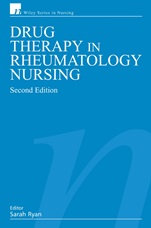
Drug Therapy in Rheumatology Nursing
ISBN 9780470027660
Autor: Sarah Ryan
Wydawca: Wiley
Dostępność: 3-6 tygodni
Cena: 351,75 zł
Przed złożeniem zamówienia prosimy o kontakt mailowy celem potwierdzenia ceny.
ISBN13: |
9780470027660 |
ISBN10: |
0470027665 |
Autor: |
Sarah Ryan |
Oprawa: |
Paperback |
Rok Wydania: |
2007-03-16 |
Numer Wydania: |
2nd Edition |
Ilość stron: |
320 |
Wymiary: |
227x152 |
Tematy: |
MJ |
Drug therapy management is a key topic for all nurses caring for patients with a rheumatologic condition. With nurses now required to prescribe, administer, monitor and review medication, this volume will help nurses develop their knowledge, skills and self–confidence to provide these services, while also advising on the benefits and risks of medication. This much–awaited second edition has been revised to address the changing face of clinical practice and distinct advances in this field, providing vital information on the latest drug treatments such as biological agents that suppress the disease and initiate remission, it will also advise on the use of selective and non–steroidal inflammatory drugs.
Content is organised into comprehensive sections, with succinct chapters that discuss:Rheumatologic conditionsDrug therapyThe role of the nursePatient education and adherence to drug therapy.
In addition, new material explores biologic therapies; management of non–steroidal drugs; nurse prescribing; management of chronic pain; and case studies to inform clinical decision–making regarding drug therapy.
Drug Therapy in Rheumatology Nursing, Second Edition, is a useful tool for nurses, primary care nurses, student nurses and educators. It will also prove a valuable resource to other health professionals caring for patients with a rheumatologic condition, including pharmacists, physiotherapists and junior doctors.
Spis treści:
Chapter 1: Rheumatological Conditions (Janet Cushnaghan and Jackie McDowell).
1 Introduction.
1.1 Features of rheumatic conditions.
1.2a) Pain.
1.2b) Stiffness.
1.2c) Swelling.
1.2d) Joint involvement.
1.3 Epidemiology.
1.4 Anatomy and physiology of the musculoskeletal system.
1.4a) Muscle.
1.4b) Bone.
1.4c0 Cartiledge.
1.4d) Synovium.
1.4e) Ligaments and tendons.
1.4f) Tendon sheaths and burs
ae.
1.4g) Synovival joints.
1.4h) Physiology.
1.4i) Circulation.
1.4j) Lymphatics.
1.4k) Intra–articular pressure.
1.4l) Motion.
1.4m) Innervation.
1.4n) Temperature.
1.5 Anatomy and Physiology of the musculoskeletal system in inflammatory and non inflammatory arthritis.
1.5a) Immunopathogentic mechanism.
1.5b) Susceptibility.
1.5c) Synovitis.
1.6 An overview of rheumatological conditions most commonly encountered in Western Europe.
1.6a) Rheumatoid Arthritis.
1.6b) Juvenille Idiopathic Arthritis.
1.6c) Polmyalgia Rheumatica.
1.6d) Inflammatory arthritis associated with spondylitis.
1.6e) Ankylosing spondylitis.
1.6f) Reiters syndrome.
1.6g) Psoriatic arthritis.
1.6h) Septic arthritis.
1.6I) Reactive Arthritis.
1.6j) Osteoarthritis.
1.6k) Fibromyalgia.
1.6l) Connective tissue dosorders.
1.6m) Systemic Lupus Erythematoisis.
1.6n) Scleroderma.
1.6o) Inflammatory muscle disease.
1.7 The impact of the rheumatological conditions on physical, psychological, social and occupational function.
1.7a) Personal impact of RA.
1.7b) Financial impact of arthritis.
1.7c) Impact on education.
17.d) Impact on employment.
17.e) The role of social support.
17.f) Impact on family relationships.
17.g) depression.
Chapter 2: Drug Therapy (Sarah Ryan, Susan Oliver and Ann Brownfield).
2.1 Pain.
2.1a) Physiology of pain.
2.1b) Pain receptors.
2.1c) Role of the brain.
2.1d) Physiological effects of acute pain.
2.2 Pharmacological interventions in rheumatology.
2.2a) Non opioid.
2.2b) Compound analgesia.
2.2c) Opioids.
2.2d) Anti–depressant drugs.
2.2e) NSAIDs.
2.3 Disease Modifying Anti–rheumatic Drugs (DMARDs).
2.3a) Early treatment of RA.
2.3b) Combination therapy.
2.3c) Mode of action and pharmacokinetics of DMARDs.
2.3d) Anti–malarials.
2.3e) Sulfasalazine.
2.3f) D–penicillamine.
2.3g)
Myocrisin.
2.3h) Auranofin.
2.3i) Methotrexate.
2.3j) Leflunomide.
2.3k) Azathioprine.
2.3l) Cyclophosphamide.
2.3m) Ciclosporin.
2.3n) Chlorambucil.
2.3o) Phenylbutazone.
2.3p) Dapsone.
2.3q) Minocycline.
2.3r) Mycophenolate Mofetil.
2.4Biologic Therapies.
2.4a) Classifications.
2.4b) Mode of action–general.
2.4c) Adverse reactions to biologic therapies.
2.4d) Biologic therapies treatment options.
Anakinra.
Anti–Tumor Necrosis Factor alpha.
2.4e) General Issues relating to the mode of action.
2.4f) Side effects for all anti–TNFs.
2.4g) Prescribing and breast feeding.
2.4 h) Immunisation.
2.4 I) Specific information on TNF.
Adalimunab.
Enbrel.
Infliximab.
Rituximab.
2.4j) Biologic therapies–patient issues.
2.5 The use of steroids in the treatment of rheumatic disease.
2.5a) The use of steroids in rheumatoid arthritis.
2.5b) Corticosteroid sparing agents.
2.5c) Adverse effect of corticosteroids.
2.5d) Use of corticosteroids in other rheumatological conditions.
2.5e) Bone mineral metabolism.
2.5f) Peptic ulceration.
2.5g) Atherosclerosis.
2.5h) Reducing the dose of corticosteroid.
2.5I) Pulsed corticosteroid.
2.5j) Intramuscular corticsteroid.
2.5k) Intra–articular injections of corticosteroid.
2.6 Disorders of purine metabolism.
2.7 Nurse prescribing.
2.7a) Independent prescribing.
2.7b) Supplementary prescribing.
2.7c) Educational preparation.
2.7d) Professional responsibilities.
2.7e) Evaluation of prescribing.
2.8 Self Medication.
2.8a) The case for self medication.
2.8b) Advantages of self medication.
2.8c) Stages in the implementation of self medication.
2.9 Complementary Medication.
2.9a) Diet.
2.9b) Massage.
2.9c) Aromatherapy.
2.9d) Reflexology.
2.9e) Acupuncture.
2.9f) Herbal medicine.
2.9g) Naturopathy.
2.9h) holism.
2.10 Glucosamine.
2.11 Cap
saicin.
Appendix 1: What happens next.
Appendix 2: Guidelines for nurses on the use and administration on intra–articular injections.
Appendix 3: Patient Group Direction for The Administration of Methylprednisolone Injection 40mg/ml by Intramuscular Injection.
Chapter 3: The Role of the Nurse in Drug Therapy (Sarah Ryan and Margaret Ann Voyce).
3.1 What is rheumatology nursing?
3.1a) The nurse–patient relationship.
3.2 Telephone helplines.
3.3 The philosophy of rheumatology nursing.
3.4 The role of the nurse in drug therapy.
3.4a) Empowerment.
3.5 The commencement of DMARDs.
3.5a) Patient preparation.
3.5b) Monitoring clinic.
3.5c) Documentation.
3.5d) Use of protocols.
3.6 Investigations.
3.6a) Haematological.
3.6b) Biochemical.
3.6c) Assessment of rheumatic disease activity.
3.7 Urine testing.
3.8 Drugs that require surveillance.
3.8a) Gold.
3.8b) Auranofin.
3.8c) D–penicillamine.
3.8d) Sulfasalazine.
3.8e) Methotrexate.
3.8f) Azathioprine.
3.8g) Cyclophosphamide.
3.8h) Ciclosporin.
3.8i) Chlorambucil.
3.8j) Phenylbutazone.
3.8k) Dapsone.
3.8l) Minocycline.
3.8m) Leflunomide.
3.8n) Mycophenolate.
3.9 Vaccinations.
3.10 Pregnancy.
3.11 The role of the community team in drug therapy.
3.12 Community drug monitoring.
3.12a) Documentation.
3.12b) General practitioner concerns relating to practice based monitoring.
3.12c) Patients experience of drug monitoring.
3.13 Community clinics.
3.14 General practice.
3.15 Evaluation of community clinics.
3.15a) Potential problems with consultant based community clinic.
3.16 Nurse led community clinic.
3.17 New ways of utilising outpatient appointments.
3.18 Drug therapy and osteoporosis.
3.18a) Classification of osteoporosis.
3.18b) Risk factors for osteoporosis fracture.
3.18c) Investigations for osteoporosis.
3.19 Hormone replacement therapy.
Koszyk
Książek w koszyku: 0 szt.
Wartość zakupów: 0,00 zł
Informacje


Kontakt
Gambit
Centrum Oprogramowania
i Szkoleń Sp. z o.o.
Al. Pokoju 29b/22-24
31-564 Kraków
Siedziba Księgarni
ul. Kordylewskiego 1
31-542 Kraków
+48 12 410 5991
+48 12 410 5987
+48 12 410 5989
Subskrypcje
Administratorem danych osobowych jest firma Gambit COiS Sp. z o.o. Na podany adres będzie wysyłany wyłącznie biuletyn informacyjny.
Autoryzacja płatności

Informacje na temat autoryzacji płatności poprzez PayU.

© Copyright 2012: GAMBIT COiS Sp. z o.o. Wszelkie prawa zastrzeżone.
Projekt i wykonanie: Alchemia Studio Reklamy