


Wydawcy
Katalog tematyczny
- Archeologia (109)
- Ekonomia, finanse, business (13704)
- Filozofia (1445)
- Historia (3040)
- Języki i językoznawstwo (2356)
- Lifestyle, hobby i rozrywka (475)
- Medycyna (9704)
- Nauki humanistyczne (4)
- Nauki o Ziemi i środowisku (2638)
- Nauki ścisłe (20412)
- Nauki społeczne (8486)
- Edukacja (229)
- Kryminologia, opieka spełeczna (284)
- Obronność (10)
- Polityka (1389)
- Psychologia (777)
- Socjologia (410)
- Społeczeństwo i kultura (187)
- Nauki techniczne (13450)
- Prawo (1696)
- Publikacje informacyjne i interdyscyplinarne (1288)
- Religia i wierzenia (917)
- Technika komputerowa (4067)
- Zdrowie, relacje międzyludzkie i rozwój osobisty (657)





Informacje szczegółowe o książce
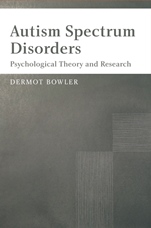
Autism Spectrum Disorders: Psychological Theory and Research
ISBN 9780470026861
Autor: Dermot Bowler
Wydawca: Wiley
Dostępność: 3-6 tygodni
Cena: 257,25 zł
Przed złożeniem zamówienia prosimy o kontakt mailowy celem potwierdzenia ceny.
ISBN13: |
9780470026861 |
ISBN10: |
0470026863 |
Autor: |
Dermot Bowler |
Oprawa: |
Paperback |
Rok Wydania: |
2006-10-06 |
Ilość stron: |
318 |
Wymiary: |
235x151 |
Tematy: |
JC |
Psychological research into autism spectrum disorders (ASD) has increased exponentially in the last two decades. Much of this work has been led by various theorists who claim to have identified processes that hold the key to understanding the condition. As a consequence, newcomers to the field feel that they have to opt for one or more of the competing approaches and to neglect the remainder as being in some way wrong. In fact, the different theoretical perspectives are just that – different points of view on the same phenomenon – each with its own insights to offer. This is not to say that understanding ASD in psychological terms is just a matter of choosing a perspective and that all perspectives are of equal value. Clearly they are not.
This book, in addition to providing an outline of what current perspectives have to offer, also provides a framework to help readers to decide which aspects of psychological research into ASD contribute to our understanding of the field and how these can be integrated in a way that enables research to be taken forward.
Spis treści:
Preface.
1. Identifying Autism: From Discrete Entity to Multidimensional Spectrum.
Early conceptions: the ‘autistic child’.
From discrete entity to spectrum of related conditions.
Diagnostic systems and instruments.
Dimensions versus entities: ‘lumping’ versus ‘splitting’.
Early detection.
Conclusion.
2. Understanding Other Minds: Cognitive Approaches.
Understanding false belief: a specific mental module?
Understanding minds: a specific process or something else?
Provisional conclusions.
3. Understanding Other People: Emotion and Interaction.
Appraisal of emotion in others.
Understanding the directedness of behaviour.
Understanding others in autism: final conclusions.
4. Beyond Social Impairment: Difficulties with Exe
cutive Functions.
Implications of the executive dysfunction account for our understanding of ASD.
Conclusion.
5. Building a Coherent Picture of the World.
Alternative explanations of WCC phenomena.
Conclusion.
6. Attention and Perception.
Attention.
Accounting for attentional difficulties.
Conclusion.
7. Specific Aspects of Understanding: Faces, Concepts and Memory.
Face processing.
Concept formation.
Memory.
Conclusion.
8. Psychology, Autism and the Brain.
Studies of brain size and structure.
Lesion–based models of autistic behaviour.
Theories of global brain dysfunction.
Brain impairments inferred from more basic psychological processes.
Conclusion.
9. Development.
Assumptions about development in ASD: psychometrics, matching and developmental delay.
Developmental trajectories in ASD.
Developmental change in two psychological domains: theory of mind and executive functions.
Developmental theory and ASD.
Conclusion.
10. Whence and Whither: Glimpses of the Tapestry, Paths Through the Jungle.
How far have we really come?
Stepping back to move forward? Emerging themes.
Final thoughts.
References.
Index.
Nota biograficzna:
Professor Dermot M Bowler, City University, London. Professor Bowler has published several articles in journals that include the Journal of Child Psychology and Psychiatry, the Journal of Autism and Developmental Disorders and Autism.
Okładka tylna:
Psychological research into autism spectrum disorders (ASD) has increased exponentially in the last two decades. Much of this work has been led by various theorists who claim to have identified processes that hold the key to understanding the condition. As a consequence, newcomers to the field feel that they have to opt for one or more of the competing approaches and
to neglect the remainder as being in some way wrong. In fact, the different theoretical perspectives are just that – different points of view on the same phenomenon – each with its own insights to offer. This is not to say that understanding ASD in psychological terms is just a matter of choosing a perspective and that all perspectives are of equal value. Clearly they are not.
This book, in addition to providing an outline of what current perspectives have to offer, also provides a framework to help readers to decide which aspects of psychological research into ASD contribute to our understanding of the field and how these can be integrated in a way that enables research to be taken forward.
Koszyk
Książek w koszyku: 0 szt.
Wartość zakupów: 0,00 zł
Informacje


Kontakt
Gambit
Centrum Oprogramowania
i Szkoleń Sp. z o.o.
Al. Pokoju 29b/22-24
31-564 Kraków
Siedziba Księgarni
ul. Kordylewskiego 1
31-542 Kraków
+48 12 410 5991
+48 12 410 5987
+48 12 410 5989
Subskrypcje
Administratorem danych osobowych jest firma Gambit COiS Sp. z o.o. Na podany adres będzie wysyłany wyłącznie biuletyn informacyjny.
Autoryzacja płatności

Informacje na temat autoryzacji płatności poprzez PayU.

© Copyright 2012: GAMBIT COiS Sp. z o.o. Wszelkie prawa zastrzeżone.
Projekt i wykonanie: Alchemia Studio Reklamy