


Wydawcy
Katalog tematyczny
- Archeologia (109)
- Ekonomia, finanse, business (13704)
- Filozofia (1445)
- Historia (3040)
- Języki i językoznawstwo (2356)
- Lifestyle, hobby i rozrywka (475)
- Medycyna (9704)
- Nauki humanistyczne (4)
- Nauki o Ziemi i środowisku (2638)
- Nauki ścisłe (20412)
- Nauki społeczne (8486)
- Nauki techniczne (13450)
- Prawo (1696)
- Publikacje informacyjne i interdyscyplinarne (1288)
- Religia i wierzenia (917)
- Technika komputerowa (4067)
- Zdrowie, relacje międzyludzkie i rozwój osobisty (657)





Informacje szczegółowe o książce
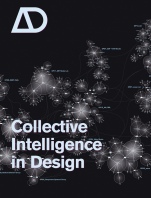
Collective Intelligence in Design
ISBN 9780470026526
Autor: Christopher Hight, Chris Perry
Wydawca: Wiley
Dostępność: 3-6 tygodni
Cena: 208,95 zł
Przed złożeniem zamówienia prosimy o kontakt mailowy celem potwierdzenia ceny.
ISBN13: |
9780470026526 |
ISBN10: |
0470026529 |
Autor: |
Christopher Hight, Chris Perry |
Oprawa: |
Paperback |
Rok Wydania: |
2006-10-13 |
Ilość stron: |
136 |
Wymiary: |
275x211 |
Tematy: |
AM |
Exploring how today;s most compelling design is emerging from new forms of collaborative practice and modes of collective intelligence, this title of AD engages two predominant phenomena: design′s relationship with new information and telecommunication technologies, and new economies of globalisation. With the shift from the second machine age to the age of information, the network has replaced the assembly line as a pre–eminent model of organisation. With this shift has come the assembly line as a pre–eminent model of organisation. With this shift has come the introduction of numerous alternative modes of social, economic and political organisation in the form of peer–to–peer networks and open–source communities. this has radically altered conventional models of collective invention, as well as challenging received notions of individual authorship and agency, questioning the way in which traditional disciplines organise themselves. This reorganisation is apparent with in architectural practice, as well as within its participation in a greater cultural context of increasing interdisciplinarity. For the design disciplines, this includes the emergence of new forms of collective intelligence in a number of different fields including architecture, software and interaction design, gaming, motion typography and product design.
Collective Intelligence in Design takes in contributions from: AlUm Studio, CONTINUUM (working with the Smart Geometry Group and Bentley Systems), Servo, Hernan Diaz–Alonso and Benjamin Bratton, Open Source Architecture, MIT′s Media Lab and United Architects. Additionally, the issue features essays from a diverse pool of academics and designer,s including Alexander Galloway and Eugene Thacker, Michael Hensel, Therese Tierney, Pia Ednie–Brown and Brett Steele, as well as an extensive interview with Michael Hardt, an influential thinker on the subject of contemporary globalisation.
Introduction: Collective Intelligence in Design (Christopher Hight and Chris Perry).
Agent Intellects: Pattern as a Form of Thought (Ed Keller and Carla Leitao).
CONTINUUM: A Self–Engineering Creature–Culture (Pia Ednie–Brown and Alisa Andrasek).
Language, Life, Code (Alexander R Galloway and Eugene Thacker).
Critical Practice: Protocol for a Fused Technology (Aaron Sprecher, Chandler Ahrens and Eran Neuman).
Collective Cognition: Neural Fabrics and Social Software (Therese Tierney).
Design Research on Responsive Display Prototypes: Integrating Sensing, Information and Computation Technologies (David Small and John Rothenberg).
Does Collaboration Work? (Kevin Kennon).
Strength in Numbers (David Salomon).
The AADRL: Design, Collaboration and Convergence (Brett Steele).
Associative Practices in the Management of Complexity (Tom Verebes).
Designing Commonspaces: Riffing with Michael Hardt on the Multitude and Collective Intelligence (Christopher Hight and Michael Hardt).
Responsive Systems / Appliance Architectures (Branden Hookway and Chris Perry).
Parallel Processing: Design / Practice (David Erdman, Marcelyn Gow, Ulrika Karisson and Chris Perry).
After BitTorrent: Darknets to Native Data (Anthony Burke).
Working with Wiki, by Design (Andrew Burrow and Jane Burry).
Computational Intelligence: The Grid as a Post–Human Network (Philippe Morel).
Evolving Synergy: OCEAN Currents, Current OCEANs and Why Networks Must Displace Themselves (Michael Hansel).
Treatment 1: Notes from an Informal Discussion on Interinstitutional Design Research and Image Production (Benjamin Bratton and Hernan Diaz–Alonso).
Interior Eye: Modernising the Morgan Library (Jayne Merkel).
Practice Profile: Cyber House Rules: James Law Cybertecture International (Anna Koor).
Building Profile: Idea Store, Whitechapel (Jeremy Melvin).
Home Run: Adelaide Court (Bruce Stewart).
McLean′s Nuggets (Will McLean).
Koszyk
Książek w koszyku: 0 szt.
Wartość zakupów: 0,00 zł
Informacje


Kontakt
Gambit
Centrum Oprogramowania
i Szkoleń Sp. z o.o.
Al. Pokoju 29b/22-24
31-564 Kraków
Siedziba Księgarni
ul. Kordylewskiego 1
31-542 Kraków
+48 12 410 5991
+48 12 410 5987
+48 12 410 5989
Subskrypcje
Administratorem danych osobowych jest firma Gambit COiS Sp. z o.o. Na podany adres będzie wysyłany wyłącznie biuletyn informacyjny.
Autoryzacja płatności

Informacje na temat autoryzacji płatności poprzez PayU.

© Copyright 2012: GAMBIT COiS Sp. z o.o. Wszelkie prawa zastrzeżone.
Projekt i wykonanie: Alchemia Studio Reklamy