


Wydawcy
Katalog tematyczny
- Archeologia (109)
- Ekonomia, finanse, business (13704)
- Filozofia (1445)
- Historia (3040)
- Języki i językoznawstwo (2356)
- Lifestyle, hobby i rozrywka (475)
- Medycyna (9704)
- Nauki humanistyczne (4)
- Nauki o Ziemi i środowisku (2638)
- Nauki ścisłe (20412)
- Astronomia (294)
- Biologia (5119)
- Biochemia (575)
- Biologia człowieka (14)
- Biologia komórkowa (377)
- Biologia molekularna (398)
- Biologia rozwoju (130)
- Biologia, ogólnie (1277)
- Botanika (280)
- Hydrobiologia (92)
- Mikrobiologia (363)
- Mykologia (22)
- Zoologia (303)
- Chemia (6540)
- Fizyka (3309)
- Matematyka (4574)
- Nauki ścisłe, ogólnie (503)
- Nauki społeczne (8486)
- Nauki techniczne (13450)
- Prawo (1696)
- Publikacje informacyjne i interdyscyplinarne (1288)
- Religia i wierzenia (917)
- Technika komputerowa (4067)
- Zdrowie, relacje międzyludzkie i rozwój osobisty (657)





Informacje szczegółowe o książce
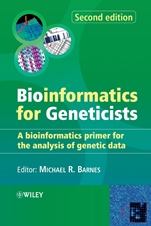
Bioinformatics for Geneticists: A Bioinformatics Primer for the Analysis of Genetic Data
ISBN 9780470026205
Autor: Michael R. Barnes
Wydawca: Wiley
Dostępność: 3-6 tygodni
Cena: 426,30 zł
Przed złożeniem zamówienia prosimy o kontakt mailowy celem potwierdzenia ceny.
ISBN13: |
9780470026205 |
ISBN10: |
0470026200 |
Autor: |
Michael R. Barnes |
Oprawa: |
Paperback |
Rok Wydania: |
2007-03-09 |
Numer Wydania: |
2nd Edition |
Ilość stron: |
576 |
Wymiary: |
243x169 |
Tematy: |
PS |
The study of human genetics is moving into a challenging new era of discovery. New technologies and data resources such as the HapMap, are enabling genome–wide genetic association studies which could potentially identify most common (and some rarer) genetic determinants of human health, disease and drug response. Although the tools may be at hand, more than ever care is required in their use. Faced with the sheer volume of data threatening to drown true signal in noise, bioinformatics is now assuming a central role in genetic study design, analysis and interpretation.
Coupled with the advances in genetics, new insights are emerging into additional layers of complexity in genome function, for example the role of micro RNA in control of gene translation and new cis–regulatory elements identified by genetic analysis of gene expression. Understanding genetics will require an effective synthesis of this complexity and, as this book shows, this is simply not possible without bioinformatics.
Bioinformatics for Geneticists seeks to describe the key bioinformatics and genetic analysis processes that are needed to identify human genetic determinants. The book is based upon the combined practical experience of domain experts from academic and industrial research environments and should be of interest to a broad audience, including students, researchers and clinicians working in the human genetics domain.More than 50% of chapters are completely new contributions, covering data manipulation and management, the HapMap, micro RNA, comparative genomics, epigenetics, cancer genetics, genetic analysis of gene expression, high–density genome scan analysis, pharmacogenetics and drug discovery.Dramatically revised content in core areas of gene and genomic characterization, pathway analysis, SNP functional analysis and statistical genetics.Focused on freely available tools and web–based approaches to bioinformatics analysis, su
itable for novices and experienced researchers alike.The only book specifically addressing the bioinformatics needs of geneticists.
Spis treści:
Foreword.
Preface.
Contributors.
Glossary.
SECTION I AN INTRODUCTION TO BIOINFORMATICS FOR THE GENETICIST.
1 Bioinformatics challenges for the geneticist (Michael R. Barnes).
1.1 Introduction.
1.2 The role of bioinformatics in genetics research.
1.3 Genetics in the post–genome era.
1.4 Conclusions.
References.
2 Managing and manipulating genetic data (Karl W. Broman and Simon C. Heath).
2.1 Introduction.
2.2 Basic principles.
2.3 Data entry and storage.
2.4 Data manipulation.
2.5 Examples of code.
2.6 Resources.
2.7 Summary.
References.
SECTION II MASTERING GENES, GENOMES AND GENETIC VARIATION DATA.
3 The HapMap – A haplotype map of the human genome (Ellen M. Brown and Bryan J. Barratt).
3.1 Introduction.
3.2 Accessing the data.
3.3 Application of HapMap data in association studies.
3.4 Future Perspectives.
References.
4 Assembling a view of the human genome (Colin A. M. Semple).
4.1 Introduction.
4.2 Genomic sequence assembly.
4.3 Annotation from a distance: the generalities.
4.4 Annotation up close and personal: the specifics.
4.5 Annotation: the next generation.
References.
5 Finding, delineating and analysing genes (Christopher Southan and Michael R. Barnes).
5.1 Introduction.
5.2 Why learn to predict and analyse genes in the complete genome era?
5.3 The evidence cascade for gene products.
5.4 Dealing with the complexities of gene models.
5.5 Locating known genes in the human genome.
5.6 Genome portal inspection.
5.7 Analysing novel genes.
5.8 Conclusions and prospects.
References.
6 Comparative genomics (Martin S. Taylor and Richard R. Copley).
6.1 Introduction.
6.2 The Genomic landscape.
6.3 Con
cepts.
6.4 Practicalities.
6.5 Technology.
6.6 Applications.
6.7 Challenges and future directions.
6.8 Conclusion.
References.
SECTION III BIOINFORMATICS FOR GENETIC STUDY DESIGN AND ANALYSIS.
7 Identifying mutations in single gene disorders (David P. Kelsell, Diana Blaydon and Charles A. Mein).
7.1 Introduction.
7.2 Clinical Ascertainment.
7.3 Genome–wide mapping of monogenic diseases.
7.4 The nature of mutation in monogenic diseases.
7.5 Considering epigenetic effects in mendelian traits.
7.6 Summary.
References.
8 From Genome Scan Culprit Gene (Ian C. Gray).
8.1 Introduction.
8.2 Theoretical and practical considerations.
8.3 A stepwise approach to locus refinement and candidate gene identification.
8.4 Conclusion.
8.5 A list of the software tools and Web links mentioned in this chapter.
References.
9 Integrating Genetics, Genomics and Epigenomics to Identify.
Disease Genes (Michael R. Barnes).
9.1 Introduction.
9.2 Dealing with the (draft) human genome sequence.
9.3 Progressing loci of interest with genomic information.
9.4 In silico characterization of the IBD5 locus – a case study.
9.5 Drawing together biological rationale – hypothesis building.
9.6 Identification of potentially functional polymorphisms.
9.7 Conclusions.
References.
10 Tools for statistical genetics (Aruna Bansal, Charlotte Vignal and Ralph McGinnis).
10.1 Introduction.
10.2 Linkage analysis.
10.3 Association analysis.
10.4 Linkage disequilibrium.
10.5 Quantitative trait locus (QTL) mapping in experimental crosses.
10.6 Closing remarks.
References.
SECTION IV MOVING FROM ASSOCIATED GENES TO DISEASE ALLELES.
11 Predictive functional analysis of polymorphisms: An overview (Mary Plumpton and Michael R. Barnes).
11.1 Introduction.
11.2 Principles of predictive functional analysis of polymorphisms.
11.3 The
anatomy of promoter regions and regulatory elements.
11.4 The anatomy of genes.
11.5 Pseudogenes and regulatory mRNA.
11.6 Analysis of novel regulatory elements and motifs in.
nucleotide sequences.
11.7 Functional analysis of non–synonymous coding polymorphisms.
11.8 Integrated tools for functional analysis of genetic variation.
11.9 A note of caution on the prioritization of in silico predictions for.
further laboratory investigation.
11.10 Conclusions.
References.
12 Functional in silico analysis of gene regulatory polymorphism (Chaolin Zhang, Xiaoyue Zhao, Michael Q. Zhang).
12.1 Introduction.
12.2 Predicting regulatory regions.
12.3 Modelling and predicting transcription factor–binding sites.
12.4 Predicting regulatory elements for splicing regulation.
12.5 Evaluating the functional importance of.
regulatory polymorphisms.
References.
13 Amino–acid properties and consequences of substitutions (Matthew J. Betts and Robert B. Russell).
13.1 Introduction.
13.2 Protein features relevant to amino–acid behaviour.
13.3 Amino–acid classifications.
13.4 Properties of the amino acids.
13.5 Amino–acid quick reference.
13.6 Studies of how mutations affect function.
13.7 A summary of the thought process.
References.
14 Non–coding RNA bioinformatics (James Brown, Steve Deharo, Barry Dancis, Michael R. Barnes and Philippe Sanseau).
14.1 Introduction.
14.2 The non–coding (nc) RNA universe.
14.3 Computational analysis of ncRNA.
14.4 ncRNA variation in disease.
14.5 Assessing the impact of variation in ncRNA.
14.6 Data resources to support small ncRNA analysis.
14.7 Conclusions.
References.
SECTION V ANALYSIS AT THE GENETIC AND GENOMIC DATA INTERFACE.
15 What are microarrays? (Catherine A. Ball and Gavin Sherlock).
15.1 Introduction.
15.2 Principles of the application of
Koszyk
Książek w koszyku: 0 szt.
Wartość zakupów: 0,00 zł
Informacje


Kontakt
Gambit
Centrum Oprogramowania
i Szkoleń Sp. z o.o.
Al. Pokoju 29b/22-24
31-564 Kraków
Siedziba Księgarni
ul. Kordylewskiego 1
31-542 Kraków
+48 12 410 5991
+48 12 410 5987
+48 12 410 5989
Subskrypcje
Administratorem danych osobowych jest firma Gambit COiS Sp. z o.o. Na podany adres będzie wysyłany wyłącznie biuletyn informacyjny.
Autoryzacja płatności

Informacje na temat autoryzacji płatności poprzez PayU.

© Copyright 2012: GAMBIT COiS Sp. z o.o. Wszelkie prawa zastrzeżone.
Projekt i wykonanie: Alchemia Studio Reklamy