


Wydawcy
Katalog tematyczny
- Archeologia (109)
- Ekonomia, finanse, business (13704)
- Filozofia (1445)
- Historia (3040)
- Języki i językoznawstwo (2356)
- Lifestyle, hobby i rozrywka (475)
- Medycyna (9704)
- Nauki humanistyczne (4)
- Nauki o Ziemi i środowisku (2638)
- Nauki ścisłe (20412)
- Nauki społeczne (8486)
- Edukacja (229)
- Kryminologia, opieka spełeczna (284)
- Obronność (10)
- Polityka (1389)
- Psychologia (777)
- Socjologia (410)
- Społeczeństwo i kultura (187)
- Nauki techniczne (13450)
- Prawo (1696)
- Publikacje informacyjne i interdyscyplinarne (1288)
- Religia i wierzenia (917)
- Technika komputerowa (4067)
- Zdrowie, relacje międzyludzkie i rozwój osobisty (657)





Informacje szczegółowe o książce
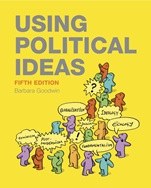
Using Political Ideas
ISBN 9780470025529
Autor: Barbara Goodwin
Wydawca: Wiley
Dostępność: 3-6 tygodni
Cena: 195,30 zł
Przed złożeniem zamówienia prosimy o kontakt mailowy celem potwierdzenia ceny.
ISBN13: |
9780470025529 |
ISBN10: |
0470025522 |
Autor: |
Barbara Goodwin |
Oprawa: |
Paperback |
Rok Wydania: |
2007-03-30 |
Numer Wydania: |
5th Edition |
Ilość stron: |
460 |
Wymiary: |
233x190 |
Tematy: |
JP |
Comprehensive, and covers the main ideologies in an interesting way . . . takes a critical and engaging perspective . . . framed in the context of debates around the meaning and purpose of theoretical enquiry . . . a more rewarding read than its competitors."
—Madeleine Davis, Department of Politics, Queen Mary, University of London.
"This book is pitched at a good level for bright and interested undergraduates . . . the combination of ideologies and concepts in one book is a major selling point."
—Professor Paul Taggart, Professor of Politics, University of Sussex
"Pulls off the enviable coup of being scholarly and yet not scary as well as providing genuinely fresh insights for the more familiar reader."
—Dr Peter Handley, School of Political, Social, and International Studies, University of East Anglia
"An outstandingly useful text . . . I look forward to a fifth edition being made available"
—Mark Donovan, Senior Lecturer in Politics, University of Cardiff
Using Political Ideas is a unique blend of political philosophy, political theory and history of political thought. It combines a critique of the major ideologies of recent and contemporary society with an analysis of the ideas that form the very stuff of political debate. By exposing the interplay between ideas and ideologies, it shows why political opponents often speak at cross–purposes and why rational agreement is so hard to achieve in politics.
The fifth edition of this well respected and widely known text will be welcomed by all those interested in questions such as:
Is equality more important than personal freedom?Does the majority have the right to dictate to the minority in multicultural society?Is nationalism a progressive force in the world?
With a new chapter on the political ideologies of the twenty–first century, and greater emphasis on contemporary issu
es such as multiculturalism, citizenship and identity throughout the book, this new edition is the ideal starting point for students and anyone else who needs an introduction to political thought.
Spis treści:
Preface to the Fifth Edition.
PART I INTRODUCTION.
1 What is Political Theory?
This chapter defines terms such as political theory, political philosophy and ideology, and clarifies the meaning of the various terms used by political theorists in discussing ideas and concepts.
2 Ideology.
In the eighteenth century, the term ‘ideology’ literally meant ‘the science of ideas’. Now it refers to an action–guiding set of political beliefs. This chapter examines different concepts of ideology and examines their significance for political theory.
Marx on Ideology.
‘Ideology’ Since Marx.
Conceptual Problems.
PART II IDEOLOGIES.
3 Liberalism.
This chapter focuses on the ideas of classical liberalism and then considers the more socially oriented ideas of the last century and some of the late twentieth–century revisions made by neo–liberals and their communitarian critics.
The Ingredients of Liberalism.
The Liberal Model: Perpetual Motion?
Why Does the Liberal Value the Individual so Highly?
Do I Know My Own Interests?
Liberals and Welfare States.
Liberalism Today.
4 Marxism.
The principles of Marx’s own theory are explained in this chapter, which also gives a brief account of later developments of Marxist theory and offers a critical perspective.
Problems in Reading Marx.
The Vocabulary of the Dialectic.
Marx’s Economics.
The Social Consequences.
History and Revolution.
Communist Society.
Criticizing Marx.
The Evolution of Marxism.
Revisionism and Recantation.
5 Socialism.
This chapter shows how the cluster of s
ocialist ideas are all interconnected: taken together, they form a socialist philosophy which this chapter examines point–by–point. The main objections to socialist thought and practice are then considered.
The Nucleus of Socialism.
The Changing Face of Socialism.
Objections to Socialism.
The Contradictions of Social Democracy.
6 Anarchism.
Anarchist doctrine has been plagued by the notion of anarchism as a synonym for disorder and chaos. This chapter dispels this myth and examines anarchism as arising initially from a feeling of moral indignation at the corrupt state of society, coupled with the perception that individuals are naturally good. This apparent paradox leads to the analysis of social evils, at the source of which is the institution of authority.
The Critique of Authority.
The Anarchist Order.
The Moral Basis of Anarchist Society.
Freedom Within Society.
Order Without Dependence.
Anarchist Individualism.
Anarchist Values.
Contemporary Anarchism.
Objections to Anarchist Theory.
The Ethics of Violence.
7 Conservatism.
Conservatism can be seen as an ideology which derives from a collection of beliefs and intuitions that form a coherent worldview. This chapter discusses the connection between these beliefs and conservative doctrines and offers a critique of conservative ideology.
Against Change.
The Virtues of Tradition.
Human Imperfection and Inequality.
Conservative Politics.
The Conservative Mentality.
Conservatism Today.
Ideology or Intuition?
8 Totalitarianism.
The concept of totalitarianism is not easily definable for theorists as it emerged from generalizations about Nazi Germany and Stalin’s USSR which may have limited application to other regimes. This chapter summarizes the views of political scientists, psychologists and historians and offers a theoretical critique of the topic.
The Phenomenological A
pproach.
The Socio–Historical Approach.
The Essentialist Analysis.
The Fascist Example.
The Psychological Roots of Totalitarianism.
Totalitarianism Dissolved.
9 Feminism.
Feminism is about the oppression of women by men; it is also an innovatory form of identity politics. This chapter focuses on the main social and political issues identified by Western feminists and their views on human nature, gender, patriarchy and oppression. Finally, three feminist strategies to combat oppression are considered.
The Demonization of Women, and of Feminism.
Feminists and Human Nature.
Gendered Society.
Patriarchal Society.
Women and Capitalism.
Oppression.
Feminist Strategies.
Feminism as Ideology.
10 Green Ideologies.
The Green Movement encompasses many controversies and internal differences and there is now a wealth of material available on ecological thought. This chapter offers an overview of the arguments of light and dark Greens and a consideration of problematic questions such as whether an authoritarian state is needed to enforce Green policies.
Shades of Green.
Economic Arguments.
Anti–Pollution Arguments.
Moral Arguments.
Green Utopias.
Problematic Questions.
Green Successes.
11 Beyond Ideology: Nationalism.
Nationalist movements have led to many wars and internecine disputes. It invites us to make distinctions between people based on national or ethnic identity or geographical location. This chapter argues that such distinctions are not only shifting and questionable, but also analytically suspect.
What is a Nation?
The Incoherence of Nationalism.
The Origins of Nationalism.
Is Nationalism an Ideology?
Nationalism, Liberalism and Democracy.
Rights of Secession.
Objections to Nationalism.
PART III IDEAS.
12 Democracy.
Democratic theory specifies not only that people should govern themselves, b
Koszyk
Książek w koszyku: 0 szt.
Wartość zakupów: 0,00 zł
Informacje


Kontakt
Gambit
Centrum Oprogramowania
i Szkoleń Sp. z o.o.
Al. Pokoju 29b/22-24
31-564 Kraków
Siedziba Księgarni
ul. Kordylewskiego 1
31-542 Kraków
+48 12 410 5991
+48 12 410 5987
+48 12 410 5989
Subskrypcje
Administratorem danych osobowych jest firma Gambit COiS Sp. z o.o. Na podany adres będzie wysyłany wyłącznie biuletyn informacyjny.
Autoryzacja płatności

Informacje na temat autoryzacji płatności poprzez PayU.

© Copyright 2012: GAMBIT COiS Sp. z o.o. Wszelkie prawa zastrzeżone.
Projekt i wykonanie: Alchemia Studio Reklamy