


Wydawcy
Katalog tematyczny
- Archeologia (109)
- Ekonomia, finanse, business (13704)
- Filozofia (1445)
- Historia (3040)
- Języki i językoznawstwo (2356)
- Lifestyle, hobby i rozrywka (475)
- Medycyna (9704)
- Nauki humanistyczne (4)
- Nauki o Ziemi i środowisku (2638)
- Nauki ścisłe (20412)
- Astronomia (294)
- Biologia (5119)
- Chemia (6540)
- Chemia analityczna (361)
- Chemia fizyczna (346)
- Chemia nieorganiczna (137)
- Chemia organiczna (535)
- Krystalografia (27)
- Minerologia (46)
- Fizyka (3309)
- Matematyka (4574)
- Nauki ścisłe, ogólnie (503)
- Nauki społeczne (8486)
- Nauki techniczne (13450)
- Prawo (1696)
- Publikacje informacyjne i interdyscyplinarne (1288)
- Religia i wierzenia (917)
- Technika komputerowa (4067)
- Zdrowie, relacje międzyludzkie i rozwój osobisty (657)





Informacje szczegółowe o książce
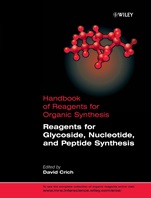
Reagents for Glycoside, Nucleotide, and Peptide Synthesis
ISBN 9780470023044
Autor: David Crich
Wydawca: Wiley
Dostępność: 3-6 tygodni
Cena: 825,30 zł
Przed złożeniem zamówienia prosimy o kontakt mailowy celem potwierdzenia ceny.
ISBN13: |
9780470023044 |
ISBN10: |
047002304X |
Autor: |
David Crich |
Oprawa: |
Hardback |
Rok Wydania: |
2005-09-16 |
Ilość stron: |
786 |
Wymiary: |
288x224 |
Tematy: |
PN |
The Synthesis of biopolymers and their conjugates is of ever increasing importance in bioorganic chemistry and chemical biology. As the need for such systems becomes ever more widespread, their synthesis is necessarily practiced in a broader spectrum of laboratories beyond the specialized ones that have traditionally concentrated in the area. For each type of biopolymer there exists a wide array of protecting systems and coupling reagents from which the practitioner must make and informed choice. This Handbook presents short, informative articles on approximately 250 of the most widely used reagents in the area in a single, affordable volume so as to facilitate the task of the experimentalist. Each of the articles, drawn from the e–EROS database, is written by an experienced worker in the area and collects together a summary of the most pertinent reactions for every reagent with references to the original literature. Each article also contains an overview of the physical properties of the reagent, conditions for its storage, and purification methods. This Handbook will prove of highest value to virtually everybody working in organic synthesis, medicinal chemistry or natural product chemistry.
All the information compiled in this volume is also available in electronic format on Wiley InterScience. The electronic Encyclopedia of Reagents for Organic Synthesis (e–EROS) includes all the reagents described in this volume plus many more reagents of other types and for other uses. e–EROS allows for both text and structure searches and has many new and updated entries added every year.
For more information visit:
http://www.mrw.interscience.wiley.com/eros/
Spis treści:
Preface.
Introduction.
Recent review Artilces and Monogrpahs.
Acetonitrile.
p–Acetoxybenzyl Bromide.
2–[(1–Acetyl–2–oxopropyl)thio]–1H–isoindole–1,3(2H)–dione.
2–Adamantyl Chl
oroformate.
N–[(Allyloxycarbonyl)oxy]maleimide–styrene Copolymer (Alloc–resin).
Allyl Tetraisopropylphosphoramidite.
Allyl Trichloroacetimidate.
Anthracenesulfonamide.
O–(7–Azabenzotriazol–1–yl)–1,3–dimethyl–1,3–dimethyleneuronium Hexafluorophosphate.
(7–Azabenzotriazol–1–yloxy)tris(pyrrolidino)phosphonium Hexafluorophosphate.
Axidotris(dimethylamino Phosphonium Hexafluorophosphate.
7–Azabenzotriazol–1–yloxytris(dimethylamino)Phosphonium Hexafluorophosphate.
Azidotris(dimethylamino)Phosphonium.
Hexafluorophosphate.
Benzeneselenenyl Bromide.
Benzeneselenenyl Trifluoromethanesulfonate.
Benzenesulfenyl Chloride.
Benzenesulfenyl Trifluoromethanesulfonate.
1–Benzenesulfinyl Piperidine.
Benzimidazolium Trifluoromethanesulfonate.
3H–1,2–Benzodithiol–3–one 1, 1–Dioxide.
1, 3–Benzodithiol–1–ium Tetrafluoroborate.
Benzothianthrene Oxide.
3H–1,2–Benzothiaselenol–3–one.
Benzothiazole–2–sulfonyl chloride (BtsC1).
1–Benzotriazolyl Diethyl Phosphate (BDP).
Benzotriazol–1–yloxytris(dimethylamino)phosphonium.
Hexafluorophosphate (BOP).
(1H–Benzotriazol–1–yloxy)tris(pyrrolidino)phosphonium.
Hexafluorophosphate.
O–Benzotriazol–1–yl–N,N,N′,N′–tetramethyluronium.
Hexafluorophosphate.
O–Benzotriazol–1–yl–N,N,N′,N′–tetramethyluronium.
Tetrafluoroborate.
Benzyl Bromide.
Benzyl Chloroformate.
Benzyl 2–Hydroxymethylbenzoate.
Benzyl Isopropenyl Ether.
Benzyl 2,2,2,–Trichloroacetimidate.
N,N′–Bis(t–butoxycarbony1)–N′–Trifluoromethanesulfonyl Guanidine.
1,3 Bis(2,2–dimethyl–1,3–dioxolan–4–ylmethyl)carb
odiimide(BDDC).
Bis(2,4–dinitrophenyl)Carbonate.
Bis(1–methoxy–2–methyl–1–propenyloxy)dimethylsilane.
N–Bis(methylthio)methylene–p–toluenesulfonamide.
Bis(4–nitrophenyl)Carbamate.
Bis(p–nitrophenyl) Hydrogen Phosphate.
Bis(o–nitrophenyl)Phenylphosphonate.
Bis(p–nitrophenyl)Phenylphosphonate.
Bis(2–oxo–3–oxazolidinyl)Phosphinic Chloride.
Bis(pentafluorophenyl)Caronate.
Bis(o–phenylene)Pyrophosphite.
1,2–Bis(phenylsulfonyl)ethylene.
1,1,3,3–Bis9tetramethylene)chlorouronium.
Hexafluorophosphate.
Bis(tributyltin)Oxide.Bis(2,2,2–trichloroethyl)Azodicarboxylate.
Bis(2,2,2–trichloroethyl)Phosphorochloridate.
Bis(trichloromethyl)carbonate.
2,7–Bis(trimethylsily)Fluorenylmethyl Chloroformate.
p–Bromobenzyl Bromide.
3–Bromocyclohexene.
2–Bromo–1–ethylpyridinium Tetrafluoroborate (BEP).
Bromonium Di–sym–collidine Perchlorate.
N–Bromosuccinimide.
Bromotripyrrolidinophosphonium Hexafluorophosphate.
1–N–(t–Butoxycarbonyl)–1H–benzotriazole–3N–oxide.
1–(t–Butoxycarbonyl)imidazole.
2–(t–Butoxycarbonyloxyimino)–2–phenylacetonitrile.
t–Butyl Chloroformate.
Cadmium Carbonate.
Carbomethoxysulfenyl Chloride.
1,1′–Caronylbis(3–methylimidazolium).
Bis(trifluoromethanesulfonate).
N,N′–Carbonyldiimidazole.
Chloroacety Chloride.
2–Chloro–4H–1,3,2–benzodioxaphosphorin–4–one.
p–Chlorobenzyl Bromide.
6–Chloro–2,4–dimethoxy–s–triazine.
2–Chloro–1,3–dimethylimidazolidium Hexafluorophosphate.
2–chloro–1–methylpyridinium Iodide.
2–Chloro–4,4,5,5–ttramethyl–1,3,2R
11;dioxaphospholane.
1–Chloro–N,N,2–trimethylpropenylamine.
ChlorotripyrrolidmopnospnoniumHexafluorophosphate.
2,4,6–Collidine.
2–Cyanoethyl Diisopropylchlorophosphoramidite.
2–cyanoethylphosphoric Acid.
2–Cyanoethyl Tetraisopropylphosphorodiamidite.
Cyanuric Fluoride.
Cyclohexyl Chloroformate.
1–Cyclohexyl–3–(2–morpholineothyl)carbodiimide.
1–Cyclohexyl–3–(2–morpholinoethyl)Carbodiimide.
Metho–p–toluenesulfonate.
17H–Cyclopental[1,2–1,:2,4–1′]diphenanthren–17–yl
Chloroformate.
a–Cyclopropylcyclopropanemethanol.
Dibenzyl N,N–Diisopropylphosphoramidite.
Dibenzylphosphite.
2,7,–Dibromo–9H–Fluoren–9–Ylmethyl Chloroformate.
Dibromomethylbenzene.
Dibromomethyl Methyl Ether.
Di–t–butyl Dicarbonate.
2,7–Di–t–Butyl–9–fluorenylmethyl Chloroformate.
2,6–Di–t–butylmethylpryridine.
Di–n–butyltin Oxide.
Dichlorobis(cyclopentadienyl)hafnium–Silver(I) Salts.
Dichloromethyl Methyl Ether.
1,3–Dichloro–1,1,3,3–tetraisopropyldisiloxane.
4,5–Dicyanoimidazole.
1,3–Dicyclohexylcarbodiimide.
1,3,–Dicyclohexylcarbodiimide–4–dimethylaminopyridine.
3–(Diethoxyphosphoryloxy)–1,2,3–benzotrazin–4(3H)–one (DEPBT).
Diethyl Chlorophosphite.
Diethyl Phosphorochloridate.
Diethyl Phosphorocyanidate (DEPC).
3,4–Dihydro–2H–pyrido[1,2–a]pyrimidin–2–one.
1,3–Diisopropylcarbodiimide.
2–(Dimethoxymethyl)naphthalene.
2,2–Dimethoxypropane.
4,4–Dimethoxytrityl Chloride.
N–[(Dimethylamino)–1H–1,2,3–triazolo[4,5–b]pyridin–1–ylmethylene]–N–methylmethanami
Koszyk
Książek w koszyku: 0 szt.
Wartość zakupów: 0,00 zł
Informacje


Kontakt
Gambit
Centrum Oprogramowania
i Szkoleń Sp. z o.o.
Al. Pokoju 29b/22-24
31-564 Kraków
Siedziba Księgarni
ul. Kordylewskiego 1
31-542 Kraków
+48 12 410 5991
+48 12 410 5987
+48 12 410 5989
Subskrypcje
Administratorem danych osobowych jest firma Gambit COiS Sp. z o.o. Na podany adres będzie wysyłany wyłącznie biuletyn informacyjny.
Autoryzacja płatności

Informacje na temat autoryzacji płatności poprzez PayU.

© Copyright 2012: GAMBIT COiS Sp. z o.o. Wszelkie prawa zastrzeżone.
Projekt i wykonanie: Alchemia Studio Reklamy