


Wydawcy
Katalog tematyczny
- Archeologia (109)
- Ekonomia, finanse, business (13704)
- Filozofia (1445)
- Historia (3040)
- Języki i językoznawstwo (2356)
- Lifestyle, hobby i rozrywka (475)
- Medycyna (9704)
- Nauki humanistyczne (4)
- Nauki o Ziemi i środowisku (2638)
- Nauki ścisłe (20412)
- Astronomia (294)
- Biologia (5119)
- Chemia (6540)
- Chemia analityczna (361)
- Chemia fizyczna (346)
- Chemia nieorganiczna (137)
- Chemia organiczna (535)
- Krystalografia (27)
- Minerologia (46)
- Fizyka (3309)
- Matematyka (4574)
- Nauki ścisłe, ogólnie (503)
- Nauki społeczne (8486)
- Nauki techniczne (13450)
- Prawo (1696)
- Publikacje informacyjne i interdyscyplinarne (1288)
- Religia i wierzenia (917)
- Technika komputerowa (4067)
- Zdrowie, relacje międzyludzkie i rozwój osobisty (657)





Informacje szczegółowe o książce
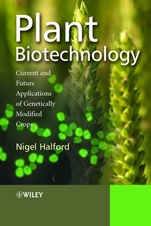
Plant Biotechnology: Current and Future Applications of Genetically Modified Crops
ISBN 9780470021811
Autor: Nigel Halford
Wydawca: Wiley
Dostępność: 3-6 tygodni
Cena: 718,20 zł
Przed złożeniem zamówienia prosimy o kontakt mailowy celem potwierdzenia ceny.
ISBN13: |
9780470021811 |
ISBN10: |
0470021810 |
Autor: |
Nigel Halford |
Oprawa: |
Hardback |
Rok Wydania: |
2006-01-13 |
Ilość stron: |
316 |
Wymiary: |
255x175 |
Tematy: |
PN |
Genetic modification (GM), a technique of inserting a single gene or small group of genes into the DNA of an organism artificially, has become an established technique in plant breeding around the world. GM crops are a controversial issue with the public worried about issues such as the inadvertent synthesis of antigens, and the risk of gene flow between GM and non–GM crops or wild relatives. Governments have responded to public concern by introducing regulations to control GM crop production and use.
Plant Biotechnology: Current and Future Uses of Genetically Modified Crops covers in detail the development, use and regulation of GM crops. Split into three sections, Part 1 will introduce GM crops and will describe the GM crops that are used commercially. Part 2 will look at new developments and methodologies in areas including potential applications of GM crops for the production of vaccines, enhanced nutritional value of GM food, and engineering resistance to fungal pathogens. Part 3 concludes by considering the key issues of safety and legislation, including allergenicity, environmental impacts, risk assessment and labelling.
Key features:
Covers the topic in depth and addresses key subject areas. Takes a broad view of the current situation in different countries. Examines the commercial application of plant biotechnology in the USA and China. Covers two major areas of public concern: allergenicity and gene flow. Covers new developments in plant research, safety and legislation aspects.This book is essential reading for postgraduates and researchers in plant biotechnology and related sciences in Departments of Plant Science, Biotechnology, Bioscience, Environmental Science, Food Biosciences and Chemistry. It would be of interest for professionals working in the plant biotechnology industry or government professionals working in environmental policy.
List of Contributors.
Preface.
PART I: THE CURRENT SITUATION.
1.1 From Primitive Selection to Genetic Modification, Ten Thousand Years of Plant Breeding (Nigel G. Halford).
1.2 Crop Biotechnology in the United States: Experiences and Impacts (Sujatha Sankula).
1.3 Development of Biotech Crops in China (Qingzhong Xue, Yuhua Zhang and Xianyin Zhang).
PART II: NEW DEVELOPMENTS.
2.1 Advances in Transformation Technologies (Huw D. Jones).
2.2 Enhanced Nutritional Value of Food Crops (Dietrich Rein and Karin Herbers).
2.3 The Production of Long–Chain Polyunsaturated Fatty Acids in Transgenic Plants (Louise V. Michaelson, Frédéric Beaudoin, Olga Sayanova and Johnathan A. Napier).
2.4 The Application of Genetic Engineering to the Improvement of Cereal Grain Quality (Peter R. Shewry).
2.5 Improvements in Starch Quality (Michael M. Burrell).
2.6 Production of Vaccines in GM Plants (Liz Nicholson, M. Carmen Can izares and George P. Lomonossoff).
2.7 Prospects for Using Genetic Modification to Engineer Drought Tolerance in Crops (S.G. Mundree, R. Iyer, B. Baker, N. Conrad, E.J. Davis, K. Govender, A.T. Maredza and J.A. Thomson).
2.8 Salt Tolerance (Eduardo Blumwald and Anil Grover).
2.9 Engineering Fungal Resistance in Crops (Maarten Stuiver).
PART III: SAFETY AND REGULATION.
3.1 Plant Food Allergens (E.N. Clare Mills, John A. Jenkins and Peter R. Shewry).
3.2 Environmental Impact and Gene Flow (P.J.W. Lutman and K. Berry).
3.3 Risk Assessment, Regulation and Labeling (Nigel G. Halford).
Index.
Dr. Nigel Halford is principal research scientist in the Crop Performance and Improvement Division at Rothamsted Research (a BBSRC centre). He has achieved renown as an expert in the GM field, and has strong collaborative research links within academia and industry, and is regularly involved in public debates on GM crops.
"The book provides an overview of the development, use and regulation of GM crops." ( Food Science and Technology Abstracts, September 2008)
" very important and useful for anyone interested in the subject." (Plant Science Bulletin, 11/06)
Koszyk
Książek w koszyku: 0 szt.
Wartość zakupów: 0,00 zł
Informacje


Kontakt
Gambit
Centrum Oprogramowania
i Szkoleń Sp. z o.o.
Al. Pokoju 29b/22-24
31-564 Kraków
Siedziba Księgarni
ul. Kordylewskiego 1
31-542 Kraków
+48 12 410 5991
+48 12 410 5987
+48 12 410 5989
Subskrypcje
Administratorem danych osobowych jest firma Gambit COiS Sp. z o.o. Na podany adres będzie wysyłany wyłącznie biuletyn informacyjny.
Autoryzacja płatności

Informacje na temat autoryzacji płatności poprzez PayU.

© Copyright 2012: GAMBIT COiS Sp. z o.o. Wszelkie prawa zastrzeżone.
Projekt i wykonanie: Alchemia Studio Reklamy