


Wydawcy
Katalog tematyczny
- Archeologia (109)
- Ekonomia, finanse, business (13704)
- Filozofia (1445)
- Historia (3040)
- Języki i językoznawstwo (2356)
- Lifestyle, hobby i rozrywka (475)
- Medycyna (9704)
- Nauki humanistyczne (4)
- Nauki o Ziemi i środowisku (2638)
- Geografia (299)
- Nauki o Ziemi (1661)
- Geologia (414)
- Hydrologia (237)
- Meteorologia i klimatologia (114)
- Paleontologia (33)
- Wulkanologia i sejsmologia (44)
- Planowanie przestrzenne (53)
- Środowisko (607)
- Nauki ścisłe (20412)
- Nauki społeczne (8486)
- Nauki techniczne (13450)
- Prawo (1696)
- Publikacje informacyjne i interdyscyplinarne (1288)
- Religia i wierzenia (917)
- Technika komputerowa (4067)
- Zdrowie, relacje międzyludzkie i rozwój osobisty (657)





Informacje szczegółowe o książce
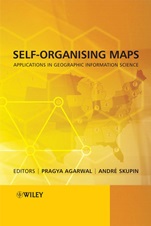
Self–Organising Maps: Applications in Geographic Information Science
ISBN 9780470021675
Autor: Pragya Agarwal, Andre Skupin
Wydawca: Wiley
Dostępność: 3-6 tygodni
Cena: 741,30 zł
Przed złożeniem zamówienia prosimy o kontakt mailowy celem potwierdzenia ceny.
ISBN13: |
9780470021675 |
ISBN10: |
0470021675 |
Autor: |
Pragya Agarwal, Andre Skupin |
Oprawa: |
Hardback |
Rok Wydania: |
2008-02-29 |
Ilość stron: |
214 |
Wymiary: |
254x178 |
Tematy: |
RB |
Self–Organising Maps: Applications in Geographic Information Science brings together innovative geographic research involving use of the self–organising map (SOM) method. The range of applications in this book demonstrates how innovative artificial intelligence and neural network methods such as SOMs offer novel opportunities to geospatial experts and how these tools can be adapted for specific geographic needs. The book begins with an overview of the SOM technique and the most commonly used (and often freely available) software. It then looks at different uses of the technique, namely clustering, data mining, and cartography, from a range of application areas in physical and socio–economic environments.
This book will be an invaluable reference to researchers in the field who are looking for a comprehensive overview of the subject, by providing a clear explanation and understanding of this novel technique. Advanced undergraduates and post–graduates undertaking a research project in GIScience techniques will also find this book useful.A comprehensive overview of cutting–edge research on applying the classic SOM method to a range of GIScience applications.
Chapters cover a range of techniques including clustering and data mining and all include appropriate case studies to enhance understanding.
Presents balanced coverage of physical and socio–economic applications.
Includes contributions from leading international researchers in the field.
Spis treści:
List of Contributors.
1. Introduction: What is a Self–Organizing Map? (André Skupin and Pragya Agarwal).
2. Applications of Different Self–Organizing Map Variants to Geographical Information Science Problems (Fernando Bação, Victor Lobo and Marco Painho).
3. An Integrated Exploratory Geovisualization Enviro
nment Based on Self–Organizing Map (Etien L. Koua and Menno–Jan Kraak).
4. Visual Exploration of Spatial Interaction Data with Self–Organizing Maps (Jun Yan and Jean–Claude Thill).
5. Detecting Geographic Associations in English Dialect Features in North America within a Visual Data Mining Environment Integrating Self–Organizing Maps (Jean–Claude Thill, William A. Kretzschmar Jr, Irene Casas and Xiaobai Yao).
6. Self–Organizing Maps for Density–Preserving Reduction of Objects in Cartographic Generalization (Monika Sester).
7. Visualizing Human Movement in Attribute Space (André Skupin).
8. Climate Analysis, Modelling, and Regional Downscaling Using Self–Organizing Maps (Bruce C. Hewitson).
9. Prototyping Broad–Scale Climate and Ecosystem Classes by Means of Self–Organising Maps (Jürgen P. Kropp and Hans Joachim Schellnhuber).
10. Self–Organising Map Principles Applied Towards Automating Road Extraction from Remotely Sensed Imagery (Pete Doucette, Peggy Agouris and Anthony Stefanidis).
11. Epilogue: Intelligent Systems for GIScience: Where Next? A GIScience Perspective (Michael Goodchild).
Index.
Okładka tylna:
Self–Organising Maps: Applications in Geographic Information Science brings together innovative geographic research involving use of the self–organising map (SOM) method. The range of applications in this book demonstrates how innovative artificial intelligence and neural network methods such as SOMs offer novel opportunities to geospatial experts and how these tools can be adapted for specific geographic needs. The book begins with an overview of the SOM technique and the most commonly used (and often freely available) software. It then looks at different uses of the technique, namely clustering, data mining, and cartography, from a range of applica
tion areas in physical and socio–economic environments.
This book will be an invaluable reference to researchers in the field who are looking for a comprehensive overview of the subject, by providing a clear explanation and understanding of this novel technique. Advanced undergraduates and post–graduates undertaking a research project in GIScience techniques will also find this book useful.A comprehensive overview of cutting–edge research on applying the classic SOM method to a range of GIScience applications.
Chapters cover a range of techniques including clustering and data mining and all include appropriate case studies to enhance understanding.
Presents balanced coverage of physical and socio–economic applications.
Includes contributions from leading international researchers in the field.
Koszyk
Książek w koszyku: 0 szt.
Wartość zakupów: 0,00 zł
Informacje


Kontakt
Gambit
Centrum Oprogramowania
i Szkoleń Sp. z o.o.
Al. Pokoju 29b/22-24
31-564 Kraków
Siedziba Księgarni
ul. Kordylewskiego 1
31-542 Kraków
+48 12 410 5991
+48 12 410 5987
+48 12 410 5989
Subskrypcje
Administratorem danych osobowych jest firma Gambit COiS Sp. z o.o. Na podany adres będzie wysyłany wyłącznie biuletyn informacyjny.
Autoryzacja płatności

Informacje na temat autoryzacji płatności poprzez PayU.

© Copyright 2012: GAMBIT COiS Sp. z o.o. Wszelkie prawa zastrzeżone.
Projekt i wykonanie: Alchemia Studio Reklamy