


Wydawcy
Katalog tematyczny
- Archeologia (109)
- Ekonomia, finanse, business (13704)
- Filozofia (1445)
- Historia (3040)
- Języki i językoznawstwo (2356)
- Lifestyle, hobby i rozrywka (475)
- Medycyna (9704)
- Nauki humanistyczne (4)
- Nauki o Ziemi i środowisku (2638)
- Nauki ścisłe (20412)
- Nauki społeczne (8486)
- Edukacja (229)
- Kryminologia, opieka spełeczna (284)
- Obronność (10)
- Polityka (1389)
- Psychologia (777)
- Socjologia (410)
- Społeczeństwo i kultura (187)
- Nauki techniczne (13450)
- Prawo (1696)
- Publikacje informacyjne i interdyscyplinarne (1288)
- Religia i wierzenia (917)
- Technika komputerowa (4067)
- Zdrowie, relacje międzyludzkie i rozwój osobisty (657)





Informacje szczegółowe o książce
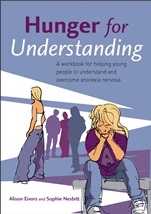
Hunger for Understanding: A Workbook for helping young people to understand and overcome anorexia nervosa
ISBN 9780470021286
Autor: Alison Eivors, Sophie Nesbitt
Wydawca: Wiley
Dostępność: 3-6 tygodni
Cena: 280,35 zł
Przed złożeniem zamówienia prosimy o kontakt mailowy celem potwierdzenia ceny.
ISBN13: |
9780470021286 |
ISBN10: |
0470021284 |
Autor: |
Alison Eivors, Sophie Nesbitt |
Oprawa: |
Paperback |
Rok Wydania: |
2005-04-01 |
Ilość stron: |
184 |
Wymiary: |
244x172 |
Tematy: |
JC |
Hunger for Understanding sets out to involve the young person directly in the process of recovering from anorexia nervosa. Its accessible format, wealth of practical ideas and reliable information will make it a helpful and valuable addition to the shelves of any therapist who works with young people with eating disorders."
—Dr Rachel Bryant–Waugh
Hampshire Partnership and Great Ormond Street Hospital for Children NHS Trusts
Hunger for Understanding is an innovative workbook designed specifically for use with young people with anorexia nervosa in a therapeutic setting. Fully illustrated, it provides many practical tasks that will help the young person to reflect on their own personal experience of anorexia nervosa, to understand more about their experience, and to then engage with the recovery process.
Introduced by a therapist’s guide, the workbook carefully combines cognitive–behavioural, motivational enhancement and psycho–educational approaches and techniques. The tasks can be accessed online and downloaded for use with patients, and a comprehensive list of further reading and useful organisations is included.
Hunger for Understanding is a ‘must–have’ tool for clinical psychologists, psychiatrists, nurses, cognitive–behavioural therapists, occupational therapists, counsellors and other professionals working with young people with anorexia nervosa.
Online resources: The workbook, including all the practical tasks, is available to download free of charge to purchasers of the print version. Visit the website www.wiley.com/hunger to find out how to access and download these materials.
Spis treści:
About the authors.
Foreword.
Acknowledgements.
1 The purpose of the workbook.
Who is Hunger for Understanding for?
Who can use Hunger for Understanding?
When and how should Hunger for Understanding<
/i> be used?
Accessing the workbook electronically.
Issues of confidentiality.
2 Psychological interventions for anorexia nervosa and the role of psycho–education.
Psychological interventions.
Motivational–enhancement therapy (MET).
Cognitive–behavioural therapy (CBT).
Psycho–education in anorexia nervosa.
The psychological symptoms of starvation.
The cultural context of eating disorders.
Set–point theory.
The physical effects of starvation.
3 Therapeutic challenges, skills and techniques.
Challenges of work with people with anorexia nervosa.
Physical issues.
Psychological issues.
Therapeutic skills and techniques.
Externalisation.
Instilling hope.
Empathy.
Developing emotional awareness.
Rolling with resistance.
Dealing with distress.
Managing relapses.
4 The contents of the workbook and guidelines for use.
Section 1: What is anorexia nervosa?
Section 2: What causes anorexia?
Section 3: How does dieting affect us?
Section 4: How does anorexia affect you?
Section 5: What keeps anorexia going?
Section 6: The tricks anorexia plays.
Section 7: Thinking about change.
Section 8: Getting better.
Section 9: Teamwork.
Section 10: Becoming assertive.
Section 11: Myths and questions about anorexia nervosa.
Some good advice and messages of support.
Ending the workbook.
The Workbook.
Useful contacts.
References.
Index.
Nota biograficzna:
Alison Eivors qualified as a clinical psychologist in 1999. During her training she developed an interest in eating disorders and completed her doctorate in this area. She conducted a qualitative study that investigated reasons for dropout from services for anorexia nervosa. This gave her the opportunity to interview w
omen about the meaning of their eating difficulties and gave her an invaluable insight into the very functional role anorexia can play in people’s lives and the enormous battle they face to overcome the disorder.
Alison currently works as Principal Clinical Psychologist at a specialist adolescent mental health service in Leicester. This post has provided her with the opportunity to work clinically with young women suffering from eating disorders.
For the past two years Alison has been part of a multidisciplinary team to review her local service for young people with eating disorders. The review involved researching the evidence base, interviewing previous clients and visiting other specialist units around the country. This has drawn her attention to the need for creative and varied therapeutic techniques (such as psychoeducation, motivational–enhancement and cognitive–behavioural techniques) in the treatment of young people with anorexia.
Sophie Nesbitt developed a special interest in working with young people with eating disorders while working as a trainee clinical psychologist. Her doctorate research investigated the role of exercise as a risk factor in the development and maintenance of eating disorders. She was also able to work clinically with young people with eating disorders at an inpatient unit. Much of this work involved working and communicating effectively with young people, and she developed a particular interest in the development of psycho–education information for this client group.
Sophie is currently working in a multidisciplinary outpatient team. This provides her with the opportunity to work with other types of disorders, such as developmental disorders and emotional disorders. However, as part of this post she is also involved in training other healthcare professionals in generic mental health issues. By necessity, a large part of this training has focused on raising awareness of eating disorders with
in primary care settings.
Sophie is also currently involved in a preliminary research study aimed at evaluating the Hunger for Understanding workbook. The main aims of this study are to investigate whether the workbook improves understanding of anorexia nervosa, increases motivation to change and enhances the therapeutic relationship. Findings from this study will be reported in due course.
The Hunger for Understanding workbook was initially developed as a therapeutic tool that could be used by therapists at an inpatient service. Often, the young people who are referred to the service have chronic difficulties with food and weight and have had a diagnosis of anorexia nervosa for some time.
They tend to be difficult to engage in treatment and therefore the aim of the workbook was to provide guidance and structure to therapeutic work. The workbook is based on ideas and techniques that Alison and Sophie have used in therapeutic work, which were influenced by their research and training in this area, and most importantly by talking to patients who have undergone extensive treatment for anorexia nervosa. Their experience of using the workbook to date has been very positive and the feedback received has helped develop and refine the content and structure of the text.
Okładka tylna:
"Hunger for Understanding sets out to involve the young person directly in the process of recovering from anorexia nervosa. Its accessible format, wealth of practical ideas and reliable information will make it a helpful and valuable addition to the shelves of any therapist who works with young people with eating disorders."
—Dr Rachel Bryant–Waugh
Hampshire Partnership and Great Ormond Street Hospital for Children NHS Trusts
Hunger for Understanding is an innovative workbook designed specifically for use with young people with anorexia nervosa in a therapeutic setting. Fully illustrated, it provides man
Koszyk
Książek w koszyku: 0 szt.
Wartość zakupów: 0,00 zł
Informacje


Kontakt
Gambit
Centrum Oprogramowania
i Szkoleń Sp. z o.o.
Al. Pokoju 29b/22-24
31-564 Kraków
Siedziba Księgarni
ul. Kordylewskiego 1
31-542 Kraków
+48 12 410 5991
+48 12 410 5987
+48 12 410 5989
Subskrypcje
Administratorem danych osobowych jest firma Gambit COiS Sp. z o.o. Na podany adres będzie wysyłany wyłącznie biuletyn informacyjny.
Autoryzacja płatności

Informacje na temat autoryzacji płatności poprzez PayU.

© Copyright 2012: GAMBIT COiS Sp. z o.o. Wszelkie prawa zastrzeżone.
Projekt i wykonanie: Alchemia Studio Reklamy