


Wydawcy
Katalog tematyczny
- Archeologia (109)
- Ekonomia, finanse, business (13704)
- Filozofia (1445)
- Historia (3040)
- Języki i językoznawstwo (2356)
- Lifestyle, hobby i rozrywka (475)
- Medycyna (9704)
- Nauki humanistyczne (4)
- Nauki o Ziemi i środowisku (2638)
- Nauki ścisłe (20412)
- Nauki społeczne (8486)
- Nauki techniczne (13450)
- Prawo (1696)
- Publikacje informacyjne i interdyscyplinarne (1288)
- Religia i wierzenia (917)
- Technika komputerowa (4067)
- Zdrowie, relacje międzyludzkie i rozwój osobisty (657)





Informacje szczegółowe o książce
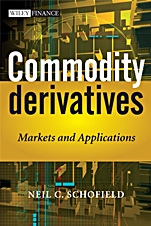
Commodity Derivatives: Markets and Applications
ISBN 9780470019108
Autor: Neil C. Schofield
Wydawca: Wiley
Dostępność: 3-6 tygodni
Cena: 422,10 zł
Przed złożeniem zamówienia prosimy o kontakt mailowy celem potwierdzenia ceny.
ISBN13: |
9780470019108 |
ISBN10: |
0470019107 |
Autor: |
Neil C. Schofield |
Oprawa: |
Hardback |
Rok Wydania: |
2007-11-09 |
Ilość stron: |
336 |
Wymiary: |
250x185 |
Tematy: |
KF |
In Commodity Derivatives: Markets and Applications, Neil Schofield provides a complete and accessible reference for anyone working in, or studying commodity markets and their associated derivatives. Dealing primarily with over the counter structures, the book provides extensive coverage of both hard and soft commodities, including gold, crude oil, electricity, plastics, emissions and agriculturals.
Using structures unique to the individual market, each chapter includes an explanation of the commodity and an analysis of its physical market, discussion on the typical patterns of demand and supply and the main factors that will influence the price of the commodity, and the main products.
Each chapter focuses on how the products could be used along the physical supply chain and seeks to identify the main market risks and how they can be hedged. The book then brings into perspective how the structuring banks hedge their own resultant exposure and examines the attraction of OTC investment structures for the wholesale market.
Commodity Derivatives: Markets and Applications is essential reading for those wishing to learn about the main features of the commodity markets, the mechanics of derivatives, and how they are applied.
Spis treści:
Preface.
Acknowledgements.
About the Author.
1 An Introduction to Derivative Products.
1.1 Forwards and futures.
1.2 Swaps.
1.3 Options.
1.4 Derivative pricing.
1.4.1 Relative Value.
1.5 The spot–forward relationship.
1.5.1 Deriving forward prices: market in contango.
1.5.2 Deriving forward prices: market in backwardation.
1.6 The spot–forward–swap relationship.
1.7 The spot–forward–option relationship.
1.8 Put–call parity: a key relationship.
1.9 Sources of value in a hedge.
1.10 Measures of option risk management.
1.10.1 Delta.
1.10.2 Gamma.
1.10.3 Theta.
1.10.4 Vega.
2 Risk Management.
2.1 Categories of risk.
2.1.1 Defining risk.
2.1.2 Credit risk.
2.2 Commodity market participants: the time dimension.
2.2.1 Short–dated maturities.
2.2.2 Medium–dated maturities.
2.2.3 Longer–dated exposures.
2.3 Hedging corporate risk exposures.
2.4 A framework for analysing corporate risk.
2.4.1 Strategic considerations.
2.4.2 Tactical considerations.
2.5 Bank risk management.
2.6 Hedging customer exposures.
2.6.1 Forward risk management.
2.6.2 Swap risk management.
2.6.3 Option risk management.
2.6.4 Correlation risk management.
2.7 View–driven exposures.
2.7.1 Spot–trading strategies.
2.7.2 Forward trading strategies.
2.7.3 Single period physically settled "swaps."
2.7.4 Single or multi–period financially settled swaps.
2.7.5 Option–based trades: trading volatility.
3 Gold.
3.1 The market for gold.
3.1.1 Physical Supply Chain.
3.1.2 Financial Institutions.
3.1.3 The London gold market.
3.1.4 The price of gold.
3.1.5 Fixing the price of gold.
3.2 Gold price drivers.
3.2.1 The supply of gold.
3.2.2 Demand for gold.
3.2.3 The Chinese effect.
3.3 The gold leasing market.
3.4 Applications of derivatives.
3.4.1 Producer strategies.
3.4.2 Central Bank strategies.
4 Base Metals.
4.1 Base metal production.
4.2 Aluminium.
4.3 Copper.
4.4 London metal exchange.
4.4.1 Exchange–traded metal futures.
4.4.2 Exchange–traded metal options.
4.4.3 Contract specification.
4.4.4 Trading.
4.4.5 Clearing.
4.4.6 Delivery.
4.5 Price drivers.
4.6 Structure of market prices.
4.6.1 Description of the forward curve.
4.6.2 Are forward prices predictors of future spot prices?
4.7 Applications of derivatives.
4.7.1 Hedges for aluminium consumers in the automotive sector.
4.8 Forward purchase.
4.8.1 Borrowing and lending in the base
metal market.
4.9 Vanilla option strategies.
4.9.1 Synthetic long put.
4.9.2 Selling options to enhance the forward purchase price.
4.9.3 "Three way."
4.9.4 Min–max.
4.9.5 Ratio min–max.
4.9.6 Enhanced risk reversal.
4.10 Structured option solutions.
4.10.1 Knock–out forwards.
4.10.2 Forward plus.
4.10.3 Bonus forward.
4.10.4 Basket options.
5 Crude Oil.
5.1 The value of crude oil.
5.1.1 Basic chemistry of oil.
5.1.2 Density.
5.1.3 Sulphur content.
5.1.4 Flow properties.
5.1.5 Other chemical properties.
5.1.6 Examples of crude oil.
5.2 An overview of the physical supply chain.
5.3 Refining crude oil.
5.3.1 Applications of refined products.
5.4 The demand and supply for crude oil.
5.4.1 Proved oil reserves.
5.4.2 R/P ratio.
5.4.3 Production of crude oil.
5.4.4 Consumption of crude oil.
5.4.5 Demand for refined products.
5.4.6 Oil refining capacity.
5.4.7 Crude oil imports and exports.
5.4.8 Security of supply.
5.5 Price drivers.
5.5.1 Macroeconomic issues.
5.5.2 Supply chain considerations.
5.5.3 Geopolitics.
5.5.4 Analysing the forward curves.
5.6 The price of crude oil.
5.6.1 Defining price.
5.6.2 The evolution of crude oil prices.
5.6.3 Delivered price.
5.6.4 Marker crudes.
5.6.5 Pricing sources.
5.6.6 Pricing methods.
5.6.7 The term structure of oil prices.
5.7 Trading crude oil and refined products.
5.7.1 Overview.
5.7.2 North Sea oil.
5.7.3 US crude oil markets.
5.8 Managing price risk along the supply chain.
5.8.1 Producer hedges.
5.8.2 Refiner hedges.
5.8.3 Consumer hedges.
6 Natural Gas.
6.1 How natural gas is formed.
6.2 Measuring natural gas.
6.3 The physical supply chain.
6.3.1 Production.
6.3.2 Shippers.
6.3.3 Transmission.
6.3.4 Interconnectors.
6.3.5 Storage.
6.3.6 Supply.
6.3.7 Customers.
6.3.8 Financial institutions.
6.4 D
eregulation and re–regulation.
6.4.1 The US experience.
6.4.2 The UK experience.
6.4.3 Continental European deregulation.
6.5 The demand and supply for gas.
6.5.1 Relative importance of natural gas.
6.5.2 Consumption of natural gas.
6.5.3 Reserves of natural gas.
6.5.4 Production of natural gas.
6.5.5 Reserve to production ratio.
6.5.6 Exporting natural gas.
6.5.7 Liquefied natural gas.
6.6 Gas price drivers.
6.6.1 Definitions of price.
6.6.2 Supply side price drivers.
6.6.3 Demand side price drivers.
6.6.4 The price of oil.
6.7 Trading physical natural gas.
6.7.1 Motivations for trading natural gas.
6.7.2 Trading locations.
6.7.3 Delivery points.
6.8 Natural gas derivatives.
6.8.1 Trading natural gas in the UK.
6.8.2 On–the–day commodity market.
6.8.3 Exchange–traded futures contracts.
6.8.4 Applications of exchange–traded futures.
6.8.5 Over–the–counter natural gas transactions.
6.8.6 Financial/Cash–settled transactions.
7 Electricity.
7.1 What is electricity?
7.1.1 Conversion of energy sources to electricity.
7.1.2 Primary sources of energy.
7.1.3 Commercial production of electricity.
7.1.4 Measuring electricity.
7.2 The physical supply chain.
7.3 Price drivers of electricity.
7.3.1 Regulation.
7.3.2 Demand for electricity.
7.3.3 Supply of electricity.
7.3.4 Factors influencing spot and forward prices.
7.3.5 Spark and dark spreads.
7.4 Trading electricity.
7.4.1 Overview.
7.4.2 Markets for trading.
7.4.3 Motivations for trading.
7.4.4 Traded volumes: spot markets.
7.4.5 Traded volumes: forward markets.
7.5 Nord pool.
7.5.1 The spot market: Elspot.
7.5.2 Post spot: the balancing market.
7.5.3 The financial market.
7.5.4 Real–time operations.
7.6 United states of america.
7.6.1 Independent System Operators.
7.6.2 Wholesale markets in the USA.
Koszyk
Książek w koszyku: 0 szt.
Wartość zakupów: 0,00 zł
Informacje


Kontakt
Gambit
Centrum Oprogramowania
i Szkoleń Sp. z o.o.
Al. Pokoju 29b/22-24
31-564 Kraków
Siedziba Księgarni
ul. Kordylewskiego 1
31-542 Kraków
+48 12 410 5991
+48 12 410 5987
+48 12 410 5989
Subskrypcje
Administratorem danych osobowych jest firma Gambit COiS Sp. z o.o. Na podany adres będzie wysyłany wyłącznie biuletyn informacyjny.
Autoryzacja płatności

Informacje na temat autoryzacji płatności poprzez PayU.

© Copyright 2012: GAMBIT COiS Sp. z o.o. Wszelkie prawa zastrzeżone.
Projekt i wykonanie: Alchemia Studio Reklamy