


Wydawcy
Katalog tematyczny
- Archeologia (109)
- Ekonomia, finanse, business (13704)
- Filozofia (1445)
- Historia (3040)
- Języki i językoznawstwo (2356)
- Lifestyle, hobby i rozrywka (475)
- Medycyna (9704)
- Nauki humanistyczne (4)
- Nauki o Ziemi i środowisku (2638)
- Nauki ścisłe (20412)
- Nauki społeczne (8486)
- Nauki techniczne (13450)
- Budownictwo lądowe (1045)
- Chemia przemysłowa (2258)
- Elektronika i telekomunikacja (3287)
- Energetyka (1122)
- Inne nauki stosowane (363)
- Inżynieria biochemiczna (507)
- Inżynieria transportu (232)
- Mechanika i materiały (3316)
- Nauka o środowisku (321)
- Rolnictwo (507)
- Technika, ogólnie (475)
- Prawo (1696)
- Publikacje informacyjne i interdyscyplinarne (1288)
- Religia i wierzenia (917)
- Technika komputerowa (4067)
- Zdrowie, relacje międzyludzkie i rozwój osobisty (657)





Informacje szczegółowe o książce
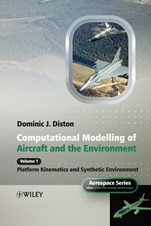
Computational Modelling and Simulation of Aircraft and the Environment, Volume 1: Platform Kinematics and Synthetic Environment
ISBN 9780470018408
Autor: Dominic J. Diston
Wydawca: Wiley
Dostępność: 3-6 tygodni
Cena: 533,40 zł
Przed złożeniem zamówienia prosimy o kontakt mailowy celem potwierdzenia ceny.
ISBN13: |
9780470018408 |
ISBN10: |
0470018402 |
Autor: |
Dominic J. Diston |
Oprawa: |
Hardback |
Rok Wydania: |
2009-04-17 |
Ilość stron: |
382 |
Wymiary: |
253x175 |
Tematy: |
TG |
This first volume of Computational Modelling of Aircraft and the Environment provides a comprehensive guide to the derivation of computational models from basic physical & mathematical principles, giving the reader sufficient information to be able to represent the basic architecture of the synthetic environment. Highly relevant to practitioners, it takes into account the multi–disciplinary nature of the aerospace environment and the integrated nature of the models needed to represent it. Coupled with the forthcoming Volume 2: Aircraft Models and Flight Dynamics it represents a complete reference to the modelling and simulation of aircraft and the environment.
Chapters include:
Computational ModellingPlatform KinematicsGeospatial Reference ModelPositional AstronomyGeopotential FieldsAtmosphereAppendices (an Introduction to MATLAB and Data and Functions).
All major examples within the book are implemented using MATLAB, and more high level, detailed mathematics is contained within the appendices in order to render the main body of the material digestible as an introductory level text. The author has drawn from his experience both as a modelling and simulation specialist with BAE Systems along with his more recent academic career to create a resource that will appeal to and benefit senior/ graduate students and industry practitioners alike.
Spis treści:
Preface.
Acknowledgements.
List of Abbreviations.
How To Use This Book.
Series Preface.
Chapter 1: Introduction.
1.1 Computational Modelling.
1.2 Modelling and Simulation (M&S).
1.3 Development Processes.
1.4 Models.
1.5 Meta–models.
1.6 Aerospace Applications.
1.7 Integration and Interoperability.
1.8 The End of the Beginning.
Chapter 2: Platform Kinematics.
2.1 Axis Systems.
2.2 Changing Position and Orientation.
2.3 Rot
ating Axis Systems.
2.4 Quaternions.
2.5 Line of Sight.
Chapter 3: Geospatial Reference Model.
3.1 Spherical Earth.
3.2 Spherical Trigonometry.
3.3 Great Circle Navigation.
3.4 Rhumb Line Navigation.
3.5 Reference Ellipsoids.
3.6 Coordinate Systems.
3.7 Navigation on an Ellipsoidal Earth.
3.8 Mapping.
3.9 General Principles of Map Projection.
3.10 Mercator Projection .
3.11 Transverse Mercator Projection.
3.12 Conformal Latitude.
3.13 Polar Stereographic Projection.
3.14 Three–Dimensional Mapping.
3.15 Actual Latitudes, Longitudes and Altitudes.
Chapter 4: Positional Astronomy.
4.1 Earth and Sun.
4.2 Observational Reference Frames.
4.3 Measurement of Time.
4.4 Calendars and the J2000 Reference Epoch.
4.5 Chronological Scale.
4.6 Astrometric Reference Frames.
4.7 Orbital Mechanics.
4.8 Solar System Orbit Models.
4.9 GPS Orbit Models.
4.10 Night Sky.
Chapter 5: Geopotential Fields.
5.1 Potential Fields.
5.2 Gravitation.
5.3 Geomagnetism.
5.4 Geopotential Computation.
5.5 Final Comment on Geopotential Models.
Chapter 6: Atmosphere.
6.1 Overview.
6.2 Standard Atmosphere Models.
6.3 ISA Constants and Relationships.
6.4 Geopotential Altitude.
6.5 Vertical Structure of the Atmosphere.
6.6 Pressure Altitude.
6.7 Reference Atmospheres.
6.8 Seasonal Variation.
6.9 Climatic Regions.
6.10 Air Density.
6.11 Water Vapour.
6.12 Weather Systems.
Appendix A: Introduction to MATLAB.
A. 1 MATLAB.
A. 2 The MATLAB Product Family.
A. 3 Getting Started.
A. 4 Getting Help.
A. 5 Where?
A. 6 Numbers: Variables and Literals.
A. 7 Arithmetic.
A. 8 Logic.
A. 9 M–Files and Functions.
A.10 Built–in Functions.
A.11 Constants.
A.12 Creating Graphs.
A.13 Summary of Appendix A.
Appendix B: Data and Function.
B.1 Types of Data.
B.2 Data Type Descriptions.
B.2.1 ‘double’.
B.2.2 ‘logical’.
B.2.3 ‘char’.
B.2.4 ‘cell’.
B.2.5 ‘struct’.
B.2.6 ‘function—handle’.
B.3 Program Structure.
B.3.1 Syntax.
B.3.2 Conditional Execution.
B.3.3 Iterative Execution.
B.3.4 Exception Handling.
B.3.5 Omissions.
B.4 User–defined Functions.
B.4.1 Interfacing.
B.4.2 Generic Functions.
B.4.3 Recursive Functions.
B.4.4 Private Functions.
B.5 User–defined Classes.
B.6 Practical Implementation.
B.6.1 Naming Convention.
B.6.2 Program Architecture.
B.6.3 Precedence.
B.6.4 Preferences.
B.7 Summary of Appendix B
Appendix C: Organisations.
C.1 Specialist Agencies of the United Nations.
C.2 International Organisations.
C.3 US Government Organisations.
C.4 UK Government Organisations.
C.5 European Organisations.
C.6 Open Projects and Consortia.
Bibliography.
Index.
Okładka tylna:
This first volume of Computational Modelling of Aircraft and the Environment provides a comprehensive guide to the derivation of computational models from basic physical & mathematical principles, giving the reader sufficient information to be able to represent the basic architecture of the synthetic environment. Highly relevant to practitioners, it takes into account the multi–disciplinary nature of the aerospace environment and the integrated nature of the models needed to represent it. Coupled with the forthcoming Volume 2: Aircraft Models and Flight Dynamics it represents a complete reference to the modelling and sim
ulation of aircraft and the environment.
Chapters include:
Computational ModellingPlatform KinematicsGeospatial Reference ModelPositional AstronomyGeopotential FieldsAtmosphereAppendices (an Introduction to MATLAB and Data and Functions).
All major examples within the book are implemented using MATLAB, and more high level, detailed mathematics is contained within the appendices in order to render the main body of the material digestible as an introductory level text. The author has drawn from his experience both as a modelling and simulation specialist with BAE Systems along with his more recent academic career to create a resource that will appeal to and benefit senior/ graduate students and industry practitioners alike.
Koszyk
Książek w koszyku: 0 szt.
Wartość zakupów: 0,00 zł
Informacje


Kontakt
Gambit
Centrum Oprogramowania
i Szkoleń Sp. z o.o.
Al. Pokoju 29b/22-24
31-564 Kraków
Siedziba Księgarni
ul. Kordylewskiego 1
31-542 Kraków
+48 12 410 5991
+48 12 410 5987
+48 12 410 5989
Subskrypcje
Administratorem danych osobowych jest firma Gambit COiS Sp. z o.o. Na podany adres będzie wysyłany wyłącznie biuletyn informacyjny.
Autoryzacja płatności

Informacje na temat autoryzacji płatności poprzez PayU.

© Copyright 2012: GAMBIT COiS Sp. z o.o. Wszelkie prawa zastrzeżone.
Projekt i wykonanie: Alchemia Studio Reklamy