


Wydawcy
Katalog tematyczny
- Archeologia (109)
- Ekonomia, finanse, business (13704)
- Filozofia (1445)
- Historia (3040)
- Języki i językoznawstwo (2356)
- Lifestyle, hobby i rozrywka (475)
- Medycyna (9704)
- Nauki humanistyczne (4)
- Nauki o Ziemi i środowisku (2638)
- Nauki ścisłe (20412)
- Nauki społeczne (8486)
- Nauki techniczne (13450)
- Prawo (1696)
- Publikacje informacyjne i interdyscyplinarne (1288)
- Religia i wierzenia (917)
- Technika komputerowa (4067)
- Zdrowie, relacje międzyludzkie i rozwój osobisty (657)





Informacje szczegółowe o książce
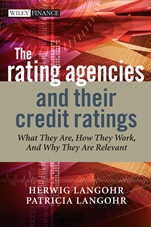
The Rating Agencies and Their Credit Ratings: What They Are, How They Work, and Why They are Relevant
ISBN 9780470018002
Autor: Herwig Langohr, Patricia Langohr
Wydawca: Wiley
Dostępność: 3-6 tygodni
Cena: 354,90 zł
Przed złożeniem zamówienia prosimy o kontakt mailowy celem potwierdzenia ceny.
ISBN13: |
9780470018002 |
ISBN10: |
0470018003 |
Autor: |
Herwig Langohr, Patricia Langohr |
Oprawa: |
Hardback |
Rok Wydania: |
2009-01-23 |
Ilość stron: |
524 |
Wymiary: |
251x170 |
Tematy: |
KF |
Credit ratings have become a universal phenomenon throughout the capital markets, relied upon by investors, issuers and regulators alike. Issuers understand the fundamental effect of their rating on financing costs, and investors make buying (and selling) decisions based heavily on these scores. Regulators have incorporated credit ratings into everything from allowable investment alternatives for institutional investors to required capital for global banking firms.
Credit rating agencies and their output are vital in overcoming the information asymmetries of the capital market. The Rating Agencies and their Credit Ratings is a comprehensive explanation of what they are, how they function and why they are relevant, addressing a broad range of issues from the credit rating process and the performance of credit ratings, to the evolution of the credit rating industry and its regulation.
The book is organised into three distinct sections. Part A provides an introduction to credit ratings and their broad and diverse applications, and describes how an issuer obtains and maintains a credit rating. Part B focuses on credit rating analysis, providing analysis of how rating actions and inactions interact with the market. Finally, Part C examines the credit rating industry, explaining where it comes from, what its main characteristics are, how the main players compete, and what results it produces for issuers, investors and shareholders.
Written by experienced Professors Herwig M. Langohr and Patricia T. Langohr, this book provides a unique and exhaustive introduction to credit ratings, developing the reader’s understanding of credit ratings and the credit rating agencies that produce them. It combines breadth of perspective, substantiation of arguments and depth in reflection, provided by the analysis of extensive field interviews, academic research, rating agency data and regulatory hearings and testimony.
Spis treści:
Forew
ord
Preface
1 Introduction
1.1 Context and Premises
1.2 Book Chapters
1.3 Supporting Materials
PART A: CREDIT RATING FOUNDATIONS
2 Credit Ratings
2.1 The World of Corporate Defaults
2.2 Credit Rating Scales
2.3 The Interpretation of Credit Ratings
2.4 Credit Ratings: Summary and Conclusions
3 The ‘Raison d’Être’ of Credit Ratings and Their Market
3.1 Needs for Credit Ratings – or the Demand Side of Ratings
3.2 Credit Ratings as a Solution to Information Asymmetry: Economic Analysis.
3.3 Credit Rating Segments – or Scale and Scope of the Rated Universe.
4 How to Obtain and Maintain a Credit Rating
4.1 The Rating Preparation
4.2 The Rating
4.3 Quality of the Rating Process
PART B: CREDIT RATING ANALYSIS
5 The France Telecom Credit Rating Cycle
5.1 From Sovereign Status to Near Speculative Grade
5.2 Turning Point and Rating Recovery (Fall 2002–Winter 2004)
5.3 Analysis and Evaluation
6 Credit Rating Analysis
6.1 Fundamental Corporate Credit Ratings
6.2 Corporate Ratings Implied by Market Data
6.3 Special Sector Ratings
6.4 Technical Appendix
7 Credit Rating Performance
7.1 Relevance: Ratings and Value.
7.2 Preventing Surprise in Defaults: Rating Accuracy and Stability
7.3 Efficiency Enhancement: Stabilization in Times of Crisis
PART C: THE CREDIT RATING BUSINESS
8 The Credit Rating Industry
8.1 The Rise of the Credit Rating Agencies
8.2 Industry Specifics and How they Affect Competition
8.3 Industry Performance
9 Regulatory Oversight of the Credit Rating Industry
9.1 The Regulatory Uses of Ratings
9.2 The Regulation of the Industry
9.3 Analysis and Evaluation
10 Summary and Conclusions
10.1 The Rating Agencies Value Added
10.2 The Challenges Rating Agencies Face Today
10.3 Concluding Thoughts
Referen
ces
Index
Nota biograficzna:
Herwig Langohr was Professor of Finance and Banking at Insead, in Fontainebleau, France, which he joined in 1976, specialising in corporate finance, financial services and corporate governance. He visited numerous academic institutions such as The Wharton School, The Darden School and the Universität Konstanz (Germany). He was holder of the Goldschmidt Chair in Corporate Governance at the Solvay Business School (Brussels). Professor Langohr served on several boards of directors, in particular on the Board of Directors and the Audit Committee of both the financial services group KBC Group N.V. and KBC Insurance N.V. He was Dean MBA and member of the Executive Committee at INSEAD from 1993–1995. He was also a frequent director of Executive Programs and a regular advisor in corporate finance and strategy in the banking sector. He was a contributor to academic journals such as The Journal of Monetary Economics, The Journal of Financial Economics and The Journal of Money, Credit and Banking; to numerous professional journals and newspapers and a regular publisher of case studies. He passed away at the age of 64 on May 28th 2008.
Patricia Langohr is Professor of Economics at the Essec Business School, in Cergy, France, since 2005. Her research specializes in industrial organization, dynamic models of competition and the financial services industry. She teaches microeconomics, industrial organization and business economics. Prior to that, she was a researcher at the Price and Index Number Research division of the Bureau of Labor Statistics in Washington D.C. Professor Langohr obtained her PhD in Managerial Economics and Strategy from the Kellogg School of Management at Northwestern University in December 2003. She has a Diploma in Economics from the Humboldt Universität in Berlin and a Maîtrise in Monetary Economics and Banking from the Uni
versité Paris IX Dauphine.
Okładka tylna:
Credit ratings have become a universal phenomenon throughout the capital markets, relied upon by investors, issuers and regulators alike. Issuers understand the fundamental effect of their rating on financing costs, and investors make buying (and selling) decisions based heavily on these scores. Regulators have incorporated credit ratings into everything from allowable investment alternatives for institutional investors to required capital for global banking firms.
Credit rating agencies and their output are vital in overcoming the information asymmetries of the capital market. The Rating Agencies and their Credit Ratings is a comprehensive explanation of what they are, how they function and why they are relevant, addressing a broad range of issues from the credit rating process and the performance of credit ratings, to the evolution of the credit rating industry and its regulation.
The book is organised into three distinct sections. Part A provides an introduction to credit ratings and their broad and diverse applications, and describes how an issuer obtains and maintains a credit rating. Part B focuses on credit rating analysis, providing analysis of how rating actions and inactions interact with the market. Finally, Part C examines the credit rating industry, explaining where it comes from, what its main characteristics are, how the main players compete, and what results it produces for issuers, investors and shareholders.
Written by experienced Professors Herwig M. Langohr and Patricia T. Langohr, this book provides a unique and exhaustive introduction to credit ratings, developing the reader’s understanding of credit ratings and the credit rating agencies that produce them. It combines breadth of perspective, substantiation of arguments and depth in reflection, provided by the analysis of extensive field interviews, academic research, rating agency data and regulatory he
Koszyk
Książek w koszyku: 0 szt.
Wartość zakupów: 0,00 zł
Informacje


Kontakt
Gambit
Centrum Oprogramowania
i Szkoleń Sp. z o.o.
Al. Pokoju 29b/22-24
31-564 Kraków
Siedziba Księgarni
ul. Kordylewskiego 1
31-542 Kraków
+48 12 410 5991
+48 12 410 5987
+48 12 410 5989
Subskrypcje
Administratorem danych osobowych jest firma Gambit COiS Sp. z o.o. Na podany adres będzie wysyłany wyłącznie biuletyn informacyjny.
Autoryzacja płatności

Informacje na temat autoryzacji płatności poprzez PayU.

© Copyright 2012: GAMBIT COiS Sp. z o.o. Wszelkie prawa zastrzeżone.
Projekt i wykonanie: Alchemia Studio Reklamy