


Wydawcy
Katalog tematyczny
- Archeologia (109)
- Ekonomia, finanse, business (13704)
- Filozofia (1445)
- Historia (3040)
- Języki i językoznawstwo (2356)
- Lifestyle, hobby i rozrywka (475)
- Medycyna (9704)
- Nauki humanistyczne (4)
- Nauki o Ziemi i środowisku (2638)
- Nauki ścisłe (20412)
- Astronomia (294)
- Biologia (5119)
- Chemia (6540)
- Chemia analityczna (361)
- Chemia fizyczna (346)
- Chemia nieorganiczna (137)
- Chemia organiczna (535)
- Krystalografia (27)
- Minerologia (46)
- Fizyka (3309)
- Matematyka (4574)
- Nauki ścisłe, ogólnie (503)
- Nauki społeczne (8486)
- Nauki techniczne (13450)
- Prawo (1696)
- Publikacje informacyjne i interdyscyplinarne (1288)
- Religia i wierzenia (917)
- Technika komputerowa (4067)
- Zdrowie, relacje międzyludzkie i rozwój osobisty (657)





Informacje szczegółowe o książce
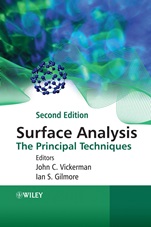
Surface Analysis: The Principal Techniques
ISBN 9780470017630
Autor: John C. Vickerman, Ian S. Gilmore
Wydawca: Wiley
Dostępność: 3-6 tygodni
Cena: 1 022,70 zł
Przed złożeniem zamówienia prosimy o kontakt mailowy celem potwierdzenia ceny.
ISBN13: |
9780470017630 |
ISBN10: |
0470017635 |
Autor: |
John C. Vickerman, Ian S. Gilmore |
Oprawa: |
Hardback |
Rok Wydania: |
2009-03-27 |
Numer Wydania: |
2nd Edition |
Ilość stron: |
686 |
Wymiary: |
248x175 |
Tematy: |
PN |
The second edition of this successful textbook provides a clear, well–written introduction to the principal techniques used in surface analysis, together with the computational methods used to interpret the increasingly complex data generated by them. Coverage includes the basic theory and practice of each technique together with practical examples of its sue and application and most chapters include review questions enabling the reader to develop and test their understanding.
Includes the following new material:A completely new chapter on ′Dynamic SIMS′A completely new chapter on ′The Application of Multivariate Data Analysis Techniques in Surface Analysis′All the other chapters have been extensively revised. Many now include illustrative applications and development room the fields of biotechnology and nanotechnology.
Surface Analysis – the Principal Techniques 2nd Edition, will be appropriate for the scientifically literate lay–person and for use in specialist undergraduate courses in materials and analytical sciences. Post–graduate M.Sc. and Ph.D. students involved in surface analysis and research whether concerned with inorganic, organic or biological materials will find it particularly useful. In addition, industrial analytical scientists will find this book an invaluable introduction to bring rapid familiarity with the capabilities of the various techniques.
Thus this book should be of value to those who need to have a wide overview of the techniques in education or in industrial quality control or R&D laboratories. For those who wish to further develop their knowledge and practice or particular techniques, it should also give a good basic understanding from which to build.
Spis treści:
List of Contributors.
Preface.
1 Introduction (John C. Vickerman).
1.1 How do we Define the Surface?
1.2 How Many Atoms in a Sur
face?
1.3 Information Required.
1.4 Surface Sensitivity.
1.5 Radiation Effects – Surface Damage.
1.6 Complexity of the Data.
2 Auger Electron Spectroscopy (Hans Jörg Mathieu).
2.1 Introduction.
2.2 Principle of the Auger Process.
2.3 Instrumentation.
2.4 Quantitative Analysis.
2.5 Depth Profile Analysis.
2.6 Summary.
References.
Problems.
3 Electron Spectroscopy for Chemical Analysis (Buddy D. Ratner and David G. Castner).
3.1 Overview.
3.2 X–ray Interaction with Matter, the Photoelectron Effect and Photoemission from Solids.
3.3 Binding Energy and the Chemical Shift.
3.4 Inelastic Mean Free Path and Sampling Depth.
3.5 Quantification.
3.6 Spectral Features.
3.7 Instrumentation.
3.8 Spectral Quality.
3.9 Depth Profiling.
3.10 X–Y Mapping and Imaging.
3.11 Chemical Derivatization.
3.12 Valence Band.
3.13 Perspectives.
3.14 Conclusions.
Acknowledgements.
References.
Problems.
4 Molecular Surface Mass Spectrometry by SIMS (John C. Vickerman).
4.1 Introduction.
4.2 Basic Concepts.
4.3 Experimental Requirements.
4.4 Secondary Ion Formation.
4.5 Modes of Analysis.
4.6 Ionization of the Sputtered Neutrals.
4.7 Ambient Methods of Desorption Mass Spectrometry.
References.
Problems.
5 Dynamic SIMS (David McPhail and Mark Dowsett).
5.1 Fundamentals and Attributes.
5.2 Areas and Methods of Application.
5.3 Quantification of Data.
5.4 Novel Approaches.
5.5 Instrumentation.
5.6 Conclusions.
References.
Problems.
6 Low–Energy Ion Scattering and Rutherford Backscattering (Edmund Taglauer).
6.1 Introduction.
6.2 Physical Basis.
6.3 Rutherford Backscattering.
6.4 Low–Energy Ion Scattering.
Acknowledgement.
References.
Problems.
Key Facts.
7 Vibrational Spectroscopy from Surfaces (Martyn E. Pem
ble and Peter Gardner).
7.1 Introduction.
7.2 Infrared Spectroscopy from Surfaces.
7.3 Electron Energy Loss Spectroscopy (EELS).
7.4 The Group Theory of Surface Vibrations.
7.5 Laser Raman Spectroscopy from Surfaces.
7.6 Inelastic Neutron Scattering (INS).
7.7 Sum–Frequency Generation Methods.
References.
Problems.
8 Surface Structure Determination by Interference Techniques (Christopher A. Lucas).
8.1 Introduction.
8.2 Electron Diffraction Techniques.
8.3 X–ray Techniques.
8.4 Photoelectron Diffraction.
References.
9 Scanning Probe Microscopy (Graham J. Leggett).
9.1 Introduction.
9.2 Scanning Tunnelling Microscopy.
9.3 Atomic Force Microscopy.
9.4 Scanning Near–Field Optical Microscopy.
9.5 Other Scanning Probe Microscopy Techniques.
9.6 Lithography Using Probe Microscopy Methods.
9.7 Conclusions.
References.
Problems.
10 The Application of Multivariate Data Analysis Techniques in
Surface Analysis (Joanna L.S. Lee and Ian S. Gilmore).
10.1 Introduction.
10.2 Basic Concepts.
10.3 Factor Analysis for Identification.
10.4 Regression Methods for Quantification.
10.5 Methods for Classification.
10.6 Summary and Conclusion.
Acknowledgements.
References.
Problems.
Appendix 1 Vacuum Technology for Applied Surface Science (Rod Wilson).
A1.1 Introduction: Gases and Vapours.
A1.2 The Pressure Regions of Vacuum Technology and their Characteristics.
A1.3 Production of a Vacuum.
A1.4 Measurement of Low Pressures.
Acknowledgement.
References.
Appendix 2 Units, Fundamental Physical Constants and Conversions.
A2.1 Base Units of the SI.
A2.2 Fundamental Physical Constants.
A2.3 Other Units and Conversions to SI.
References.
Index.
Okładka tylna:
The second edition of this successful textbook provides a clear, wellR
11;written introduction to the principal techniques used in surface analysis, together with the computational methods used to interpret the increasingly complex data generated by them. Coverage includes the basic theory and practice of each technique together with practical examples of its sue and application and most chapters include review questions enabling the reader to develop and test their understanding.
Includes the following new material:A completely new chapter on ′Dynamic SIMS′A completely new chapter on ′The Application of Multivariate Data Analysis Techniques in Surface Analysis′All the other chapters have been extensively revised. Many now include illustrative applications and development room the fields of biotechnology and nanotechnology.
Surface Analysis – the Principal Techniques 2nd Edition, will be appropriate for the scientifically literate lay–person and for use in specialist undergraduate courses in materials and analytical sciences. Post–graduate M.Sc. and Ph.D. students involved in surface analysis and research whether concerned with inorganic, organic or biological materials will find it particularly useful. In addition, industrial analytical scientists will find this book an invaluable introduction to bring rapid familiarity with the capabilities of the various techniques.
Thus this book should be of value to those who need to have a wide overview of the techniques in education or in industrial quality control or R&D laboratories. For those who wish to further develop their knowledge and practice or particular techniques, it should also give a good basic understanding from which to build.
Koszyk
Książek w koszyku: 0 szt.
Wartość zakupów: 0,00 zł
Informacje


Kontakt
Gambit
Centrum Oprogramowania
i Szkoleń Sp. z o.o.
Al. Pokoju 29b/22-24
31-564 Kraków
Siedziba Księgarni
ul. Kordylewskiego 1
31-542 Kraków
+48 12 410 5991
+48 12 410 5987
+48 12 410 5989
Subskrypcje
Administratorem danych osobowych jest firma Gambit COiS Sp. z o.o. Na podany adres będzie wysyłany wyłącznie biuletyn informacyjny.
Autoryzacja płatności

Informacje na temat autoryzacji płatności poprzez PayU.

© Copyright 2012: GAMBIT COiS Sp. z o.o. Wszelkie prawa zastrzeżone.
Projekt i wykonanie: Alchemia Studio Reklamy