


Wydawcy
Katalog tematyczny
- Archeologia (109)
- Ekonomia, finanse, business (13704)
- Filozofia (1445)
- Historia (3040)
- Języki i językoznawstwo (2356)
- Lifestyle, hobby i rozrywka (475)
- Medycyna (9704)
- Nauki humanistyczne (4)
- Nauki o Ziemi i środowisku (2638)
- Nauki ścisłe (20412)
- Astronomia (294)
- Biologia (5119)
- Chemia (6540)
- Chemia analityczna (361)
- Chemia fizyczna (346)
- Chemia nieorganiczna (137)
- Chemia organiczna (535)
- Krystalografia (27)
- Minerologia (46)
- Fizyka (3309)
- Matematyka (4574)
- Nauki ścisłe, ogólnie (503)
- Nauki społeczne (8486)
- Nauki techniczne (13450)
- Prawo (1696)
- Publikacje informacyjne i interdyscyplinarne (1288)
- Religia i wierzenia (917)
- Technika komputerowa (4067)
- Zdrowie, relacje międzyludzkie i rozwój osobisty (657)





Informacje szczegółowe o książce
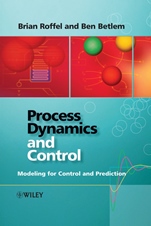
Process Dynamics and Control: Modeling for Control and Prediction
ISBN 9780470016633
Autor: Brian Roffel, Ben Betlem
Wydawca: Wiley
Dostępność: 3-6 tygodni
Cena: 904,05 zł
Przed złożeniem zamówienia prosimy o kontakt mailowy celem potwierdzenia ceny.
ISBN13: |
9780470016633 |
ISBN10: |
0470016639 |
Autor: |
Brian Roffel, Ben Betlem |
Oprawa: |
Hardback |
Rok Wydania: |
2006-11-17 |
Ilość stron: |
560 |
Wymiary: |
249x181 |
Tematy: |
PN |
Process Dynamics and Control: Modeling for Control and Prediction is a comprehensive and practical overview of modeling that is divided into three broad parts. The first part deals with developing physical models, the second part with developing empirical models and the final part discusses developing process control solutions.
Taking a unique approach to the subject the book includes both physical and empirical modeling as well as discussing developing control schemes for entire process plants. Theory is discussed where needed to ensure students have a full understanding of key techniques that are used to solve a modeling problem.
MATLAB is used throughout the book as the standard for developing process models of limited complexity. In this way, the reader can study the detailed process dynamics and compare it to the linearized and approximated process dynamics. Models of different process units have been developed and are available as a source for further model development.
An invaluable resource for students of chemical engineering and other related engineering courses. The book will also be of interest to practitioners of process control.integrated approach focusing on both physical and empirical modellingincludes MATLAB simulation examples of all processes and modelling techniques discussed throughout the textincludes discussion on developing control schemes for entire process plantssupplementary website featuring figures from the book and further references
For MATLAB product information, please contact:
The MathWorks, Inc., 3 Apple Drive, Natick, MA. 01760–2098 USA
Spis treści:
Foreword.
Preface.
Acknowledgement.
1 Introduction to Process Modelling.
2 Process Modelling Fundamentals.
3 Extended Analysis of Modelling for Process Operation.
4 De
sign for Process Modelling and Behavioural Models.
5 Transformation Techniques.
6 Linearization of Model Equations.
7 Operating points.
8 Process Simulation.
9 Frequency Response Analysis.
References.
10 General Process Behaviour
11 Analysis of a Mixing Process.
12 Dynamics of Chemical Stirred Tank Reactors.
13 Dynamic Analysis of Tubular Reactors.
14 Dynamic Analysis of Heat Exchangers.
15 Dynamics of Evaporators and Separators.
16 Dynamic Modelling of Distillation Columns.
17 Dynamic Analysis of Fermentation Reactors
18 Physiological Modeling: Glucose–Insulin Dynamics and Cardiovascular Modelling.
19 Introduction to Black Box Modelling.
20 Basics of Linear Algebra.
21 Data Conditioning.
22 Principal Component Analysis
23 Partial Least Squares
24 Time–series Identification.
25 Discrete Linear and Non–linear State Space Modelling.
26 Model Reduction.
27 Neural Networks.
28 Fuzzy Modelling.
29 Neuro Fuzzy Modelling.
30 Hybrid Models.
31 Introduction to Process Control and Instrumentation.
32 Behaviour of Controlled Processes.
33 Design of Control Schemes.
34 Control of Distillation Columns.
35 Control of a Fluid Catalytic Cracker.
Appendix A. Modelling an Extraction Process.
A1: Problem Analysis.
A2: Dynamic Process Model Development.
A3 Dynamic Process Model Analysis.
A4 Dynamic Process Simulation.
A5: Process Control Simulation.
Hints.
Index.
Nota biograficzna:
Professor Brian Roffel, University of Twente, The Netherlands
Okładka tylna:
Process Dynamics and Control
: Modeling for Control and Prediction is a comprehensive and practical overview of modeling that is divided into three broad parts. The first part deals with developing physical models, the second part with developing empirical models and the final part discusses developing process control solutions.
Taking a unique approach to the subject the book includes both physical and empirical modeling as well as discussing developing control schemes for entire process plants. Theory is discussed where needed to ensure students have a full understanding of key techniques that are used to solve a modeling problem.
MATLAB is used throughout the book as the standard for developing process models of limited complexity. In this way, the reader can study the detailed process dynamics and compare it to the linearized and approximated process dynamics. Models of different process units have been developed and are available as a source for further model development.
An invaluable resource for students of chemical engineering and other related engineering courses. The book will also be of interest to practitioners of process control.integrated approach focusing on both physical and empirical modellingincludes MATLAB simulation examples of all processes and modelling techniques discussed throughout the textincludes discussion on developing control schemes for entire process plantssupplementary website featuring figures from the book and further references
For MATLAB product information, please contact:
The MathWorks, Inc., 3 Apple Drive, Natick, MA. 01760–2098 USA
Koszyk
Książek w koszyku: 0 szt.
Wartość zakupów: 0,00 zł
Informacje


Kontakt
Gambit
Centrum Oprogramowania
i Szkoleń Sp. z o.o.
Al. Pokoju 29b/22-24
31-564 Kraków
Siedziba Księgarni
ul. Kordylewskiego 1
31-542 Kraków
+48 12 410 5991
+48 12 410 5987
+48 12 410 5989
Subskrypcje
Administratorem danych osobowych jest firma Gambit COiS Sp. z o.o. Na podany adres będzie wysyłany wyłącznie biuletyn informacyjny.
Autoryzacja płatności

Informacje na temat autoryzacji płatności poprzez PayU.

© Copyright 2012: GAMBIT COiS Sp. z o.o. Wszelkie prawa zastrzeżone.
Projekt i wykonanie: Alchemia Studio Reklamy