


Wydawcy
Katalog tematyczny
- Archeologia (109)
- Ekonomia, finanse, business (13704)
- Filozofia (1445)
- Historia (3040)
- Języki i językoznawstwo (2356)
- Lifestyle, hobby i rozrywka (475)
- Medycyna (9704)
- Nauki humanistyczne (4)
- Nauki o Ziemi i środowisku (2638)
- Nauki ścisłe (20412)
- Nauki społeczne (8486)
- Nauki techniczne (13450)
- Budownictwo lądowe (1045)
- Chemia przemysłowa (2258)
- Elektronika i telekomunikacja (3287)
- Energetyka (1122)
- Inne nauki stosowane (363)
- Inżynieria biochemiczna (507)
- Inżynieria transportu (232)
- Mechanika i materiały (3316)
- Nauka o środowisku (321)
- Rolnictwo (507)
- Technika, ogólnie (475)
- Prawo (1696)
- Publikacje informacyjne i interdyscyplinarne (1288)
- Religia i wierzenia (917)
- Technika komputerowa (4067)
- Zdrowie, relacje międzyludzkie i rozwój osobisty (657)





Informacje szczegółowe o książce
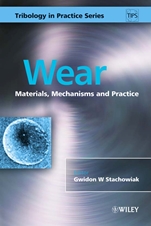
Wear: Materials, Mechanisms and Practice
ISBN 9780470016282
Autor: Gwidon W. Stachowiak
Wydawca: Wiley
Dostępność: 3-6 tygodni
Cena: 814,80 zł
Przed złożeniem zamówienia prosimy o kontakt mailowy celem potwierdzenia ceny.
ISBN13: |
9780470016282 |
ISBN10: |
0470016280 |
Autor: |
Gwidon W. Stachowiak |
Oprawa: |
Hardback |
Rok Wydania: |
2005-11-11 |
Ilość stron: |
480 |
Wymiary: |
250x180 |
Tematy: |
TG |
Tribology is emerging from the realm of steam engines and crank–case lubricants and becoming key to vital new technologies such as nanotechnology and MEMS. Wear is an integral part of tribology, and an effective understanding and appreciation of wear is essential in order to achieve the reliable and efficient operation of almost any machine or device. Knowledge in the field has increased considerably over recent years, and continues to expand: this book is intended to stimulate its readers to contribute towards the progress of this fascinating subject that relates to most of the known disciplines in physical science.
Wear – Materials, Mechanisms and Practice provides the reader with a unique insight into our current understanding of wear, based on the contributions of numerous internationally acclaimed specialists in the field.Offers a comprehensive review of current knowledge in the field of wear.Discusses latest topics in wear mechanism classification.Includes coverage of a wide variety of materials such as metals, polymers, polymer composites, diamonds, and diamond–like films and ceramics.Discusses the chemo–mechanical linkages that control tribology, providing a more complete treatment of the subject than just the conventional mechanical treatments.Illustrated throughout with carefully compiled diagrams that provide a unique insight into the controlling mechanisms of tribology.
The state of the art research on wear and the mechanisms of wear featured will be of interest to post–graduate students and lecturers in engineering, materials science and chemistry. The practical applications discussed will appeal to practitioners across virtually all sectors of engineering and industry including electronic, mechanical and electrical, quality and reliability and design.
Spis treści:
List of Contributors.
Series Editors′ Foreword.
Preface.
1. The Challenge of
Wear (I. Hutchings).
1.1 Introduction.
1.2 Definitions and Development of Wear Studies.
1.3 Scope and Challenges.
1.4 Conclusions.
2. Classification of Wear Mechanisms/Models (K. Kato).
2.1 Introduction.
2.2 Classification of Wear Mechanisms and Wear Modes.
2.3 General Discussion of Wear Mechanisms and Their Models.
2.4 Conclusion.
3. Wear of metals: a Materials Response (S.K. Biswas).
3.1 Introduction.
3.2 Mild Wear and Transition to Severe Wear.
3.3 Strain Rate Estimates and Bulk Surface Temperature.
3.4 Summary.
4. Boundary Lubricated Wear (S. Hsu, R. Munro, M.C. Shen and R. S. Gates).
4.1 Introduction.
4.2 Lubricated Wear Classification.
4.3 Lubricated Wear Versus “Dry” Wear.
4.4 Wear Measurement in Well–Lubricated Systems.
4.5 Measurement Procedures.
4.6 Wear Mechanisms Under Lubricated Conditions.
4.7 Modeling of Lubricated Wear.
4.8 Summary.
5. Wear and Chemistry of Lubricants (A. Neville).
5.1 Encountering Wear in Tribological Contacts.
5.2 Lubricant Formulations – Drivers for Change.
5.3 Tribochemistry and Wear.
5.4 Antiwear Additive Technologies.
5.5 Extreme Pressure Additives.
5.6 Lubricating Non–Fe Materials.
6. Surface Chemistry in Tribology (A.J. Gelman and N. D. Spencer).
6.1 Introduction.
6.2 Boundary Lubrication and Oiliness Additives.
6.3 Zinc Dialkyldithiophosphate.
6.4 Hard Disk Lubrication.
6.5 Vapor–Phase Lubrication.
6.6 Tribology of Quasicrystals.
6.7 Conclusions.
7. Tribology of Engineered Surfaces (K. Holmberg & A. Matthews).
7.1 Introduction.
7.2 Definition of an Engineered Surface.
7.3 Tribomechanisms of Coated Surfaces.
7.4 Contact Types.
7.5 Advanced Coating Types.
7.6 Applications.
7.7 Conclusions.
8. Wear of Ceramics: Transitions and Tribochemical Reactions in Ceramics (S. Jahanmir).
8.1 Introduction.
8.2 Struc
ture and Properties of Ceramics.
8.3 Wear Transitions.
8.4 Damage Formation in Hertzian Contacts.
8.5 Transition Loads in Sliding Contacts.
8.6 Ceramics in Tribological Applications.
9. Tribology of Diamond and Diamond–Like Carbon Films: An Overview (A. Erdemir).
9.1 General Overview.
9.2 Diamond Films.
9.3 Diamond–like Carbon Films.
9.4 Summary and Future Direction.
10. Tribology of Polymeric Solids and Their Composites (B. Briscoe and S.K. Sinha).
10.1 Introduction.
10.2 The Mechanisms of Polymer Friction.
10.3 Wear.
10.4 Tribology of Polymer Composites.
10.5 Environmental and Lubrication Effects.
10.6 A Case Study: Polymers in Hip and Knee Prosthetic Applications – Ultrahigh–Molecular–Weight Poly(ethylene) (UHMWPE).
10.7 Concluding Remarks.
11. Wear of polymer composites (K. Friedrich, Z. Zhang and P. Klein).
11.1 Introduction.
11.2 Sliding Wear of Filler Reinforced Polymer Composites.
11.3 Artificial Neural Networks Approach for Wear Prediction.
11.4 Fibre Orientation, Wear Mechanisms and Stress Conditions in Continuous Fibre Reinforced Composites.
11.5 Conclusions.
12. Third Body Reality – Consequences and Use of the Third Body Concept to Solve a Friction and Wear Problems (Y. Berthier).
12.1 Introduction.
12.2 Relationship Between the Third Body and Friction.
12.3 Relationship Between the Third Body and Wear.
12.4 What Methods Exist for Studying Friction and Wear?
12.5 The Third–Body Concept.
12.6 Functions and Behaviour of the Third Body.
12.7 Roles of the Materials in a Tribological Contact.
12.8 Taking into Account the Effects of the Mechanism.
12.9 Taking into Account the Effect of the First Bodies.
12.10 “Solid” Natural Third–Body Modelling.
12.11 Correspondence of the Strategy Proposed to Reality.
12.12 Control of Input Conditions.
12.13 Perfo
rming Experiments.
12.14 Conclusions.
13. Basic Principles of Fretting (P. Kapsa, S. Fouvry and L. Vincent).
13.1 Introduction.
13.2 Wear.
13.3 Industrial Needs.
13.4 Fretting in Assemblies.
13.5 Fretting Processes.
13.6 Fretting Parameters.
13.7 Conclusions.
14. Characterization and classification of abrasive particles and surfaces (G.W. Stachowiak, G.B. Stachowiak, D.V. de Pellegrin and P. Podsiadlo).
14.1 Introduction.
14.2 General Descriptors of Particle Shape.
14.3 Particle Angularity Parameters.
14.4 Particle Size Effect in Abrasive Wear.
14.5 Sharpness of Surfaces.
14.6 Classification of Abrasive Surfaces.
14.7 Summary.
15. Wear Mapping of materials (S. Hsu and M.C. Shen).
15.1 Introduction.
15.2 Basic Definition of Wear.
15.3 Wear as a System Function.
15.4 Wear Maps as a Classification Tool to Define the System.
15.5 Wear as an “Intrinsic” Material Property as Defined by Wear Maps.
15.6 Different Kinds of Wear Maps.
15.7 Application of Wear Maps.
15.8 Construction Techniques of Wear Maps.
15.9 Application Map Concept and Examples.
15.10 Future Wear Map Research.
16. Machine Failure and Its Avoidance – Tribology’s Contribution to Effective Maintenance of Critical Machinery (B. Roylance).
16.1 Introduction.
16.2 Maintenance Practice and Tribological Principles.
16.3 Failure Diagnoses.
16.4 Condition–Based Maintenance.
16.5 Wear and Wear Debris Analysis.
16.6 Predicting the Remaining Useful Life and Evaluating the Cost Benefits.
16.7 Closure.
Index.
Nota biograficzna:
Gwidon Stachowiak is Professor and Head of the Tribology Laboratory in the School of Mechanical Engineering at the University of Western Australia. He has published more than 130 journal papers and 90 conference papers. He has written/ contributed to several books, including “Engineering Trib
Koszyk
Książek w koszyku: 0 szt.
Wartość zakupów: 0,00 zł
Informacje


Kontakt
Gambit
Centrum Oprogramowania
i Szkoleń Sp. z o.o.
Al. Pokoju 29b/22-24
31-564 Kraków
Siedziba Księgarni
ul. Kordylewskiego 1
31-542 Kraków
+48 12 410 5991
+48 12 410 5987
+48 12 410 5989
Subskrypcje
Administratorem danych osobowych jest firma Gambit COiS Sp. z o.o. Na podany adres będzie wysyłany wyłącznie biuletyn informacyjny.
Autoryzacja płatności

Informacje na temat autoryzacji płatności poprzez PayU.

© Copyright 2012: GAMBIT COiS Sp. z o.o. Wszelkie prawa zastrzeżone.
Projekt i wykonanie: Alchemia Studio Reklamy