


Wydawcy
Katalog tematyczny
- Archeologia (109)
- Ekonomia, finanse, business (13704)
- Filozofia (1445)
- Historia (3040)
- Języki i językoznawstwo (2356)
- Lifestyle, hobby i rozrywka (475)
- Medycyna (9704)
- Nauki humanistyczne (4)
- Nauki o Ziemi i środowisku (2638)
- Nauki ścisłe (20412)
- Nauki społeczne (8486)
- Nauki techniczne (13450)
- Budownictwo lądowe (1045)
- Chemia przemysłowa (2258)
- Elektronika i telekomunikacja (3287)
- Energetyka (1122)
- Inne nauki stosowane (363)
- Inżynieria biochemiczna (507)
- Inżynieria transportu (232)
- Mechanika i materiały (3316)
- Nauka o środowisku (321)
- Rolnictwo (507)
- Technika, ogólnie (475)
- Prawo (1696)
- Publikacje informacyjne i interdyscyplinarne (1288)
- Religia i wierzenia (917)
- Technika komputerowa (4067)
- Zdrowie, relacje międzyludzkie i rozwój osobisty (657)





Informacje szczegółowe o książce
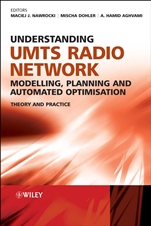
Understanding UMTS Radio Network Modelling, Planning and Automated Optimisation: Theory and Practice
ISBN 9780470015674
Autor: Maciej Nawrocki, Hamid Aghvami, Mischa Dohler
Wydawca: Wiley
Dostępność: 3-6 tygodni
Cena: 684,60 zł
Przed złożeniem zamówienia prosimy o kontakt mailowy celem potwierdzenia ceny.
ISBN13: |
9780470015674 |
ISBN10: |
0470015675 |
Autor: |
Maciej Nawrocki, Hamid Aghvami, Mischa Dohler |
Oprawa: |
Hardback |
Rok Wydania: |
2006-04-21 |
Ilość stron: |
544 |
Wymiary: |
252x170 |
Tematy: |
TJ |
Understanding UMTS Radio Network Modelling, Planning and Automated Optimisation: Theory and Practice sets out to provide the theoretical foundations that will enable radio network planners to plan, model and radio networks using state–of–the–art findings from around the globe. Adopting a logical approach, it begins with the background to the present status of UMTS radio network technology, before devoting equal coverage to planning, modelling and optimisation issues. A broad–based supply of information is given, gleaned from cutting–edge research by worldwide experts in academia and industry. All key planning areas are covered, including the technical and legal implications of network infrastructure sharing, hierarchical cell structure (HCS) deployment, ultra–high–site deployment and the benefits and limitations of using computer–aided design (CAD) software. In addition, theoretical models for UMTS technology are explained as generic system models, stand–alone services and mixed services. Business modelling theory and methods are also put forward, taking in propagation calculations, link–level, UMTS static and UMTS dynamic simulations.
Offers a solid theoretical background in the areas of modelling automatic and manual optimisation, which differs from the more practical guides available.
Covers all the key technologies: UMTS (Universal Mobile Telecommunications Service) FDD (Frequency Division Duplex) with UHS (Ultra–High–Site) and UTRAN LMDS/WiMAX backhaul systems.
Avoids explanations on a case–by–case basis, providing instead general mathematical tools that can be applied to understand, analyze and optimize complex system performance.
The challenges and goals of the automated optimization process are explored in depth using cutting–edge cost function and optimization algorithms.
Highly relevant to radi
o network operators (planning and optimization staff, system marketing, technical managers) and telecommunications equipment providers, this book will also appeal to postgraduate and research students in the field of telecommunications and radio networking.
Spis treści:
Preface.
Acknowledgments.
List of Abbreviations and Acronyms.
Notes on Editors and Contributors.
PART I: INTRODUCTION.
1. Modern Approaches to Radio Network Modelling and Planning.
1.1 Historical aspects of radio network planning.
1.2 Importance and limitations of modelling approaches.
1.3 Manual versus automated planning.
References.
2. Introduction to the UTRA FDD Radio Interface.
2.1 Introduction to CDMA–based networks.
2.2 The UTRA FDD air interface.
2.3 UTRA FDD key mechanisms.
2.4 Parameters that require planning.
References.
3. Spectrum and Service Aspects.
3.1 Spectrum aspects.
3.2 Service features and characteristics.
References.
4. Trends for the Near Future.
4.1 Introduction.
4.2 Yet to be deployed systems.
4.3 Enhanced coverage.
4.4 Enhanced capacity.
4.5 Heterogeneous approaches.
4.6 Concluding Remarks.
References.
PART II: MODELLING.
5. Propagation Modelling.
5.1 Radio channels in wideband CDMA systems.
5.2 Application of empirical and deterministic models in picocell planning.
5.3 Application of empirical and deterministic models in microcell planning.
5.4 Application of empirical and deterministic models in macrocell planning.
5.5 Propagation models of interfering signals.
5.6 Radio propagation model calibration.
Appendix: Calculation of inverse complementary cumulative normal distribution function.
References.
6. Theoretical Models for UMTS Radio Network.
6.1 Antenna modelling.
6.2 Link level model.
6.3 Capacity considerations.
6.4 Static
system level model.
6.5 Dynamic system level model.
References.
7. Business Modelling Goals and Methods.
7.1 Business modelling goals.
7.2 Business modelling methods.
References.
PART III: PLANNING.
8. Fundamentals of Business Planning for Mobile Networks.
8.1 Process description.
8.2 Technical investment calculation.
8.3 Revenue and non–technical related investment calculation.
8.4 Business planning results.
References.
9. Fundamentals of Network Characteristics.
9.1 Power characteristics estimation.
9.2 Network capacity considerations.
9.3 Required minimum network size for calculations.
References.
10. Fundamentals of Practical Radio Access Network Design.
10.1 Introduction.
10.2 Input parameters.
10.3 Network dimensioning.
10.4 Detailed network planning.
References.
11. Compatibility of UMTS Systems.
11.1 Scenarios of interference.
11.2 Approaches to compatibility calculations.
11.3 Internal electromagnetic compatibility.
11.4 External electromagnetic compatibility.
11.5 International cross–border coordination.
References.
12. Network Design – Specialised Aspects.
12.1 Network infrastructure sharing.
12.2 Adjacent channel interference control.
12.3 Fundamentals of Ultra High Site deployment.
References.
PART IV: OPTIMISATION.
13. Introduction to Optimisation of the UMTS Radio Network.
13.1 Automation of radio network optimisation.
13.2 What should be optimised and why?.
13.3 How do we benchmark the optimisation results?.
References.
14. Theory of Automated Network Optimisation.
14.1 Introduction.
14.2 Optimisation parameters for static models.
14.3 Optimisation targets and objective function.
14.4 Network optimisation with evolutionary algorithms.
14.5 Optimisation without simulation.
14.6 Comparison and suitability of al
gorithms.
References .
15. Automatic Network Design.
15.1 The key challenges in UMTS network optimisation.
15.2 Engineering case studies for network optimisation.
15.3 Case study: optimising base station location and parameters.
References.
16. Auto–tuning of RRM Parameters in UMTS Networks.
16.1 Introduction.
16.2 Radio resource management for controlling network quality.
16.3 Auto–tuning of RRM parameters.
16.4 Optimisation strategies of the auto–tuning process.
16.5 Conclusions.
References.
17. UTRAN Transmission Infrastructure Planning and Optimisation.
17.1 Introduction.
17.2 Protocol solutions for UTRAN transmission infrastructure.
17.3 End–to–end transmission dimensioning approach.
17.4 Network solutions for UTRAN transmission infrastructure.
17.5 Efficient use of WIMAX in UTRAN.
17.6 Cost–effective radio solution for UTRAN infrastructure.
References.
Concluding Remarks.
Index.
Nota biograficzna:
Maciej J. Nawrocki currently works for the Centre for Telecommunications Research at King’s College London. His areas of interest include WCDMA based cellular networks, CDMA network planning methods, optimization methods for 3G systems radio planning and, latterly, efficient modeling algorithms for UMTS radio network organization.
Mischa Dohler has a PhD from Kings College London where he has also held a lecturing post. His areas of interest include propagation, coding, transceiver design and link level simulations.
Hamid Aghvami is presently Director of the Centre for Telecommunications Research at King’s College London. He is considered a world expert in the field of personal and mobile radio communications and is a fellow of the Royal Academy of Engineering, a fellow member of the IEE and senior member of the IEEE.
Okładka tylna:
Understand
Koszyk
Książek w koszyku: 0 szt.
Wartość zakupów: 0,00 zł
Informacje


Kontakt
Gambit
Centrum Oprogramowania
i Szkoleń Sp. z o.o.
Al. Pokoju 29b/22-24
31-564 Kraków
Siedziba Księgarni
ul. Kordylewskiego 1
31-542 Kraków
+48 12 410 5991
+48 12 410 5987
+48 12 410 5989
Subskrypcje
Administratorem danych osobowych jest firma Gambit COiS Sp. z o.o. Na podany adres będzie wysyłany wyłącznie biuletyn informacyjny.
Autoryzacja płatności

Informacje na temat autoryzacji płatności poprzez PayU.

© Copyright 2012: GAMBIT COiS Sp. z o.o. Wszelkie prawa zastrzeżone.
Projekt i wykonanie: Alchemia Studio Reklamy