


Wydawcy
Katalog tematyczny
- Archeologia (109)
- Ekonomia, finanse, business (13704)
- Filozofia (1445)
- Historia (3040)
- Języki i językoznawstwo (2356)
- Lifestyle, hobby i rozrywka (475)
- Medycyna (9704)
- Chirurgia (272)
- Inne gałęzie medycyny (1871)
- Medycyna kliniczna (4187)
- Choroby wewnętrzne (514)
- Dermatologia (51)
- Diagnostyka medyczna (3)
- Endokrynologia (144)
- Gastroenterologia (27)
- Geriatria (50)
- Ginekologia i położnictwo (134)
- Hematologia (46)
- Hepatologia (10)
- Kardiologia (71)
- Laryngologia (12)
- Nefrologia (10)
- Neurologia (500)
- Oftalmologia (50)
- Pediatria (33)
- Pulmunologia (32)
- Reumatologia (14)
- Terapia genowa (1)
- Układ mięśniowo-szkieletowy (1)
- Urologia (14)
- Medycyna niekonwencjonalna (14)
- Medycyna przedkliniczna (269)
- Medycyna, ogólnie (1740)
- Medyczne służby pomocnicze (745)
- Studia medyczne (16)
- Weterynaria (548)
- Nauki humanistyczne (4)
- Nauki o Ziemi i środowisku (2638)
- Nauki ścisłe (20412)
- Nauki społeczne (8486)
- Nauki techniczne (13450)
- Prawo (1696)
- Publikacje informacyjne i interdyscyplinarne (1288)
- Religia i wierzenia (917)
- Technika komputerowa (4067)
- Zdrowie, relacje międzyludzkie i rozwój osobisty (657)





Informacje szczegółowe o książce
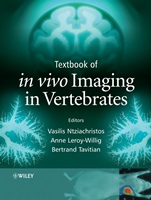
Textbook of in vivo Imaging in Vertebrates
ISBN 9780470015285
Autor: Vasilis Ntziachristos, Anne Leroy–Willig, Bertrand Tavitian
Wydawca: Wiley
Dostępność: 3-6 tygodni
Cena: 1 202,25 zł
Przed złożeniem zamówienia prosimy o kontakt mailowy celem potwierdzenia ceny.
ISBN13: |
9780470015285 |
ISBN10: |
0470015284 |
Autor: |
Vasilis Ntziachristos, Anne Leroy–Willig, Bertrand Tavitian |
Oprawa: |
Hardback |
Rok Wydania: |
2007-07-13 |
Ilość stron: |
388 |
Wymiary: |
287x204 |
Tematy: |
MJ |
Textbook of in vivo Imaging in Vertebrates.
Editors.
Vasilis Ntziachristos
Department of Radiology, Harvard University HMS/MGH, Charlestown, USA
Anne Leroy–Willig
U2R2M, CNRS and Université Paris–Sud, Orsay, France
Bertrand Tavitian
Unité d′Imagerie de l′Expression des Gènes, INSERM, Orsay, Franc
This book describes the new imaging techniques being developed to monitor physiological, cellular and subcellular function within living animals. This exciting field of imaging science brings together physics, chemistry, engineering, biology and medicine to yield powerful and versatile imaging approaches. By combining advanced non–invasive imaging technologies with new mechanisms for visualizing biochemical events and protein and gene function, non–invasive vertebrate imaging enables the in vivo study of biology and offers rapid routes from basic discovery to drug development and clinical application. Combined with the availability of an increasing number of animal models of human disease, and the ability to perform longitudinal studies of disease evolution and of the long–term effects of therapeutic procedures, this new technology offers the next generation of tools for biomedical research.
Well illustrated, largely in colour, the book reviews the most common and technologically advanced methods for vertebrate imaging, presented in a clear, comprehensive format. The basic principles are described, followed by several examples of the use of imaging in the study of living multicellular organisms, concentrating on small animal models of human diseases. The book illustrates:
· The types of information that can be obtained with modern in vivo imaging;
· The substitution of imaging methods
for more destructive histological techniques;
· The advantages conferred by in vivo imaging in building a more accurate picture of the response of tissues to stimuli over time while significantly reducing the number of animals required for such studies.
Part 1 describes current techniques in in vivo imaging, providing specialists and laboratory scientists from all disciplines with clear and helpful information regarding the tools available for their specific research field. Part 2 looks in more detail at imaging organ development and function, covering the brain, heart, lung and others. Part 3 describes the use of imaging to monitor various new types of therapy, following the reaction in an individual organism over time, e.g. after gene or cell therapy.
Most chapters are written by teams of physicists and biologists, giving a balanced coherent description of each technique and its potential applications.
The book is aimed at a broad audience conducting research in areas such as biochemistry, physiology, developmental biology, oncology and pharmacology. While written primarily for those already engaged in imaging studies, it will also be of interest to scientists from other disciplines looking for an entry point into the field of in vivo imaging in small animals.
Spis treści:
Contributors.
Introduction.
1 Nuclear Magnetic Resonance Imaging and Spectroscopy (Anne Leroy–Willig and Danielle Geldwerth–Feniger).
1.0 Introduction.
1.1 Magnets and magnetic field.
1.2 Nuclear magnetization.
1.3 Excitation and return to equilibrium of nuclear magnetization.
1.4 The NMR hardware: RF coils and gradient coils (more technology).
1.5 NMR spectroscopy: the chemical encoding.
1.6 How to build NMR images: the spatial encoding.
1.7 MRI and contrast.
1.8 Sensitivity, spatial resolution and te
mporal resolution.
1.9 Contrast agents for MRI.
1.10 Imaging of ‘other’ nuclei.
1.11 More parameters contributing to MRI contrast.
1.12 More about applications.
2 High Resolution X–ray Microtomography: Applications in Biomedical Research (Nora De Clerck and Andrei Postnov).
2.0 Introduction.
2.1 Principles of tomography.
2.2 Implementation.
2.3 Contribution of microtomography to biomedical imaging.
3 Ultrasound Imaging (S. Lori Bridal, Jean–Michel Correas and Genevieve Berger).
3.1 Principles of ultrasonic imaging and its adaptation to small laboratory animals.
3.2 Pulse–echo transmission.
3.3 Ultrasonic transducers.
3.4 From echoes to images.
3.5 Blood flow and tissue motion.
3.6 Non–linear and contrast imaging.
3.7 Discussion.
4 In Vivo Radiotracer Imaging (Bertrand Tavitian, Regine Trebossen, Roberto Pasqualini and Frederic Dolle´).
4.0 Introduction.
4.1 Radioactivity.
4.2 Interaction of gamma rays with matter.
4.3 Radiotracer imaging with gamma emitters.
4.4 Detection of positron emitters.
4.5 Image properties and analysis.
4.6 Radiochemistry of gamma–emitting radiotracers.
4.7 Radiochemistry of positron–emitting radiotracers.
4.8 Major radiotracers and imaging applications.
5 Optical Imaging and Tomography (Antoine Soubret and Vasilis Ntziachristos).
5.0 Introduction.
5.1 Light – tissue interactions.
5.2 Light propagation in tissues.
5.3 Reconstruction and inverse problem.
5.4 Fluorescence molecular tomography (FMT).
6 Optical Microscopy in Small Animal Research (Rakesh K. Jain, Dai Fukumura, Lance Munn and Edward Brown).
6.0 Introduction.
6.1 Confocal laser scanning microscopy.
6.2 Multiphoton laser scanning microscopy.
6.3 Variants for In vivo imaging.
6.4 Surgical preparations.
6.5 Applications.
7 New Radiotracers, Reporter Probes and Contrast Agents (Coordinated by B
ertrand Tavitian).
7.0 Introduction (Bertrand Tavitian).
7.1 New radiotracers (Bertrand Tavitian, Roberto Pasqualini and Frederic Dolle´).
7.2 Multimodal constructs for magnetic resonance imaging (Willem J.M. Mulder, Gustav J. Strijkers and Klaas Nicolay).
7.3 Fluorescence reporters for biomedical imaging (Benedict Law and Ching–Hsuan Tung).
7.4 New contrast agents for NMR (Silvio Aime).
7.5 Imaging techniques – reporter gene imaging agents (Huongfeng Li and Andreas H. Jacobs).
8 Multi–Modality Imaging (Coordinated by Vasilis Ntziachristos).
8.0 Introduction (Vasilis Ntziachristos).
8.1 Concurrent imaging versus computer–assisted registration (Fred S. Azar).
8.2 Combination of SPECT and CT (Jan Grimm).
8.3 FMT registration with MRI (Vasilis Ntziachristos).
9 Brain Imaging (Coordinated by Anne Leroy–Willig).
9.0 Introduction (Anne Leroy–Willig).
9.1 Bringing amyloid into focus with MRI microscopy (Greet Vanhoutte and Annemie Van der Linden).
9.2 Cerebral blood volume and BOLD contrast MRI unravels brain responses to ambient temperature fluctuations in fish (Annemie Van der Linden).
9.3 Assessment of functional and neuroanatomical re–organization after experimental stroke using MRI (Jet P. van der Zijden and Rick M. Dijkhuizen).
9.4 Brain activation and blood flow studies with speckle imaging (Andrew K. Dunn).
9.5 Manganese–enhanced MRI of the songbird brain: a dynamic window on rewiring brain circuits encoding a versatile behaviour (Vincent Van Meir and Annemie Van der Linden).
9.6 Functional MRI in awake behaving monkeys (Wim Vanduffel, Koen Nelissen, Denis Fize and Guy A. Orban).
9.7 Multimodal evaluation of mitochondrial impairment in a primate model of Huntington’s disease (Vincent Lebon and Philippe Hantraye).
10 Imaging of Heart, Muscle, Vessels (Coordinated by Yves Fromes).
10.0 Introduction (Yves Fromes).
10.1 Cardiac structure and
Koszyk
Książek w koszyku: 0 szt.
Wartość zakupów: 0,00 zł
Informacje


Kontakt
Gambit
Centrum Oprogramowania
i Szkoleń Sp. z o.o.
Al. Pokoju 29b/22-24
31-564 Kraków
Siedziba Księgarni
ul. Kordylewskiego 1
31-542 Kraków
+48 12 410 5991
+48 12 410 5987
+48 12 410 5989
Subskrypcje
Administratorem danych osobowych jest firma Gambit COiS Sp. z o.o. Na podany adres będzie wysyłany wyłącznie biuletyn informacyjny.
Autoryzacja płatności

Informacje na temat autoryzacji płatności poprzez PayU.

© Copyright 2012: GAMBIT COiS Sp. z o.o. Wszelkie prawa zastrzeżone.
Projekt i wykonanie: Alchemia Studio Reklamy