


Wydawcy
Katalog tematyczny
- Archeologia (109)
- Ekonomia, finanse, business (13704)
- Filozofia (1445)
- Historia (3040)
- Języki i językoznawstwo (2356)
- Lifestyle, hobby i rozrywka (475)
- Medycyna (9704)
- Nauki humanistyczne (4)
- Nauki o Ziemi i środowisku (2638)
- Nauki ścisłe (20412)
- Nauki społeczne (8486)
- Edukacja (229)
- Kryminologia, opieka spełeczna (284)
- Obronność (10)
- Polityka (1389)
- Psychologia (777)
- Socjologia (410)
- Społeczeństwo i kultura (187)
- Nauki techniczne (13450)
- Prawo (1696)
- Publikacje informacyjne i interdyscyplinarne (1288)
- Religia i wierzenia (917)
- Technika komputerowa (4067)
- Zdrowie, relacje międzyludzkie i rozwój osobisty (657)





Informacje szczegółowe o książce
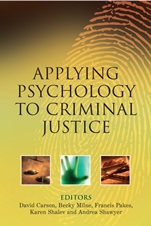
Applying Psychology to Criminal Justice
ISBN 9780470015155
Autor: David Carson, Rebecca D. Milne, Francis Pakes, Karen Shalev, Andrea Shawyer
Wydawca: Wiley
Dostępność: 3-6 tygodni
Cena: 1 043,70 zł
Przed złożeniem zamówienia prosimy o kontakt mailowy celem potwierdzenia ceny.
ISBN13: |
9780470015155 |
ISBN10: |
0470015152 |
Autor: |
David Carson, Rebecca D. Milne, Francis Pakes, Karen Shalev, Andrea Shawyer |
Oprawa: |
Hardback |
Rok Wydania: |
2007-07-27 |
Ilość stron: |
328 |
Wymiary: |
250x174 |
Tematy: |
JC |
This essential volume, edited by four psychologists and a lawyer, argues that psychology can, and should be, applied more widely, particularly within the criminal justice system.
Psychology and Law has made enormous strides during the last three decades. It now incorporates a much wider range of topics and has seen a marked international growth in specialist journals, books and conferences. The focus, until now, has been on research and academic membership rather than on practical applications and participation by practitioners, psychologists or lawyers, something this volume aims to change.
This book develops the case for successfully applying psychology to law, and criminal justice in particular, by providing a rich range of applicable examples for development, now and in the future. In Applying Psychology to Criminal Justice psychologists are encouraged to challenge the currently relatively limited ambition and imagination of psychology and law by examining, amongst other aspects:
The relevance of offenders’ methods of thinking and concepts to criminal responsibilityThe ways in which psychology might be used to inform analyses of corporate responsibility for systems failureHow analyses of decision–making under pressure are most effectively undertakenHow psychological research and insights might be applied to the investigation and analysis of system failure.
This text is an important addition to the bookshelves of forensic, legal, clinical, and occupational psychologists, students, and criminal justice personnel: police, probation, prisons. Also essential reading for investigators, lawyers, law reform agencies, and those government departments concerned with home, constitutional, law reform agendas.
Contributors
Laurence Alison, UK
Ray Bull, UK
Susan Dennison, Australia
Leslie Ellis, USA
Jacey Erickson, USA
Marie Eyre, UK
Ronald Fisher, USA
Edie Greene, USA
John G. D. Gri
eve, UK
Kirk Heilbrun, USA
Peter van Koppen, The Netherlands
Jenny McEwan, UK
Becky Milne, UK
Francis Pakes, The Netherlands/UK
Emma Palmer, UK
Margaret Reardon, USA
Gary Shaw, UK
Aldert Vrij, UK
Jane Winstone, UK
Spis treści:
About the editors.
Contributors.
Preface.
Chapter 1 Psychology and law: A science to be applied (David Carson, Becky Milne, Francis Pakes, Karen Shalev and Andrea Shawyer).
Chapter 2 Eyewitness Identification (Ronald P. Fisher & Margaret C. Reardon).
Chapter 3 Behavioural science and the law: Investigation (John G. D. Grieve).
Chapter 4 Investigative interviewing: the role of research (Becky Milne, Gary Shaw and Ray Bull).
Chapter 5 Credibility assessments in a legal context (Aldert Vrij).
Chapter 6 Fact finding and evidence (Jenny McEwan).
Chapter 7 A psychology and law of fact finding? (David Carson).
Chapter 8 Criminal responsibility (Susan Dennison).
Chapter 9 Criminal thinking (Emma Palmer).
Chapter 10 The Mentally Disordered Offender: Disenablers for the Delivery of Justice (Jane Winstone and Francis Pakes).
Chapter 11 Decision making in criminal justice (Edie Greene and Leslie Ellis).
Chapter 12 A behavioral science perspective on identifying and managing hindsight bias and unstructured judgment: Implications for legal decision making (Kirk Heilbrun and Jacey Erickson).
Chapter 13 To decide or not to decide: Decision making and decision avoidance in critical incidents (Marie Eyre and Laurence Alison).
Chapter 14 Processes: Proving guilt, disproving innocence (David Carson).
Chapter 15 The changing nature of adversarial, inquisitorial and Islamic trials (Francis Pakes).
Chapter 16 Misapplication of Psychology in Court (Peter J. van Koppen).
Chapter 17 Identifying liability for organizational errors (David Carson).
Chapter 18&
#160;Applying Key Civil Law concepts (David Carson, Becky Milne, Francis Pakes, Karen Shalev and Andrea Shawyer).
Index.
Nota biograficzna:
All of the editors are based at the Institute of Criminal Justice Studies at Portsmouth University, which is the UK’s largest provider of criminal justice courses. David Carson is Reader in Law and Behavioural Sciences and is qualified as a lawyer. Becky Milne and Francis Pakes are both senior lecturers at the Institute. Karen Shalev is a lecturer, and Andrea Shawyer is a university tutor.
Okładka tylna:
This essential volume, edited by four psychologists and a lawyer, argues that psychology can, and should be, applied more widely, particularly within the criminal justice system.
Psychology and Law has made enormous strides during the last three decades. It now incorporates a much wider range of topics and has seen a marked international growth in specialist journals, books and conferences. The focus, until now, has been on research and academic membership rather than on practical applications and participation by practitioners, psychologists or lawyers, something this volume aims to change.
This book develops the case for successfully applying psychology to law, and criminal justice in particular, by providing a rich range of applicable examples for development, now and in the future. In Applying Psychology to Criminal Justice psychologists are encouraged to challenge the currently relatively limited ambition and imagination of psychology and law by examining, amongst other aspects:
The relevance of offenders’ methods of thinking and concepts to criminal responsibilityThe ways in which psychology might be used to inform analyses of corporate responsibility for systems failureHow analyses of decision–making under pressure are most effectively undertakenHow psychological research and insights
might be applied to the investigation and analysis of system failure.
This text is an important addition to the bookshelves of forensic, legal, clinical, and occupational psychologists, students, and criminal justice personnel: police, probation, prisons. Also essential reading for investigators, lawyers, law reform agencies, and those government departments concerned with home, constitutional, law reform agendas.
Contributors
Laurence Alison, UK
Ray Bull, UK
Susan Dennison, Australia
Leslie Ellis, USA
Jacey Erickson, USA
Marie Eyre, UK
Ronald Fisher, USA
Edie Greene, USA
John G. D. Grieve, UK
Kirk Heilbrun, USA
Peter van Koppen, The Netherlands
Jenny McEwan, UK
Becky Milne, UK
Francis Pakes, The Netherlands/UK
Emma Palmer, UK
Margaret Reardon, USA
Gary Shaw, UK
Aldert Vrij, UK
Jane Winstone, UK
Koszyk
Książek w koszyku: 0 szt.
Wartość zakupów: 0,00 zł
Informacje


Kontakt
Gambit
Centrum Oprogramowania
i Szkoleń Sp. z o.o.
Al. Pokoju 29b/22-24
31-564 Kraków
Siedziba Księgarni
ul. Kordylewskiego 1
31-542 Kraków
+48 12 410 5991
+48 12 410 5987
+48 12 410 5989
Subskrypcje
Administratorem danych osobowych jest firma Gambit COiS Sp. z o.o. Na podany adres będzie wysyłany wyłącznie biuletyn informacyjny.
Autoryzacja płatności

Informacje na temat autoryzacji płatności poprzez PayU.

© Copyright 2012: GAMBIT COiS Sp. z o.o. Wszelkie prawa zastrzeżone.
Projekt i wykonanie: Alchemia Studio Reklamy