


Wydawcy
Katalog tematyczny
- Archeologia (109)
- Ekonomia, finanse, business (13704)
- Filozofia (1445)
- Historia (3040)
- Języki i językoznawstwo (2356)
- Lifestyle, hobby i rozrywka (475)
- Medycyna (9704)
- Nauki humanistyczne (4)
- Nauki o Ziemi i środowisku (2638)
- Nauki ścisłe (20412)
- Nauki społeczne (8486)
- Nauki techniczne (13450)
- Prawo (1696)
- Publikacje informacyjne i interdyscyplinarne (1288)
- Religia i wierzenia (917)
- Technika komputerowa (4067)
- Zdrowie, relacje międzyludzkie i rozwój osobisty (657)





Informacje szczegółowe o książce
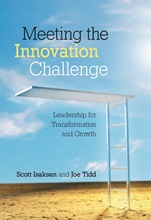
Meeting the Innovation Challenge: Leadership for Transformation and Growth
ISBN 9780470014998
Autor: Scott Isaksen, Joe Tidd
Wydawca: Wiley
Dostępność: 3-6 tygodni
Cena: 303,45 zł
Przed złożeniem zamówienia prosimy o kontakt mailowy celem potwierdzenia ceny.
ISBN13: |
9780470014998 |
ISBN10: |
0470014997 |
Autor: |
Scott Isaksen, Joe Tidd |
Oprawa: |
Paperback |
Rok Wydania: |
2006-05-19 |
Ilość stron: |
420 |
Wymiary: |
245x167 |
Tematy: |
KM |
Meeting the Innovation Challenge provides a balanced andintegrated approach to creativity, innovation, change andleadership. It is organized around a new model of creativeleadership andoffering a specific system that links people andsituations with process and content.
Essential reading for both practitioners and students,Meeting the Innovation Challenge moves beyond "What is thedifference between leadership and management?" to "How do we use afull spectrum of creative leadership skills to improve ourresponses to the need for change?"
"Status and significance within organizations are oftenadvertised, not simply by the size or position of a person′soffice, but by the size of their bookcase and the number ofbusiness books on display. Look closely, however, and most remainpristine, their pages crisply blocked and as solid as the day theprinter′s guillotine fell.
Here′s a book that′ll be different: destined to be endlesslythumbed and dog–eared by real people engaged in transformation.They couldn′t be in better hands. The authors are real people,bringing wisdom, insight and hard–won experience to that mostdifficult of tasks, leading transformation."
Mike King, Ogilvy and Mather, London, UK
"Professors Scott Isaksen and Joe Tidd remind us that change andsuccess are ultimately human endeavors. They tear down thedistinctions between leadership and management and innovation andcreativity that lead us to focus on characteristics rather thancharacter. Most importantly, Isaksen and Tidd offer a rigorousintegrated model for creative leadership and provide concrete ideasand suggestions, bringing that model alive. This is an importantbook."
Eugene J. McAllister President, University of GreatFalls Montana, USA
"As someone who has been doing research on organizationalclimate and leadership for the past forty years, I have particularinterest in finding ways to stimulate and utilize the creativecapabilities of people who work within organizations. This is a keychallenge for those who seek both radical and incremental change. Iam impressed that this book offers broader and deeper insights intosuch a relevant topic, and believe that it will be an excellentresource for both practitioners and scholars."
Göran Ekvall, Professor Emeritus OrganizationalPsychology Stockholm, Sweden
Preface.
About the Authors.
Acknowledgments.
1. Taking a Systemic Approach to Change.
Introduction.
Most change programs aren t worth the effort.
Why do organizations need to guide change?
The example of downsizing.
A survey of high performers.
Our systemic approach.
People.
Context.
Outcomes.
Method.
Conclusions.
References.
Part 1: The Outcomes of Transformation.
2. Building the Janusian Organization.
Who is Janus?
What is Janusian thinking?
What is a Janusian organization?
Why do Janusian organizations need to lead for change andtransformation?
Spectrum of change
Spectrum of change–management strategies.
Conclusion.
References.
3. Creativity and Innovation for Transformation.
New challenges, old responses.
From doing better to doingdifferent .
Searching and scanning.
Creativity in searching and scanning.
Strategic decision–making and problem–solving.
Changing organizational routines.
Creativity in changing organizational routines.
Conclusion.
References.
4. Creating Blockbusters.
What are blockbusters?
Characteristics of creative products.
How are blockbusters developed?
Who develops blockbusters?
Do blockbusters require a special environment?
Implications and conclusion.
References.
Part 2: The Part People Play.
5. Leading and Managing for Transformation.
Introduction.
Historical approaches to leadership.
Contemporary approaches to leadership.
Leading versus managing.
Creative leadership.
A model for creative leadership.
Conclusion.
References.
6. Owning up to Change.
Introduction.
Ownership.
Clientship.
Sponsorship.
Instilling ownership.
Conclusions.
Appendix 6.1.
References.
7. Teamwork for Transformation: Applying VIEW to Help Make TeamsProductive.
Deciding to use a group.
Characteristics that promote teamwork.
Challenges to watch for with teams.
Orientation to change.
Manner of processing.
Ways of deciding.
Team development.
Conclusion.
References.
Part 3: Transformation Methods.
8. Managing Change Methods.
Introduction.
What is a change method?
Why so many change methods?
Changing the way we change.
Different kinds of change.
The need for navigation.
Planning your approach to change.
Contingencies for appraising tasks.
A task appraisal model.
Designing Process.
Constraints from the context.
Making the change happen.
Ways of interacting.
References.
9. Alternative Change Methods.
A vocabulary for understanding methods.
An example of the muddle .
Our approach.
The change methods.
10. Applying Creative Problem–Solving to New ProductDevelopment.
Meeting the innovation challenge.
Pathways to growth.
Riding two horses.
Creative problem–solving: our current framework.
Key lessons learned.
References.
Part 4: The Context for Transformation.
11. Transforming the Culture and Climate.
What is culture?
What is organizational culture?
What does culture include?
Can leadership change culture?
What is climate?
Culture versus climate.
A model for organizational change.
The transactional factors.
Conclusions.
References.
12. The Climate for Innovation and Growth.
The Situational Outlook Questionnaire.
Climate dimensions and sample strategies.
Conclusions.
References.
13. Creating the Climate for Transformation.
What do we know about leadership behavior?
Case 1: A symphony orchestra.
Case 2: A medical technology company.
Case 3: An electrical engineering division.
General themes across cases.
Climate creation enables a systemic approach to change.
Conclusions and implications.
References.
Index.
Scott Isaksen is the President of the Creative ProblemSolving Group, Inc. (CPSB) and Senior Fellow of its CreativityResearch Unit.
Joe Tidd is Professor of Technology and InnovationManagement and Director of Studies at SPRU (Science and TechnologyPolicy Research), University of Sussex.
"Full of sound, well–presented material useful for both practioners and students of the subject." ( LRP, Vol 40 – 2007)
Koszyk
Książek w koszyku: 0 szt.
Wartość zakupów: 0,00 zł
Informacje


Kontakt
Gambit
Centrum Oprogramowania
i Szkoleń Sp. z o.o.
Al. Pokoju 29b/22-24
31-564 Kraków
Siedziba Księgarni
ul. Kordylewskiego 1
31-542 Kraków
+48 12 410 5991
+48 12 410 5987
+48 12 410 5989
Subskrypcje
Administratorem danych osobowych jest firma Gambit COiS Sp. z o.o. Na podany adres będzie wysyłany wyłącznie biuletyn informacyjny.
Autoryzacja płatności

Informacje na temat autoryzacji płatności poprzez PayU.

© Copyright 2012: GAMBIT COiS Sp. z o.o. Wszelkie prawa zastrzeżone.
Projekt i wykonanie: Alchemia Studio Reklamy