


Wydawcy
Katalog tematyczny
- Archeologia (109)
- Ekonomia, finanse, business (13704)
- Filozofia (1445)
- Historia (3040)
- Języki i językoznawstwo (2356)
- Lifestyle, hobby i rozrywka (475)
- Medycyna (9704)
- Nauki humanistyczne (4)
- Nauki o Ziemi i środowisku (2638)
- Nauki ścisłe (20412)
- Nauki społeczne (8486)
- Edukacja (229)
- Kryminologia, opieka spełeczna (284)
- Obronność (10)
- Polityka (1389)
- Psychologia (777)
- Socjologia (410)
- Społeczeństwo i kultura (187)
- Nauki techniczne (13450)
- Prawo (1696)
- Publikacje informacyjne i interdyscyplinarne (1288)
- Religia i wierzenia (917)
- Technika komputerowa (4067)
- Zdrowie, relacje międzyludzkie i rozwój osobisty (657)





Informacje szczegółowe o książce
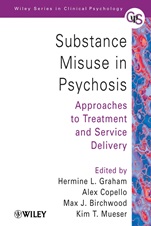
Substance Misuse in Psychosis: Approaches to Treatment and Service Delivery
ISBN 9780470013618
Autor: Hermine L. Graham, Alex Copello, Max J. Birchwood, Kim T. Mueser
Wydawca: Wiley
Dostępność: 3-6 tygodni
Cena: 319,20 zł
Przed złożeniem zamówienia prosimy o kontakt mailowy celem potwierdzenia ceny.
ISBN13: |
9780470013618 |
ISBN10: |
0470013613 |
Autor: |
Hermine L. Graham, Alex Copello, Max J. Birchwood, Kim T. Mueser |
Oprawa: |
Paperback |
Rok Wydania: |
2004-12-17 |
Ilość stron: |
420 |
Wymiary: |
223x154 |
Tematy: |
JC |
′Highly commended′ in the Mental Health category of the 2003 BMA Medical Book Competition
Substance Misuse in Psychosis: Approaches to Treatment and Service Delivery delves into the issues involved in working with those who have a severe mental health problem and use alcohol and drugs problematically. It adopts a practical, hands–on approach to sharing evidence–based approaches. Chapter authors interweave both theory and practice, by the use of illustrative clinical case material. This unique collection of authors, all of whom are experts in the field and pioneers of innovative approaches, provides an international perspective on treatment from UK, Germany, Australia, USA and Canada.
Section I provides an introduction to the issue of substance misuse amongst those with psychosis.
Section II introduces a range of integrated service models from different countries.
Section III provides a practical hands–on guide to assessment and treatment.
Section IV addresses the specific treatment needs of special population groups (i.e. young people, forensic groups, homeless people and those with HIV/Aids).
Section V examines treatment outcome studies and implications for the future.
Clinical psychologists, psychiatrists, nurses, therapists and psychiatric social workers in training and practice in clinic, hospital and community settings will find this book an essential practical resource for working with co–morbid individuals and their families.
This book appears in The Wiley Series in Clinical Psychology.
Spis treści:
About the Editors.
List of Contributors.
Preface.
Acknowledgements.
Part I: Social and Psychological Perspectives of Problem Substance Use Among those with Psychosis.
Introduction (Max J. Birchwood).
Chapter 1: Substance Misuse in Psychosis: Contextual Issues (Jenny Maslin
).
Chapter 2: Temporal Order and Aetiology(Martin Hambrecht and Heinz H¨afner).
Chapter 3: Substance Misuse and Psychosis in Context: The Influences of Families and Social Networks (Alex Copello).
Chapter 4: Sociological Aspects of Substance Misuse among People with Severe Mental Illness (Martin J. Commander).
Chapter 5: A Cognitive Conceptualization of Concurrent Psychosis and Problem Drug and Alcohol Use (Hermine L. Graham).
Part II: Integrated Service Delivery Models.
Introduction (Kim T. Mueser).
Chapter 6: Integrated Dual Disorder Treatment in New Hampshire (USA) (Kim T. Mueser and Robert E. Drake).
Chapter 7: The Combined Psychosis and Substance Use (COMPASS) Programme: An Integrated Shared–care Approach (Hermine L. Graham, Alex Copello, Max J. Birchwood, Jenny Maslin, Dermot McGovern, Jim Orford and George Georgiou).
Chapter 8: An Integrated Treatment Approach to Substance use in an Early Psychosis Programme (Jean Addington).
Chapter 9: An Inpatient–Based Service Model(Richard N. Rosenthal).
Part III: Treatments for Substance Misuse in Psychosis.
Introduction (Alex Copello).
Chapter 10: Assessment Considerations (Douglas L. Noordsy, Debra V. McQuade and Kim T. Mueser).
Chapter 11: Cognitive–Behavioural Integrated Treatment Approach for Psychosis and Problem Substance Use (Hermine L. Graham, Alex Copello, Max J. Birchwood, Jim Orford, Dermot McGovern, Jenny Maslin and George Georgiou).
Chapter 12: Relapse Prevention for Patients with Bipolar and Substance Use Disorders (Roger D. Weiss, Shelly F. Greenfield and Grace OâLeary).
Chapter 13: Family Intervention for Substance Misuse in Psychosis (Christine Barrowclough).
Chapter 14: Start Over and Survive: A Brief Intervention for Substance Misuse in Early Psychosis (David J. Kavanagh, Ross Young, Angel
a White, John B. Saunders, Natalie Shockley, Jeff Wallis and Anne Clair).
Chapter 15: Pharmacological Management of Substance Misuse in Psychosis (Ed Day, George Georgiou and Ilana Crome).
Part IV: Special Populations.
Introduction (Hermine L. Graham).
Chapter 16: Cannabis and First–Episode Psychosis: The CAP Project (Jane Edwards, Mark Hinton, Kathryn Elkins and Olympia Athanasopoulos).
Chapter 17: Comorbid severe Mental Health Problems and Substance Abuse in Forensic Populations (Alison Beck, Tom Burns and Tim Hunt).
Chapter 18: Integrated Treatment Outcomes for Homeless Persons with Severe Mental Illness and Co–Occurring Substance Use Disorders (Susan A. Pickett–Schenk, Michael Banghart and Judith A. Cook).
Chapter 19: Issues in Comorbidity and HIV/AIDS (Lisa Razzano).
Part V: The Evolving Evidence Base.
Chapter 20: Cochrane Review of Treatment Outcome Studies and its Implications for Future Developments (Ann Ley and David Jeffery).
Epilogue: Future Directions.
Concluding Remarks (Hermine L. Graham, Alex Copello, Max J. Birchwood and Kim T. Mueser).
Index.
Nota biograficzna:
Hermine L. Graham is a consultant clinical psychologist, Head of the Combined Psychosis and Substance Use (COMPASS) Programme in Northern Birmingham, UK, and an Honorary Research Fellow with the School of Psychology, University of Birmingham. In a managerial and clinical research capacity she is developing and evaluating an integrated treatment and service model for people with severe mental health problems who use alcohol/drugs problematically. She has published articles within this area and provides national and international consultancy/advice on service and policy developments for this client group. Her clinical and research interests include the application of cognitive therapy for people with combined psychosis and substance use.
A publication that reflects this is her paper, “The Role of Dysfunctional Beliefs in Individuals Who Experience Psychosis and Use Substances: Implications for Cognitive Therapy and Medication Adherence” (1998), Behavioural and Cognitive Psychotherapy, 26, 193–208.
Alex Copello is a consultant clinical psychologist, Head of the Psychology Addiction Speciality within Northern Birmingham Mental Health Trust, and Lecturer in Clinical Psychology at the School of Psychology, University of Birmingham. He is a practising clinician and the lead professional for the Addiction Research and Development Programme for the Trust. In addition, he is one of the principal investigators on an MRC–funded UK multisite study evaluating alcohol treatment. He has been involved in developing a social network–based treatment that will be evaluated in this study. His research and clinical interests include the impact of addiction upon families; the evaluation of services for alcohol and drug users, both in primary care and specialist settings; and the use of qualitative research methods. He has also been involved in international cross–cultural research assessing the impact of addiction on families in Mexico and Australia. He publishes extensively in a number of scientific journals and has co–authored the book Living with Drink: Women Who Live with Problem Drinkers (1998).
Max J. Birchwood is Director of the Early Intervention Service and Director of Research and Development for Northern Birmingham Mental Health Trust, and Professor of Mental Health at the University of Birmingham, UK. His clinical and research interests have centred around the development of methods of promoting individuals’ control over their psychotic symptoms, including the application of cognitive therapy to psychotic symptoms, as in acute psychosis, and the recognition and control of early warning signs of relapse. He has publishe
Koszyk
Książek w koszyku: 0 szt.
Wartość zakupów: 0,00 zł
Informacje


Kontakt
Gambit
Centrum Oprogramowania
i Szkoleń Sp. z o.o.
Al. Pokoju 29b/22-24
31-564 Kraków
Siedziba Księgarni
ul. Kordylewskiego 1
31-542 Kraków
+48 12 410 5991
+48 12 410 5987
+48 12 410 5989
Subskrypcje
Administratorem danych osobowych jest firma Gambit COiS Sp. z o.o. Na podany adres będzie wysyłany wyłącznie biuletyn informacyjny.
Autoryzacja płatności

Informacje na temat autoryzacji płatności poprzez PayU.

© Copyright 2012: GAMBIT COiS Sp. z o.o. Wszelkie prawa zastrzeżone.
Projekt i wykonanie: Alchemia Studio Reklamy